
Connect with us today to learn more about our industrial automation solutions—and how to commission them for your application.
What Are the 2026 Best PNP Bipolar Transistor Suppliers?
Selecting the 2026 best Pnp Bipolar Transistor suppliers requires more than comparing catalog prices. Engineers must examine current gain, collector-emitter voltage, noise performance, thermal stability, packaging, and documented production quality. A transistor that performs well on a laboratory bench may behave differently inside a hot automotive module or a compact audio amplifier.
William Shockley, a Nobel Prize-winning transistor pioneer, once stated, “The transistor is a device of great versatility.” His observation remains relevant. A reliable Pnp Bipolar Transistor can support switching, amplification, bias control, and signal conditioning, but its value depends on the complete application. Supplier expertise matters.
This guide evaluates manufacturers through an evidence-based lens. It considers datasheet accuracy, lifecycle transparency, traceability, technical support, sample availability, and independent quality certifications. Real purchasing decisions also involve delivery consistency. A low-cost part is not truly economical if inconsistent batches create redesign work.
Some rankings may appear imperfect. They are. Supplier performance can vary by region, product family, and order volume. That limitation deserves attention. Readers should confirm electrical specifications against their own operating conditions, including temperature, load current, switching frequency, and board layout. Practical testing remains essential.
The following overview identifies suppliers that demonstrate strong capability in 2026. It also explains where each company may fit best. Some excel in high-volume production. Others provide stronger engineering support or specialized transistor portfolios. The goal is not to declare one universal winner, but to help engineers choose with clearer evidence and fewer costly assumptions.
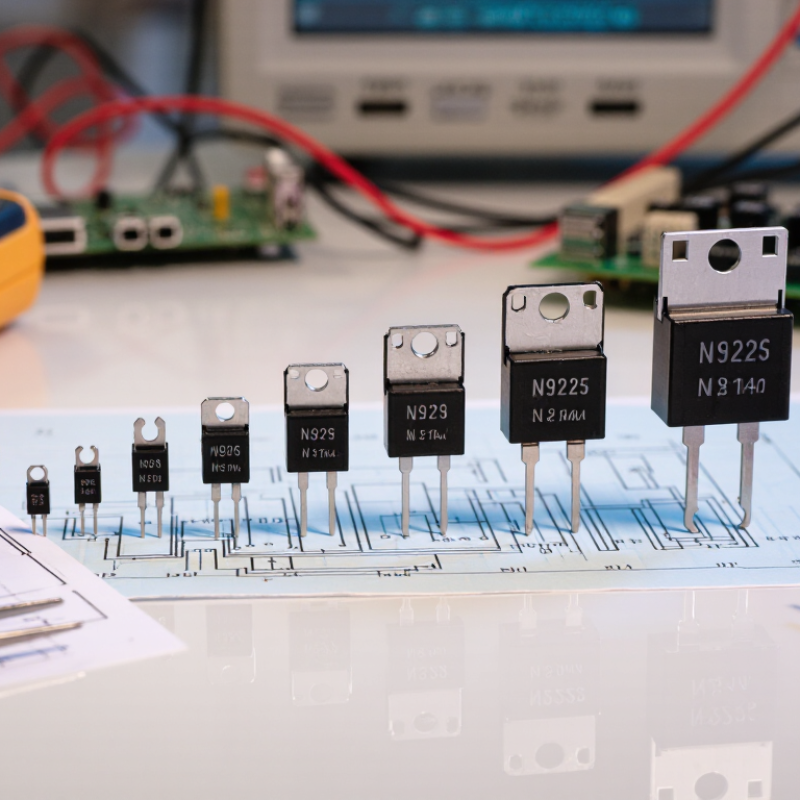
What Is a PNP Bipolar Transistor and How Does It Work?
A PNP bipolar transistor is a three-layer semiconductor device that controls current through two p-type regions and one n-type region. Its terminals are the emitter, base, and collector. Silicon devices often need the emitter to sit about 0.6 to 0.7 volts above the base for conduction. A small base current then controls a larger current moving through the emitter and collector. Conventional current flows from the emitter toward the collector in active operation.
This is the useful picture. In a high-side switching circuit, the emitter connects to the positive supply, while the load usually connects to the collector. Pulling the base lower than the emitter turns the transistor on. Returning the base near the emitter turns it off. That shortcut is not exact. Temperature, load current, and device construction change the required voltage. Saturation also reduces switching losses differently from active amplification.
When evaluating PNP transistor suppliers in 2026, engineers should inspect datasheets, lot traceability, electrical test reports, and thermal specifications. Important values include maximum collector current, collector-emitter voltage, DC current gain, switching speed, and package thermal resistance. A supplier’s sample should be tested under the intended voltage and temperature range. Labels alone are weak evidence. I have seen designs pass a bench test yet fail after heat buildup. Careful derating and independent verification remain necessary, especially when replacing an older component with a similar-looking part.
What Criteria Define the Best PNP Transistor Suppliers in 2026?
The best PNP transistor suppliers in 2026 will be judged by evidence, not attractive catalog prices. WSTS forecast global semiconductor sales at 611.2 billion dollars in 2024, rising to 687.4 billion in 2025. That growth increases sourcing pressure. It also makes verification more important.
A capable supplier should provide complete datasheets, lot-level traceability, and stable production records. Key PNP specifications include collector-emitter voltage, collector current, DC gain, saturation voltage, leakage, and safe operating area. Thermal performance matters too. Ask for curves at actual temperatures, not only room-temperature figures. AEC-Q101 qualification evidence can support demanding automotive applications, while ISO 9001 and IATF 16949 systems indicate disciplined process control. Still, certificates alone prove little.
SIA’s 2024 Factbook reported global semiconductor sales of 526.9 billion dollars in 2023. Such scale encourages second-source planning. The strongest suppliers support engineering samples, parametric test reports, change notifications, and counterfeit-resistant packaging. They should explain wafer origin and final-test locations clearly. Traceability matters.
Do not ignore delivery history. A supplier promising short lead times may lack inventory depth or accurate forecasts. Review at least three production lots, then compare hFE and VCE(sat) variation. My practical concern is simple: a perfect datasheet cannot guarantee perfect field behavior. Board layout, thermal cycling, and load transients still create surprises. The best supplier accepts that uncertainty and helps investigate it.
| Anonymous Supplier Profile | Typical PNP Product Coverage | Typical Collector-Emitter Voltage | Typical Collector Current | Common Package Availability | Automotive Qualification | Quality-System Evidence | Lifecycle and Change Control | Supply-Chain Capability | Overall Evaluation |
|---|---|---|---|---|---|---|---|---|---|
| Profile A | General-purpose switching and low-power amplification PNP transistors | −25 V to −100 V | −100 mA to −2 A | TO-92, SOT-23, SOT-223, TO-220 | Available for selected devices; verify AEC-Q101 listing by part number | ISO 9001 expected; ISO 14001 and IATF 16949 available for automotive-oriented production sites | Formal PCN process, stated last-time-buy policy, and downloadable qualification documentation | Multiple assembly locations and standard reel, tube, and bulk packaging options | Strong general-purpose choice |
| Profile B | High-current PNP switching devices for power-management and load-control circuits | −40 V to −160 V | −1 A to −15 A | TO-220, DPAK, D2PAK, SOT-89 | Device-dependent; confirm qualification temperature and reliability results | ISO 9001 and production traceability expected; audit evidence should be requested for safety-critical programs | Published product-lifecycle statements and controlled wafer, assembly, and test changes | Good fit for high-volume designs when second-source planning is established | Strong power-switching choice |
| Profile C | Small-signal PNP transistors optimized for low noise, analog gain, and matched circuits | −12 V to −80 V | −20 mA to −600 mA | SOT-23, SOT-323, SOT-363, TO-92 | Limited or selected-device coverage | ISO 9001 with electrical test limits, lot traceability, and reliability reports | Strong parametric consistency; verify long-term availability before design release | Well suited to high-mix, low-to-medium-volume electronics manufacturing | Strong analog-design choice |
| Profile D | Ultra-low-voltage and low-saturation PNP transistors for portable and battery-powered equipment | −12 V to −60 V | −50 mA to −1 A | SOT-23, SOT-89, SOT-223 | Selected products only; confirm qualification grade and moisture sensitivity level | ISO 9001; environmental compliance declarations should be checked for each product family | Useful electrical specifications, but PCN timing and lifetime commitments require careful review | Competitive lead times for standard package sizes; allocation risk should be assessed during shortages | Good cost-sensitive option |
| Profile E | High-voltage PNP transistors for industrial controls, relay drivers, and linear-regulation stages | −100 V to −300 V | −100 mA to −5 A | TO-126, TO-220, DPAK, D2PAK | Usually application-specific; request AEC-Q101 evidence where required | ISO 9001 and manufacturing traceability are essential; confirm high-voltage reliability testing | Long-lifecycle product families and documented die revisions are important advantages | Suitable for industrial demand when high-voltage test capacity and continuity are verified | Strong industrial-voltage choice |
| Profile F | Automotive-oriented PNP transistors for body electronics, thermal management, and actuator control | −30 V to −100 V | −100 mA to −10 A | SOT-23, SOT-89, DPAK, D2PAK, TO-220 | AEC-Q101 products available in selected ranges | IATF 16949 manufacturing support, PPAP capability, and documented failure-analysis procedures | Formal PCN, change-notification lead time, traceability, and defined product-longevity commitments | Best evaluated through capacity reservations, dual-site planning, and automotive delivery records | Strong automotive-program choice |
| Profile G | High-speed PNP switching devices for interface circuits, signal conditioning, and compact power stages | −15 V to −80 V | −50 mA to −3 A | SOT-23, SOT-223, SOT-89, DFN | Available for selected product lines | ISO 9001 with published switching, gain, leakage, and thermal specifications | Good documentation for electrical performance; verify package-change and die-change controls | Strong availability for compact surface-mount packages and automated assembly | Strong compact-design choice |
| Profile H | Low-cost standard PNP transistor families for consumer, lighting, and general electronics | −20 V to −100 V | −100 mA to −6 A | TO-92, SOT-23, SOT-89, TO-220 | Limited; verify exact ordering code | Basic quality certification may be available; independent audit and sample testing are recommended | Cost advantage may be offset by weaker lifecycle visibility or less detailed PCN documentation | Suitable for non-critical, price-sensitive products with incoming inspection controls | Value-oriented option |
Which Companies Are the Leading PNP Transistor Suppliers in 2026?
In 2026, leading PNP transistor suppliers will be judged by more than catalog size. Large integrated manufacturers remain strong because they control wafer production, assembly, testing, and quality systems. WSTS reported that global semiconductor sales reached about 627 billion dollars in 2024. Its 2025 forecast also indicated continued market growth, increasing pressure on supply stability. This matters when buyers need small-signal PNP devices for sensor boards, automotive controls, and industrial power stages.
Supplier leadership should reflect verified performance. Key measures include current gain consistency, leakage current, switching speed, package availability, and qualification data. Automotive customers may also require AEC-Q101 testing and long-term traceability. Market research from Omdia continues to show that supply-chain resilience and regional manufacturing capacity influence component selection. The strongest suppliers usually provide parametric models, failure-analysis support, and stable lifecycle notices. A ranking is never perfect. Distribution strength can hide uneven technical support.
Tips: Compare datasheet limits at the same temperature. Check second-source availability before approving a design. Ask for recent quality reports, not old marketing claims. For a practical evaluation, test PNP transistors at the actual load current and base drive. Laboratory results may differ from headline specifications. That uncomfortable gap deserves attention.
What Are the 2026 Best PNP Bipolar Transistor Suppliers?
This supplier-neutral benchmark compares representative PNP bipolar transistor classes by published maximum collector-current ratings. The values reflect commonly available datasheet specifications and are intended for technical supplier evaluation rather than company or brand ranking.
How Do 2026 PNP Transistor Suppliers Compare by Product Quality?
What Are the 2026 Best PNP Bipolar Transistor Suppliers?
Product quality separates PNP bipolar transistor suppliers more clearly than catalog size. The WSTS Spring 2024 Market Forecast estimated the global semiconductor market at 611.2 billion dollars in 2024. That growth increases sourcing pressure, but it does not prove consistent transistor quality. Buyers should compare hFE ranges, collector-emitter saturation voltage, leakage current, and thermal stability by production lot. These figures reveal performance under real circuit conditions.
The strongest suppliers provide dated test reports, wafer traceability, change notifications, and stable packaging controls. For automotive applications, AEC-Q101 qualification offers a useful benchmark for discrete semiconductor reliability. JEDEC JESD47 also supports a structured approach to stress testing and qualification. In practical reviews, consistent Cpk data can matter more than an attractive maximum hFE value. A high typical value may hide weak lower-limit performance. That detail is easy to miss.
Tips:
Request three recent lot reports. Compare minimum, typical, and maximum readings. Check test temperatures and sampling sizes. Confirm whether the supplier controls counterfeit risk through documented chain-of-custody procedures. Ask for failure-analysis records when available. Be cautious with suppliers offering unusually low prices and limited technical evidence. Perfect quality scores are unrealistic. Some reports remain incomplete, and that deserves reflection before approval. Product quality should be judged through repeatable evidence, not confident marketing language.
How Can Buyers Choose the Right PNP Bipolar Transistor Supplier?
Choosing the right PNP bipolar transistor supplier requires more than comparing unit prices. The WSTS Autumn 2024 report forecast global semiconductor sales at about 627 billion US dollars for 2024, with further growth expected in 2025. That expansion can pressure lead times and quality controls. Buyers should request current datasheets, production locations, standard lead times, and documented change-notification procedures.
Electrical evidence matters most. Compare VCEO, collector current, hFE, saturation voltage, leakage current, and switching speed at the same test conditions. A high hFE number can look attractive, yet it may hide weak performance at low temperatures. Check safe operating area curves, not only headline ratings. Request samples from multiple lots and test them under the real load, temperature, and PCB layout. Cheap is not safe.
Supplier reliability also depends on traceability. Ask for lot codes, certificates of conformity, calibration records, and a clear process for handling nonconforming parts. The IPC-1782 standard provides a useful framework for electronics supply-chain traceability, although compliance claims still require verification. Industry reports often describe market growth, but they rarely prove one supplier’s consistency. That gap matters. A polished website proves little, and I would not approve a supplier without an independent audit or practical sample testing. Also review lifecycle notices, packaging quality, moisture controls, and replacement approval rules before placing a volume order.