
Connect with us today to learn more about our industrial automation solutions—and how to commission them for your application.
What Are the 2026 Top Li Polymer Battery Suppliers?
The 2026 Li-Polymer battery market is becoming more competitive, but identifying the true leaders requires more than checking production volume. A top supplier must demonstrate stable energy density, dependable cycle life, strong safety controls, and responsive engineering support. These requirements matter in smartphones, wearable devices, drones, medical equipment, and compact electric systems. Small details matter. A swollen pouch cell can damage an entire product line.
This guide examines suppliers such as ATL, Sunwoda, EVE Energy, LG Energy Solution, and Samsung SDI. Their positions may differ by application, region, and contract size. Some companies excel in high-volume consumer electronics. Others perform better with customized dimensions, low-temperature performance, or demanding quality audits. Professor M. Stanley Whittingham has emphasized that advanced batteries must be “safe, reliable, and affordable.” That principle remains useful for evaluating every Li-Polymer battery manufacturer in 2026.
The ranking is not perfectly simple. Public data often combines lithium-ion and polymer production, while supplier claims may use different testing conditions. That creates uncertainty. A high capacity figure does not always mean better field performance. Buyers should compare verified cycle-life data, safety certifications, traceability, defect rates, and delivery records. Factory visits can reveal more than polished brochures. Even this approach has limits. Pricing, regional capacity, and material availability may change quickly. Therefore, this overview presents leading candidates rather than a permanent verdict, helping readers assess quality, reliability, and practical fit before selecting a long-term battery partner.
What Are Lithium Polymer Batteries and How Do They Work?
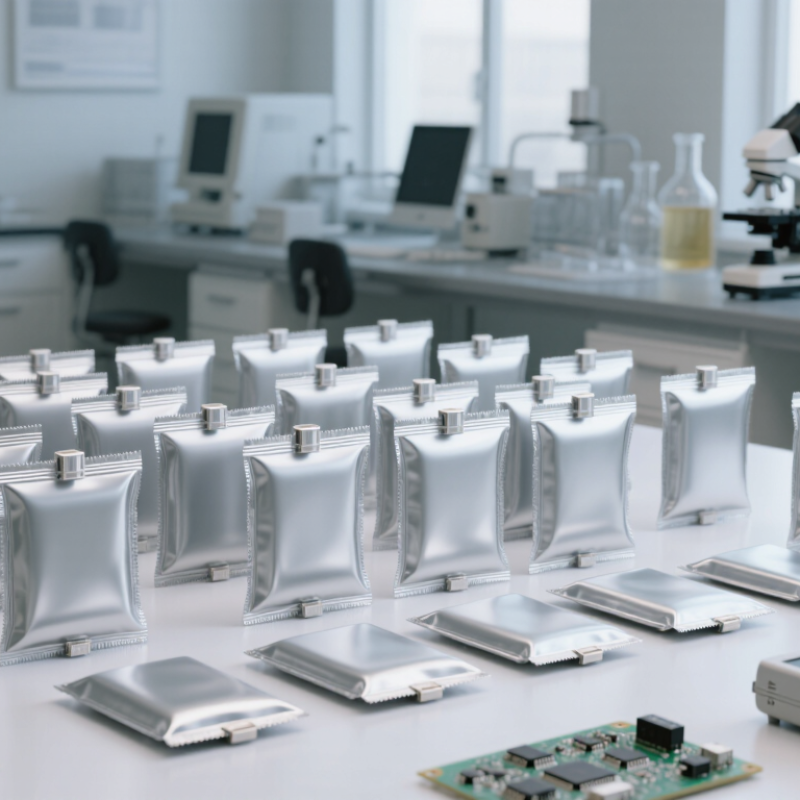
Lithium polymer batteries are rechargeable lithium-ion cells using a flexible pouch and polymer-based electrolyte system. The word “polymer” can mislead. Most commercial cells use a gel-like electrolyte, not a fully solid polymer. Inside, lithium ions move between a graphite anode and a lithium-metal-oxide cathode. During charging, ions travel toward the anode. Electrons move through the charger’s external circuit. During use, both flows reverse and power the device.
A separator keeps the electrodes apart while allowing ions to pass. Aluminum and copper current collectors carry electrical charge from each electrode. The pouch saves space, so designers can create thin packs for drones, medical devices, and compact electronics. However, the pouch can swell when damaged, overcharged, overheated, or poorly stored. It needs a battery-management system for voltage, temperature, and current control.
The International Energy Agency reported that global electric-vehicle battery demand exceeded 1 terawatt-hour in 2024, showing the scale of lithium-ion manufacturing. BloombergNEF’s 2024 Battery Price Survey placed the average lithium-ion pack price near 115 dollars per kilowatt-hour. These figures do not describe every polymer cell, but they reveal strong pressure for lower costs and higher energy density. In practice, supplier comparisons should examine cycle testing, cell consistency, traceability, and failure-response records. A perfect rating is unrealistic. Even careful testing can miss aging caused by heat, vibration, or irregular charging.
What Defines a Leading Lithium Polymer Battery Supplier in 2026?
A leading lithium polymer battery supplier offers more than high energy density. It understands how cells behave inside real products, from compact medical devices to lightweight industrial equipment. Experienced engineers should explain cycle life, discharge limits, swelling risks, and charging conditions clearly. Vague promises deserve caution. Reliable suppliers provide test reports, production records, and traceable material data. They also support prototype testing before large-scale production.
Consistency matters greatly. A dependable supplier controls electrode coating, pouch sealing, moisture levels, and cell thickness. Small variations can affect safety and device performance.
Strong suppliers use automated inspection and sample testing throughout production. They should also discuss transportation rules, quality certifications, and regional compliance requirements. However, no supplier gets every design right. Even skilled teams may revise a cell after testing reveals unexpected heat or reduced capacity. That honesty builds trust.
Tips: Request several samples, not one. Compare capacity, internal resistance, swelling, and discharge performance under identical conditions. Ask how failed cells are investigated. Confirm lead times, replacement policies, and communication during engineering changes. Visit the facility when possible, or arrange an independent audit. A polished presentation is useful, but repeatable test evidence matters more. Think carefully.
Which Companies Are the Top Lithium Polymer Battery Suppliers?
Which companies are the top lithium polymer battery suppliers in 2026? The strongest candidates are manufacturers with proven pouch-cell production, stable electrolyte control, and audited safety systems. Industry rankings should not rely on factory size alone. Battery cells may look similar, yet separator quality, tab welding, and swelling control create major differences in real use.
S&P Global Mobility reports continued growth in global battery demand, driven by electric mobility and energy storage. Grand View Research also identifies lithium-ion pouch cells as a growing segment because they offer flexible shapes and efficient packaging. Based on these reports, the leading supplier group includes large Asian cell producers, specialized aerospace battery makers, and contract manufacturers serving consumer electronics. Their advantages include automated coating lines, high-volume quality inspection, and traceable raw-material testing.
Look closely at warranty data.
A reliable supplier should publish cycle-life results under defined temperatures, discharge rates, and storage conditions. UL Solutions and IEC testing frameworks remain useful reference points, although certification alone does not prove long-term field performance. Some supplier claims still depend on ideal laboratory conditions. That deserves scrutiny. In practice, buyers should compare swelling after repeated charging, capacity retention, batch consistency, and response time for technical support. The “top” company may therefore differ between drones, wearable devices, medical equipment, and compact electric vehicles. Supplier selection needs evidence, not attractive specifications.
| Anonymous Supplier Profile | Primary Market Position | Typical Li Polymer Cell Formats | Typical Energy Density | Key Compliance Capabilities | Common Application Coverage | Supply-Chain Strength | 2026 Evaluation |
|---|---|---|---|---|---|---|---|
| Supplier Profile A | Large-scale consumer electronics and mobility supplier | Pouch cells, custom-shaped cells, multi-cell battery packs | Approximately 180–280 Wh/kg at cell level, depending on chemistry and design | UN 38.3 transport testing, IEC 62133-2, RoHS, REACH, and application-specific quality systems | Smartphones, tablets, wearable devices, drones, handheld equipment, and light electric mobility | High-volume production, automated assembly, multi-region sourcing, and established quality-control systems | Very strong |
| Supplier Profile B | Specialist supplier for small-format and ultra-thin batteries | Ultra-thin pouch cells, curved cells, miniature cells, and low-profile packs | Approximately 160–250 Wh/kg at cell level | UN 38.3, IEC 62133-2, UL-related testing where required, RoHS, and REACH | Wearables, medical monitors, Bluetooth accessories, portable sensors, and compact consumer electronics | Strong engineering customization, short design cycles, and flexible low-to-medium volume production | Strong |
| Supplier Profile C | High-energy-density supplier for aerial and portable power systems | High-rate pouch cells, lightweight packs, and reinforced battery modules | Approximately 200–300 Wh/kg at cell level for selected high-energy products | UN 38.3, IEC 62133-2, battery-management-system validation, and application-specific environmental testing | Consumer drones, robotics, cameras, power tools, and portable industrial equipment | Strong cell matching, high-rate discharge expertise, and advanced thermal-management integration | Very strong |
| Supplier Profile D | Automotive and light-electric-vehicle battery-pack supplier | Large pouch cells, stacked-cell modules, and integrated battery packs | Approximately 160–250 Wh/kg at cell level, with emphasis on cycle life and safety | UN 38.3, ISO 9001, IATF 16949 for qualified automotive operations, and relevant vehicle-level testing | Electric bicycles, scooters, mobility devices, low-speed vehicles, and industrial vehicles | Strong pack integration, traceability, thermal controls, and long-term program support | Very strong |
| Supplier Profile E | Industrial and medical-device battery specialist | Custom pouch cells, protected battery packs, and redundant multi-cell assemblies | Approximately 150–240 Wh/kg at cell level | UN 38.3, IEC 62133-2, IEC 60601-related design considerations where applicable, RoHS, and REACH | Medical devices, inspection equipment, emergency systems, instrumentation, and professional electronics | High documentation quality, strong change control, customized protection circuits, and dependable after-sales support | Strong |
| Supplier Profile F | Cost-competitive supplier for high-volume standard products | Standard pouch cells, cylindrical-to-pack alternatives, and pre-engineered battery packs | Approximately 160–260 Wh/kg at cell level | UN 38.3, IEC 62133-2, RoHS, REACH, and customer-specific factory audits | Consumer electronics, toys, smart-home devices, lighting products, and portable accessories | Competitive pricing, broad standard catalog, scalable production, and efficient procurement support | Strong value |
| Supplier Profile G | Premium supplier focused on long cycle life and safety performance | Long-life pouch cells, low-swelling cells, and protected rechargeable packs | Approximately 150–230 Wh/kg at cell level | UN 38.3, IEC 62133-2, reliability testing, abuse testing, RoHS, and REACH | Connected devices, professional tools, energy-storage accessories, and equipment requiring extended service life | Strong reliability testing, conservative cell design, stable specifications, and low field-failure focus | Strong |
How Do the Leading Suppliers Compare in Technology and Manufacturing?
In 2026, leading lithium-polymer battery suppliers differ more in execution than in headline claims. Their strongest products use stacked pouch cells, high-nickel cathodes, silicon-enhanced anodes, or safer lithium-iron-phosphate chemistry. Each choice changes energy density, cycle life, cost, and thermal behavior. There is no universal winner.
BloombergNEF reported an average lithium-ion pack price of $115 per kWh in 2024, a 20% annual decline. This pressure favors suppliers with automated coating, precise electrolyte filling, and high production yields. SNE Research recorded global electric-vehicle battery usage above 1,100 GWh in 2024, showing the scale required from serious manufacturers. Yet volume alone proves little. A factory producing millions of cells can still struggle with swelling, tab welding, or uneven moisture control.
Technology must be judged beside manufacturing discipline. The International Energy Agency reported that lithium-iron-phosphate batteries represented nearly half of the global electric-car battery market in 2024. That trend supports suppliers offering lower-cost, stable chemistries, while premium applications still demand higher specific energy. Independent testing should examine capacity retention, puncture resistance, fast charging, and storage performance. Supplier comparisons often overlook low-temperature cycling. That is a mistake. Product samples may perform well, but long-term field data remains limited. Buyers should request traceability records, batch-level defect rates, and audit results before accepting polished technical presentations.
How Should Buyers Choose a Lithium Polymer Battery Supplier in 2026?
Buyer decisions should begin with evidence, not attractive pricing. The International Energy Agency reported that global electric-vehicle battery demand exceeded 750 GWh in 2023, rising about 40% year on year. However, public reports rarely separate lithium polymer cells from other lithium-ion formats. That limitation matters. Suppliers should therefore provide product-specific test records, not broad market claims.
Check energy density, cycle life, swelling control, thermal behavior, and capacity tolerance under real operating conditions. Request samples from the same production line used for mass orders. A cell performing well in a laboratory may behave differently inside a sealed device. It happens. Review IEC 62133-2 and UN 38.3 test evidence, along with factory quality systems, process traceability, and change-control procedures. ISO 9001 certification can support confidence, but it cannot replace independent validation.
Reliability also depends on communication. Ask how quickly the supplier reports defects, manages recalls, and maintains material traceability. Compare warranty terms using measurable limits, such as retained capacity after a defined number of cycles. The International Energy Agency notes continued pressure on battery costs and supply chains, yet the cheapest quotation may hide weaker inspection or unstable raw-material sourcing. Buyers should score suppliers across safety, consistency, documentation, lead time, and technical support. No supplier scores perfectly. A transparent weakness is often safer than a polished promise.
What Are the 2026 Top Li Polymer Battery Suppliers?
How Should Buyers Choose a Lithium Polymer Battery Supplier in 2026?
The chart shows typical voltage reference points for a single-cell lithium polymer battery: approximately 3.7 V nominal voltage, 4.2 V at full charge, and about 3.0 V as a commonly used low-voltage cutoff. Buyers should confirm the supplier’s cell chemistry, protection settings, cycle-life data, UN 38.3 transport test reports, IEC 62133-2 compliance where applicable, production traceability, and quality consistency before placing an order. Actual limits may vary by cell design and application.