7 Tips for Choosing a Single Phase VFD
Industry reports place motor-driven systems at the center of energy management. The U.S. Department of Energy estimates that motor systems consume about 68% of industrial electricity in the United States. The International Energy Agency has reported that electric motors use roughly 45% of global electricity. These figures make speed control more than a purchasing detail. A correctly selected single phase vfd can reduce throttling losses, soften motor starts, and improve process control. The wrong model may overheat, trip repeatedly, or shorten motor life.
This guide presents seven practical checks for choosing a suitable drive. They include motor voltage, rated current, load behavior, enclosure protection, wiring, control method, and technical support. Begin with the motor nameplate, not horsepower alone. A 1.5 kW conveyor motor faces different demands from a ventilation fan. Starting torque, overload capacity, acceleration time, and braking requirements all matter. Check the input and output phases carefully. Some drives accept single-phase input but provide three-phase output. They may not operate a standard single-phase capacitor motor.
Standards also deserve attention. IEC 61800-5-1 addresses electrical, thermal, and mechanical safety for adjustable speed drive systems. The DOE’s motor-system guidance supports evaluating the complete system, rather than focusing only on the inverter. In practice, inspect the cabinet space, cooling airflow, cable length, and ambient temperature. Small details matter. A dusty workshop can expose weak enclosure choices quickly. No checklist is perfect, and real applications often reveal assumptions missed during selection. Therefore, verify the manufacturer’s manual, protection ratings, compatibility data, and local installation requirements before energizing the equipment.
Define the Motor and Power Requirements
Before choosing a single-phase VFD, read the motor nameplate carefully. Record its rated voltage, full-load current, frequency, power, and speed. Do not size the drive by horsepower alone. Current is usually the safer reference.
Many single-phase VFDs accept single-phase input but produce three-phase output. Therefore, confirm that the motor is a compatible three-phase induction motor. A capacitor-start single-phase motor usually cannot connect directly to this type of drive. Check the wiring diagram, terminal labels, and motor connection voltage before applying power.
Measure the available supply at the installation point. A circuit marked 230 volts may show a lower reading under load. That detail matters. Compare the measured voltage with the VFD input range and the motor’s configured voltage. Select a drive with an output-current rating above the motor’s full-load current, especially for pumps, conveyors, or machines that start under load. Allow extra capacity when acceleration is frequent or ventilation is poor.
Keep it practical.
In field inspections, oversized drives are sometimes chosen for comfort, yet poor motor data still causes faults. I have also seen a small motor paired with a drive that looked correct on paper but overheated during repeated starts. Record the starting behavior, ambient temperature, and cable length. These details may expose a weak selection before installation. Then set the motor data accurately in the VFD, rather than relying on factory defaults.
Check Input, Output, and Phase Compatibility
7 Tips for Choosing a Single Phase VFD
Check the input label before comparing prices.
A single-phase supply may be 120, 230, or 240 volts, with different frequency requirements. Confirm the available amperage, breaker capacity, and phase count at the installation point. A voltage mismatch can cause nuisance trips, overheating, or immediate failure. It is easy to overlook the frequency.
Check the output carefully.
Many single-phase-input VFDs produce three-phase output, but the motor must support that connection. Match the VFD output voltage, rated current, overload capacity, and frequency range with the motor nameplate. Do not size only by horsepower. A heavily loaded conveyor may need more current than its horsepower suggests. Also verify whether the motor requires a delta or wye connection. The wrong link arrangement can quietly damage windings.
The International Energy Agency reports that electric motor-driven systems consume more than half of global electricity and about 70% of industrial electricity. Small compatibility errors therefore have measurable energy and maintenance costs. IEC 61800-5-1 provides safety requirements for adjustable speed electrical power drive systems, including insulation and protective measures. Check its relevant requirements with qualified personnel.
A practical commissioning check is simple:
measure voltage at the VFD input and motor terminals, then observe current during acceleration. Leave room for imperfect conditions. Cable length, ambient heat, and frequent starts can change performance.
I once treated a motor’s rated current as a fixed truth; the application proved otherwise. That assumption needed revision.
Match the VFD Rating to the Motor Load
7 Tips for Choosing a Single Phase VFD
Match the VFD rating to the motor load, not only the motor’s nameplate horsepower. Tip 1: Read the motor’s full-load amperage and voltage first. Tip 2: Select a VFD whose continuous output current meets or exceeds that amperage. A larger horsepower rating alone can mislead. The IEA’s Energy Efficiency 2017 analysis estimates that electric motor systems consume roughly half of global electricity. Correct sizing can therefore reduce avoidable losses.
Tip 3: Check the application’s load pattern. A conveyor may need steady torque, while a fan usually needs variable torque. Tip 4: Allow for starting and short overload demands. Tip 5: Review the VFD’s overload rating, commonly expressed as a percentage for a limited time. Measure the real load when possible. Field readings are better than guesses.
Tip 6: Consider heat, altitude, enclosure, and switching frequency. Derating may apply in a hot control cabinet. Tip 7: Confirm single-phase input and three-phase motor compatibility before installation. IEC 60034-12 provides guidance on motor starting performance, but it does not replace application testing. I have seen carefully calculated selections fail because the pump was partially blocked. That detail matters. An oversized VFD may seem safer, yet it can reduce control resolution and increase cost. Recheck the actual current after commissioning, especially during peak demand.
7 Tips for Choosing a Single Phase VFD - Match the VFD Rating to the Motor Load
| Tip |
Selection Dimension |
What to Verify |
Practical Selection Guidance |
Reference Example |
| 1 |
Motor nameplate current |
Record the motor’s rated voltage, frequency, phase, horsepower or kilowatt rating, and full-load amperes (FLA). |
Select the VFD by output current, not by horsepower alone. The VFD continuous output current should be at least equal to the motor nameplate FLA. |
A 230 V motor rated at 8.2 A requires a VFD with a continuous output rating of at least 8.2 A before any application derating. |
| 2 |
Motor load type |
Determine whether the load is variable torque or constant torque. |
Fans and centrifugal pumps usually have variable-torque characteristics. Conveyors, compressors, positive-displacement pumps, mixers, and hoists commonly require constant-torque capability. |
A centrifugal fan generally needs less starting torque than a loaded conveyor of the same motor size. |
| 3 |
Overload capacity |
Compare the required starting and acceleration torque with the VFD’s overload rating and duration. |
For demanding constant-torque loads, choose a heavy-duty rating when available. Many drives provide approximately 150% of rated current for 60 seconds, but the actual value must be confirmed in the drive specifications. |
A 10 A motor with a 150% overload requirement may need approximately 15 A of short-term output capability. |
| 4 |
Single-phase input derating |
Confirm that the VFD is approved for single-phase input at the available supply voltage and frequency. |
Some VFDs designed primarily for three-phase input require output-current derating when operated from single-phase power because the input rectifier and DC bus experience higher current stress. |
A drive listed for 10 A on three-phase input may have a lower allowable motor-output current when supplied from single-phase power. |
| 5 |
Supply and motor voltage |
Match the incoming single-phase voltage and the motor’s rated voltage to the VFD input and output specifications. |
A common arrangement is single-phase 200–240 V input feeding a three-phase 200–240 V motor. Do not connect a motor to a voltage or phase configuration outside the VFD’s listed limits. |
A 230 V three-phase motor must be connected according to its nameplate wiring diagram, typically in the low-voltage configuration when specified. |
| 6 |
Speed range and cooling |
Identify the minimum operating speed, required speed range, and the motor’s cooling method. |
A standard self-cooled motor may overheat when operated continuously at low speed because its shaft-mounted fan moves less air. Use thermal protection or an independently cooled motor when low-speed torque is continuous. |
Running a self-cooled motor at 25 Hz for extended periods can require load reduction or additional cooling, depending on the motor design. |
| 7 |
Environment and installation |
Check enclosure rating, ambient temperature, altitude, ventilation, cable length, and braking requirements. |
Apply the manufacturer’s derating rules for high temperature, high altitude, dusty locations, restricted airflow, or long motor cables. Add a braking resistor only when the application regenerates significant energy during deceleration. |
A drive installed above 1,000 m or inside a hot electrical cabinet may require reduced output current or improved cabinet cooling. |
Key sizing rule: The selected VFD’s allowable continuous output current, after all applicable derating factors, should be equal to or greater than the motor nameplate FLA and suitable for the load’s required overload performance. Always verify final settings and wiring against the motor and VFD manuals.
Evaluate Control Features and Operating Conditions
Choosing a single phase VFD requires more than matching voltage and horsepower. Check the motor’s rated current, frequency, and starting load. A pump, fan, or conveyor may need different control behavior. The drive should support adjustable acceleration and deceleration times. These settings reduce belt shock and nuisance trips. Look for sensorless vector control when steady torque matters. Simple V/f control may suit basic fans and pumps. It is often easier to configure.
Operating conditions can change the correct choice. Measure the enclosure temperature near the installation point, not only the room temperature. Dust, moisture, and poor airflow can shorten service life. Select a suitable protection rating and leave clear space around cooling vents. Derating may be necessary in hot environments or at high elevations. Read the drive’s installation manual carefully. Small details matter.
Control features deserve practical testing. Confirm whether the drive accepts terminal, keypad, analog, or communication commands. Check emergency stopping behavior and restart settings before connecting the load. A built-in overload function protects the motor, but it cannot replace correct motor data. I once saw a drive trip repeatedly because the acceleration time was too short. The setting looked reasonable on paper. Real machinery disagreed. Review fault history after commissioning, and record current readings during startup and normal operation. That record helps distinguish a configuration problem from a mechanical issue. Do not ignore unusual vibration or rising motor temperature. They may reveal problems the display cannot show.
7 Tips for Choosing a Single-Phase VFD
Evaluate each drive against motor compatibility, control capability, electrical ratings, and the actual operating environment. The priority scores below are an illustrative selection guide, not a substitute for checking the motor nameplate and VFD specifications.
Give the highest attention to motor compatibility, output current, overload capacity, and the required control method. Confirm input voltage, ambient temperature, enclosure rating, braking needs, cable length, and EMC requirements before installation.
Compare Safety Functions, Installation, and Support
7 Tips for Choosing a Single Phase VFD
Safety should be compared before price. Check whether the drive provides Safe Torque Off, emergency stopping, and fault diagnostics. STO prevents unintended motor torque, but it does not isolate electrical power. For higher-risk machinery, compare SS1, SLS, and certified SIL or PL ratings under IEC 61800-5-2. Verify the complete machine assessment, not only the drive certificate. The IEA’s Energy Efficiency 2023 report estimates that electric motor systems use about 53% of global electricity, so small safety or efficiency decisions can affect large operating loads. Use qualified personnel for testing.
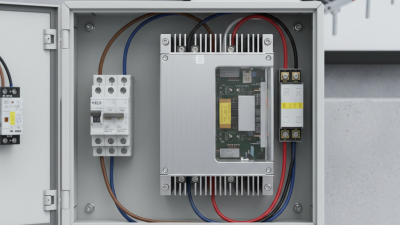
Installation details often decide reliability. Confirm the single-phase input range and required output current. Many drives derate their output when supplied by single-phase power. Check the manual carefully. Allow space around cooling vents, use correct grounding, and separate control wiring from motor cables. Review EMC requirements and enclosure protection for dusty or damp rooms. The U.S. Department of Energy’s Improving Motor and Drive System Performance sourcebook notes that motor systems can consume more than 70% of industrial electricity. Poor installation can waste that energy through heat, nuisance trips, and premature failures.
Support deserves a practical comparison. Ask for commissioning guidance, fault-code explanations, firmware procedures, and replacement timelines. Request evidence of local technical coverage. A clear wiring diagram matters during a night-shift repair. In my experience, many selection mistakes begin with assumptions about compatibility. I have also seen a careful checklist miss cable length limits. Recheck them with the actual motor, load, and site conditions before ordering.