10 Best Pool Accessories Every Buyer Needs?
Buying a pool involves more than choosing a stylish float or colorful lights. The right Pool Accessories improve safety, water quality, comfort, and daily maintenance. They also reduce small frustrations, such as cloudy water, slippery steps, or a skimmer basket overflowing after a windy afternoon.
Rudy Stankowitz, a pool-industry educator and water-treatment expert, offers a practical reminder: “A clean pool starts with consistent testing, not with guessing.” That principle shapes this guide to the ten accessories every buyer should consider. A reliable test kit, telescopic pole, brush, skimmer net, and automatic or manual vacuum can form the maintenance foundation. A fitted cover can limit debris and evaporation. A thermometer helps swimmers understand changing water conditions. Non-slip steps, rescue equipment, and properly rated lighting add useful safety support. Comfortable floats and a durable storage solution make the pool area easier to enjoy.
Not every pool needs every product. Size matters. So does climate. A small backyard pool may need fewer tools, while a leafy property demands stronger cleaning equipment. I have found that inexpensive accessories can fail quickly when exposed to sun and chlorine. That lesson is easy to overlook. Buyers should check material quality, compatibility, warranty terms, and replacement-part availability before paying. The best choice is rarely the most attractive one. It is the accessory that performs reliably beside real water, real weather, and real maintenance habits.
Essential Pool Accessories for Safety and Water Quality
10 Best Pool Accessories Every Buyer Needs?
A safe pool begins with visibility, control, and clean water. A fitted safety cover limits accidental entry and reduces leaves, sunlight, and evaporation. A compliant barrier or self-closing gate adds another layer of protection. Keep a rescue hook and a suitable flotation device beside the pool. They should remain easy to reach, not buried in a storage box. A non-slip mat near ladders can reduce wet-foot slips. Never treat it as a replacement for active supervision.
Water testing deserves equal attention. A reliable test kit measures pH, sanitizer level, alkalinity, and sometimes calcium hardness. Test at consistent times, especially after heavy rain or frequent swimming. A floating thermometer helps explain sudden chemical changes. A skimmer net, wall brush, and manual vacuum remove debris before it strains the filtration system. Clean the filter basket regularly. Small neglect becomes cloudy water.
I have found that buyers often purchase cleaning tools but forget a written maintenance log. Record test results, cleaning dates, and unusual odors. This makes patterns easier to identify and supports safer decisions. Follow the equipment instructions and local pool-safety requirements. Do not guess chemical amounts. Water may look clear while its balance remains unsuitable. A drain cover inspection is also wise, although many owners overlook it. That oversight can become serious.
Comfort and Convenience Accessories for Everyday Pool Use
10 Best Pool Accessories Every Buyer Needs?
Comfort matters as much as water quality during everyday pool use. A firm, quick-drying lounger supports longer sessions without leaving deep marks on the skin. Add a non-slip step mat, shaded side table, waterproof storage box, and soft towel hooks near the exit. These small details reduce wet footprints and make the pool area feel less chaotic. A floating drink tray is useful, but it should stay away from crowded swimming lanes.
The Pool & Hot Tub Alliance reports that the U.S. pool and spa sector supports hundreds of thousands of jobs and serves millions of residential pool owners. That scale reflects a practical truth: buyers need accessories that survive frequent use. Look for corrosion-resistant hardware, washable fabrics, rounded edges, and storage that drains quickly. Energy Star guidance also shows that efficient pool pumps can reduce energy use substantially compared with standard models. A timer or simple water-flow monitor may improve convenience, although technology cannot replace regular maintenance. I once underestimated storage space. That mistake made every towel and toy look untidy.
Tips: Keep a rescue hook, first-aid kit, and clearly marked depth signs within reach. The CDC identifies drowning as a leading cause of death for young children. Comfort accessories should never block visibility. Check cushions, suction cups, and ladder grips each week. Replace anything cracked, slippery, or faded. A cheap accessory can become an expensive distraction.
Cleaning Tools for Maintaining a Clear and Healthy Pool
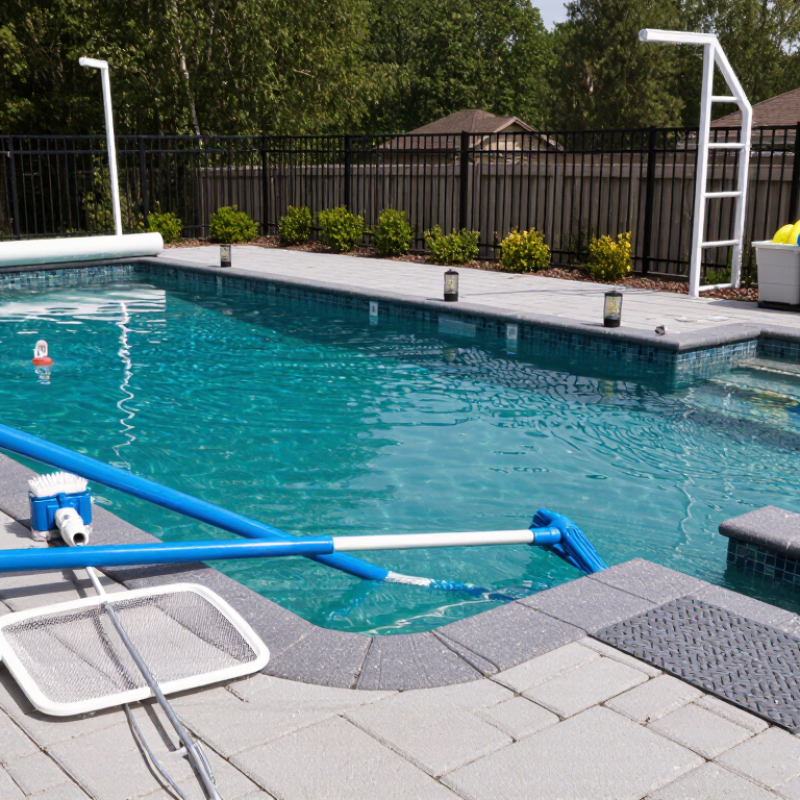
A clear pool starts with the right cleaning tools, not expensive decoration. A skimmer net removes leaves before they sink and stain the surface. A telescopic pole gives safer reach around corners and deep steps. Use a stiff pool brush weekly, especially along the waterline, where oils and sunscreen collect. A manual or automatic vacuum then lifts fine debris from the floor.
The CDC’s Model Aquatic Health Code recommends maintaining pool water between pH 7.0 and 7.8. Test the water with reliable strips or a liquid kit before adjusting chemicals. The CDC also reports about 4,000 fatal unintentional drownings annually in the United States. Clean, balanced water cannot prevent every accident, but strong visibility supports safer supervision. I still miss a leaf sometimes. That small mistake can become cloudy water after heavy rain.
Tips: Keep a skimmer, brush, vacuum, test kit, and spare filter nearby. Test water two or three times weekly, and test again after storms or crowded use. Rinse the filter according to its instructions, but avoid over-cleaning it. A little trapped debris can improve filtration. Record each reading in a simple notebook. This habit exposes slow changes that memory often hides.
10 Best Pool Accessories Every Buyer Needs
Cleaning Tools for Maintaining a Clear and Healthy Pool
This chart shows a practical starting schedule for using or checking common pool-maintenance accessories during a typical swimming season. Surface cleaning and water testing are performed several times per week, while brushing, vacuuming, and filter-related checks are generally completed weekly. Actual frequency depends on pool size, weather, debris levels, bather load, and the type of filtration system.
Equipment for Poolside Entertainment and Relaxation
10 Best Pool Accessories Every Buyer Needs?
Equipment for Poolside Entertainment and Relaxation
A comfortable pool area needs more than water and sunshine. In my experience, ten accessories make poolside time easier: floating loungers, inflatable pillows, a shade umbrella, waterproof drink holders, a compact cooler, soft towels, a storage basket, poolside lighting, floating games, and a non-slip mat. These items support both quiet relaxation and casual entertainment. A stable lounger helps you read without constant adjustment. A shaded seat protects skin from excessive sun exposure. A cooler keeps water within reach, so guests take fewer trips indoors.
Choose equipment according to your space, climate, and swimming habits. Look for strong seams, smooth edges, and easy-clean materials. Floating items should be checked for air loss before use. Poolside lights and speakers must be designed for wet environments, with cords kept away from standing water. Safety remains more important than appearance. A decorative accessory is not useful if it blocks walking paths or becomes slippery.
Tips: Keep drinks in sealed containers. Store accessories after windy weather. I still forget to dry cushions quickly, and mildew appears sooner than expected. Test every inflatable regularly. Leave one clear area around the pool for safe movement. A simple storage box also reduces clutter and keeps small games from disappearing. Children need supervision near every floating accessory, even when the water looks calm.
How to Choose the Right Accessories for Your Pool Needs
Choosing pool accessories should begin with your pool’s size, surface, depth, and daily use. A small above-ground pool needs different tools than a large in-ground pool. Measure storage space too. Oversized equipment often becomes difficult to handle and easy to neglect.
From practical pool maintenance experience, a reliable testing kit is more valuable than decorative lighting. It helps monitor pH and sanitizer levels before swimmers notice cloudy water or irritation. Choose a skimmer with a comfortable handle, a brush suited to your pool surface, and a vacuum that matches your filtration system. A strong cover can reduce debris, evaporation, and cleaning time, but it must fit securely. Safety rails, non-slip steps, and clear lighting also deserve attention, especially around evening use. Appearance matters, but safe access matters more.
Tips: Check compatibility before buying. Read the pool equipment manual, measure connection sizes, and inspect materials for corrosion resistance. Store brushes and nets out of direct sunlight. Replace worn parts early. I once chose a convenient-looking accessory that was too large for the storage area, which made regular cleaning less likely. That mistake still shapes my recommendations. Seasonal weather, children’s swimming habits, and maintenance confidence should influence every purchase. Some buyers need fewer accessories, not more.