
Connect with us today to learn more about our industrial automation solutions—and how to commission them for your application.
How to Choose the Best Solar Street Light for Your Needs?
Choosing the right Solar Street Light can be a daunting task. With many options available, it’s vital to know what features matter most. Solar Street Lights provide illumination while promoting sustainability. They harness solar energy, reducing electricity costs and environmental impact. However, not all solar lights are created equal.
Consider the brightness, battery life, and installation ease. Take time to research different brands and user reviews. Look for reliable manufacturers with a reputation in the market. Overlooking these factors may lead to dissatisfaction. Sometimes, cheaper options may lack durability or illumination.
Understanding your specific needs is key. Think about the area you want to illuminate and how much light is required. Assess your local climate, as it affects solar performance. Each decision should be informed and thoughtful, ensuring the chosen Solar Street Light meets your expectations.
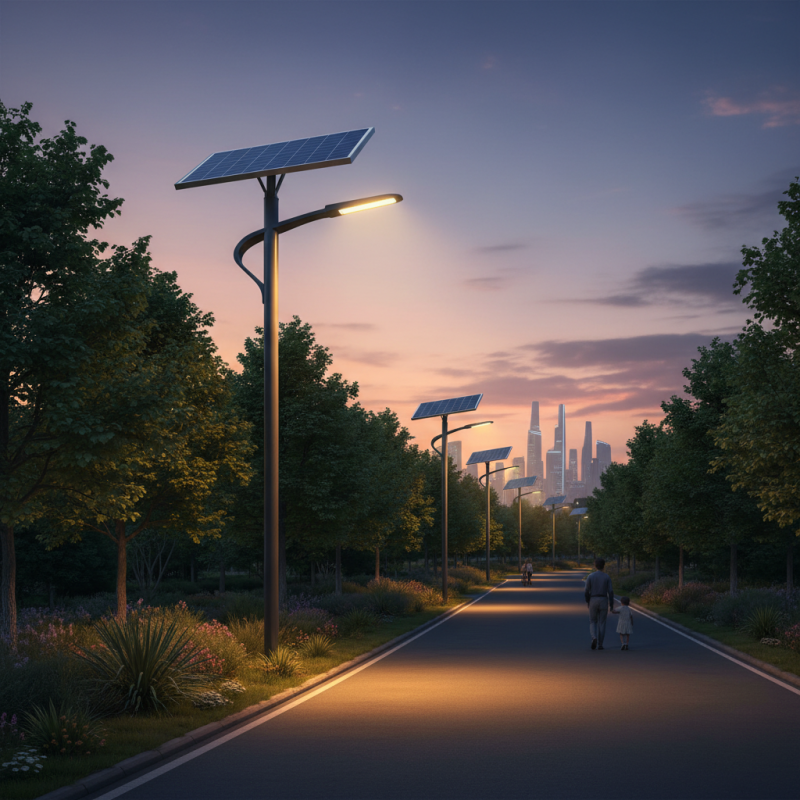
Understanding Solar Street Lights: Technology and Functionality
Solar street lights are becoming more popular due to rising energy costs and environmental concerns. They rely on solar panels to capture sunlight during the day, converting it into energy stored in batteries for nighttime use. Understanding the technology behind solar street lights can help you make informed decisions.
These lights consist of several components. The solar panel is crucial, as it determines how efficiently the light charges. LED technology is common, providing bright illumination while conserving energy. Battery capacity also matters; larger batteries offer longer illumination hours. Wind and rain can affect performance, so consider your local climate when selecting a model.
Another aspect to reflect on is the installation process. Proper placement ensures maximum sunlight exposure. There may be challenges with tree cover or nearby buildings. You might also need to think about the light's motion sensor capabilities, which can save energy. Assessing your specific needs will help mitigate potential issues.
Key Factors in Solar Street Light Selection: Brightness and Lumens
When selecting solar street lights, understanding brightness and lumens is crucial. Lumens measure how much light a fixture emits. Higher lumens indicate brighter lights. According to industry reports, effective street lighting typically ranges from 1000 to 2000 lumens. However, this number varies based on specific needs, such as road width and surrounding environment.
Brightness affects visibility and safety. Streets with less foot traffic may not need as high lumens. Yet, locations with high vehicle flow or pedestrian activity require increased brightness for safety. A study by the International Dark-Sky Association revealed that proper lighting can reduce accidents by up to 30%. However, it’s essential to balance brightness and light pollution. Excessive brightness can lead to light trespass and disrupt local wildlife.
Moreover, energy efficiency cannot be overlooked. Solar lights must provide sufficient brightness while consuming minimal power. Poor choices in lumens can result in either inadequate lighting or unnecessary energy waste. Users must evaluate their unique circumstances. Uniformity in lighting is vital for safety. Poorly lit areas can create shadows, making it harder for people to see clearly. This is where careful thought on lumens and brightness plays a key role.
Evaluating Battery and Solar Panel Efficiency for Optimal Performance
When selecting solar street lights, the efficiency of their battery and solar panels plays a crucial role. A report from the U.S. Department of Energy highlights that effective solar panels convert an average of 20% of sunlight into electricity. Choosing a panel with a higher efficiency rating increases energy production, especially in areas with limited sunlight.
Battery performance also affects how well solar lights operate. The best batteries, such as lithium-ion, have a lifespan of up to 10 years and charge quickly. They can withstand numerous cycles, making them more reliable for outdoor use. Data from the Solar Energy Industries Association reveals that high-quality batteries can retain about 80% of their capacity over time. However, it's essential to assess the discharge rates, as some batteries may struggle in extreme temperatures.
Considering both solar panel efficiency and battery capacity is imperative for optimal performance. Not all setups will provide adequate light during prolonged cloudy periods. It's worth noting that cheaper options may underperform, leaving shortfalls in nighttime illumination. Evaluating your specific needs and local climate conditions helps avoid these pitfalls, ensuring that street lighting remains functional and effective.
Assessing Weather Resistance and Durability Standards in Solar Products
When choosing solar street lights, weather resistance and durability are key factors. Look for models that use high-quality materials. These will withstand harsh conditions like heavy rain, strong winds, and extreme temperatures. Check for an IP rating, which indicates protection against dust and water. A rating of IP65 or higher is generally recommended for outdoor use.
Additionally, consider the light's framework and mounting options. Aluminum and stainless steel are great choices due to their corrosion resistance. However, some models may claim durability but lack real-world testing. Research user reviews to get insights into actual performance. Longevity is crucial; a poorly made light can fail after just a few months, leaving your area poorly lit.
It’s important to evaluate how different brands meet industry standards. Look for certifications that prove a product’s resilience. While many products boast high ratings, their performance in various environments may differ. Take the time to analyze specific weather scenarios relevant to your location. Are your chosen lights equipped to handle that? Always seek information to make informed decisions.
Assessing Weather Resistance and Durability Standards in Solar Street Lights
Cost Analysis: Long-term Savings versus Initial Investment in Solar Lights
When considering solar street lights, understanding costs is crucial. The initial investment may seem high, often ranging from $200 to $2,000 per unit. However, these costs must be weighed against long-term savings. According to the U.S. Department of Energy, solar lighting can save up to 80% on electricity bills. This is particularly significant in areas with high utility rates.
Maintenance and replacement are additional factors. Traditional street lights require frequent bulb changes and repairs, adding to long-term costs. In contrast, solar lights typically have a lifespan of 10 to 15 years with minimal maintenance. A study from the Solar Energy Industries Association highlighted that over 20 years, solar street lights can save municipalities thousands of dollars in operational costs.
However, the transition to solar is not without challenges. High upfront costs could deter immediate investment. Some communities may lack the infrastructure to support solar technology. Solar lighting's effectiveness can also vary based on geographic location and climate, leading to inconsistent performance. Assessing these factors is essential for determining the true financial impact of solar street lights.
How to Choose the Best Solar Street Light for Your Needs? - Cost Analysis: Long-term Savings versus Initial Investment in Solar Lights
| Type of Solar Street Light | Initial Investment (USD) | Average Lifespan (Years) | Annual Maintenance Costs (USD) | Energy Savings per Year (USD) | Long-term Savings (10 Years) (USD) |
|---|---|---|---|---|---|
| Standard Solar Street Light | 2,500 | 10 | 150 | 300 | 2,850 |
| Smart Solar Street Light | 3,500 | 12 | 200 | 400 | 3,600 |
| High-Power Solar Street Light | 4,500 | 15 | 250 | 600 | 4,250 |
| Compact Solar Street Light | 1,800 | 8 | 100 | 200 | 1,600 |
| Integrated Solar Street Light | 2,000 | 10 | 120 | 250 | 2,080 |