
Why Choose a Switching Power Supply Over Traditional Power Supply?

In the ever-evolving world of electronics, the choice of power supply can greatly impact performance and efficiency. According to Dr. Emily Chen, a renowned expert in power electronics, "Switching Power Supplies offer unmatched efficiency and flexibility." This statement reflects a growing trend in industries seeking to optimize energy use.

Switching Power Supplies (SPS) have emerged as a preferred option over traditional linear supplies. Their lightweight design and high energy efficiency provide a competitive edge. Many devices today rely on SPS for reliable performance, from consumer electronics to industrial equipment. However, challenges remain. Some users report issues with electromagnetic interference, requiring careful design considerations.

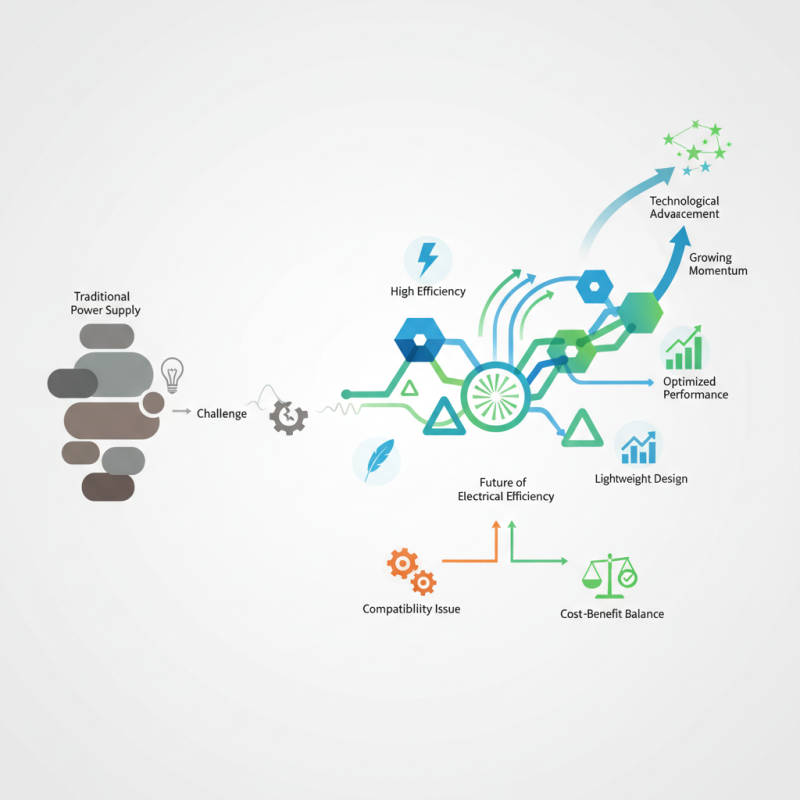
Adopting a Switching Power Supply is not without reflection. While the benefits are clear, ensuring compatibility with existing systems can be complex. Striking a balance between efficiency, cost, and performance often demands attention. Nonetheless, as technology advances, the advantages of Switching Power Supplies continue to gain momentum. They are not just a trend; they are shaping the future of electrical efficiency.
Why Choose a Switching Power Supply Over Traditional Power Supply?

Understanding the Basics of Switching Power Supplies

Switching power supplies have become increasingly popular in modern electronics. These devices convert electrical power efficiently by periodically switching on and off. This technique allows them to minimize energy loss. Unlike traditional linear power supplies, switching supplies can adapt to different loads easily.

A key characteristic of switching supplies is their compact size. They can fit into smaller devices and reduce overall weight. However, not all designs are perfect. Some users report issues with electromagnetic interference. This can affect sensitive electronic components nearby. It’s essential to consider such factors when designing circuits.

Efficiency is another significant advantage. Switching supplies can achieve over 90% efficiency under optimal conditions. This reduces heat generation, which is often a concern in electronics. Still, the design process can be challenging. Engineers must ensure proper layout and shielding to avoid potential pitfalls. Balancing efficiency and signal integrity is crucial.

Comparing Efficiency Between Switching and Traditional Power Supplies

Switching power supplies (SMPS) have gained popularity due to their efficiency, especially in modern applications. According to a report by the Electrical Efficiency Research Institute, SMPS can achieve efficiencies of up to 95%, significantly surpassing traditional linear power supplies, which often hover around 60-70%. This remarkable efficiency stems from their ability to adapt to varying load conditions, minimizing wasted energy.

However, there are concerns. A study published by the International Power Supply Association noted that while SMPS generates less heat, the electromagnetic interference (EMI) can be problematic. This interference may affect sensitive devices. Traditional power supplies, despite being less efficient, produce cleaner outputs. Their linear regulation can be vital in environments where noise levels matter.

Switching power supplies are compact and lightweight. They can operate in a wide range of temperatures. Still, some industries may prefer traditional designs due to their reliability in specific applications. Choosing the right technology requires weighing efficiency against performance needs. Each option has its strengths and weaknesses, influencing the decision in different scenarios.

Analyzing Size and Weight Advantages of Switching Power Supplies

Switching power supplies offer distinct advantages in terms of size and weight compared to traditional power supplies. They can reduce overall system weight by as much as 75%. This reduction is significant in applications like mobile devices, where every gram counts. A report from the Power Sources Manufacturers Association highlights that modern designs can achieve efficiencies over 90%. This means less heat wasted, promoting smaller heat sinks and compact designs.

In automotive and aerospace sectors, size constraints are critical. A typical linear power supply can measure several inches in size and weigh several pounds. In contrast, a switching power supply is often less than half that size and weight. This compactness allows for more flexible design spaces. Yet, these advantages come with a trade-off. Switching power supplies can introduce electromagnetic interference, which may complicate device integration. Designers must balance size benefits with performance issues.

Moreover, the shift towards miniaturization necessitates innovation. The increasing demand for lightweight components pushes manufacturers to prioritize compact designs. In a recent study, it was shown that engineers often face challenges in managing heat dissipation in smaller units. Understanding these dynamics is vital for successful implementation. Lightweight designs promise efficiency but might require additional measures to mitigate potential drawbacks.

Exploring Cost Effectiveness of Switching Power Supplies

Switching power supplies are becoming increasingly popular due to their cost-effectiveness. Unlike traditional power supplies, they convert power with greater efficiency. This means less energy is wasted as heat. Consequently, businesses save on energy costs over time.


Efficiency plays a key role in cost-effectiveness. Switching power supplies can operate over a wide range of voltages. This versatility allows for less complicated systems and reduces the need for multiple power sources. However, their complexity might also lead to issues that require expert knowledge for troubleshooting.


Another aspect to consider is the footprint. Switching power supplies are generally smaller and lighter. This can help in saving space and reducing shipping costs. However, some models may generate electromagnetic interference. This could affect other devices if not managed well. Exploring these options can help in making informed decisions, balancing cost, efficiency, and performance.

Evaluating Applications and Use Cases for Switching Power Supplies

Switching power supplies have become increasingly popular in various applications. They offer several advantages over traditional power supplies. For example, they can provide higher efficiency, leading to lower energy consumption. This is beneficial in both consumer electronics and industrial applications. The lightweight design of switching power supplies makes them ideal for portable devices.

Moreover, they are versatile. Switching power supplies can handle a wide range of input voltages. This adaptability makes them suitable for different environments. Many devices, like smartphones and laptops, rely on them. However, not all devices benefit equally from this technology. Some sensitive applications may experience electromagnetic interference, which could affect performance.

In automotive and telecommunications, switching power supplies shine. They support compact designs and fast response times. Yet, they are not without challenges. The complexity of the circuit can lead to potential reliability issues. Manufacturers should consider the specific requirements of their applications before choosing this technology. In some cases, a traditional power supply may still be the better option.

Learn More

Connect with us today to learn more about our industrial automation solutions—and how to commission them for your application.