
How to Choose the Best Iron Pipe Bending Machine in 2026?

Choosing the best Iron Pipe Bending Machine in 2026 requires more than comparing prices, motor power, or attractive catalog photographs. A reliable choice begins with the pipe itself. Consider its diameter, wall thickness, material grade, bending radius, and expected production volume. A machine bending thin steel tube is not automatically suitable for heavy iron pipe. The difference can appear quickly: wrinkles inside the bend, flattened sections, surface marks, or a stubborn springback after forming.

Manufacturing expert Dr. Serope Kalpakjian wrote, “Manufacturing is the transformation of materials into products of greater value.” This principle matters when selecting bending equipment. The machine should protect material quality while improving production speed and repeatability. Look closely at the frame rigidity, tooling accuracy, hydraulic or electric control system, programmable functions, and operator safety features. Ask for real test bends using your own pipe specification. A showroom demonstration may look perfect.

Small details matter.

An experienced buyer should also examine service support, spare-part availability, training, warranty conditions, and energy consumption. These factors often decide whether a machine remains productive after installation. Digital controls can improve consistency, but they do not replace correct tooling or skilled setup. That point is easy to underestimate. This guide may not eliminate every purchasing risk, because factory conditions differ widely. However, it will help connect technical requirements with practical performance. The goal is not simply to buy a powerful Iron Pipe Bending Machine. It is to choose equipment that produces accurate bends, limits waste, protects operators, and remains dependable throughout demanding daily work.
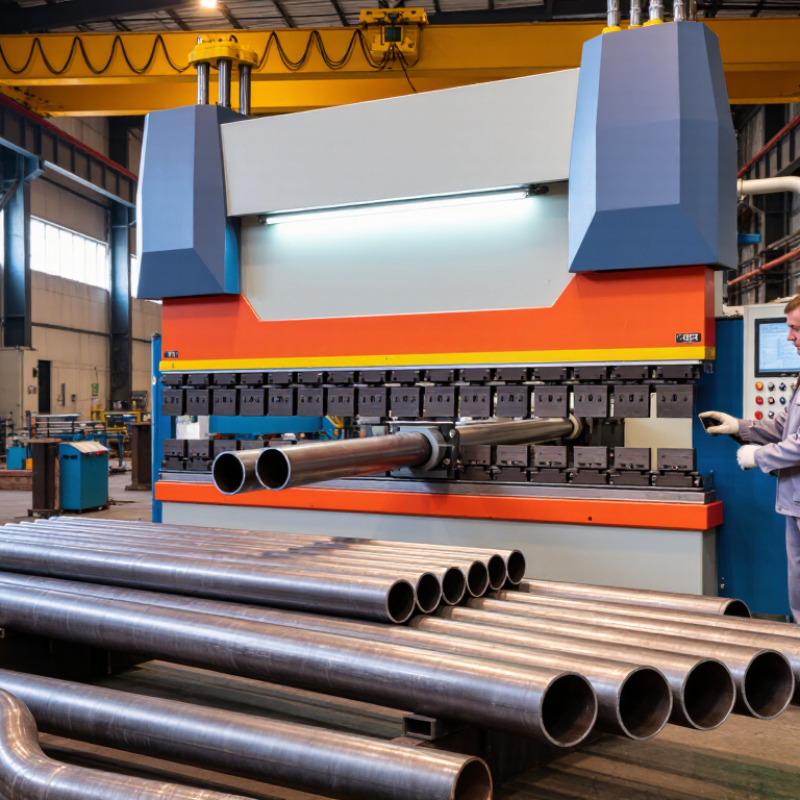
How to Choose the Best Iron Pipe Bending Machine in 2026?

What Is an Iron Pipe Bending Machine?

What Is an Iron Pipe Bending Machine?

An iron pipe bending machine reshapes straight metal pipes into controlled angles and radii. It applies force through rollers, dies, or a hydraulic ram. Some models bend pipes cold, while others use heat for thicker sections. The machine helps create frames, handrails, conduits, exhaust systems, and structural assemblies. Pipe diameter, wall thickness, material strength, and bend radius determine the correct machine design.

The process looks simple, but it is not. Poor tooling can flatten the pipe or cause wrinkles inside the bend. A mandrel supports the inner wall during tighter bends. Hydraulic systems provide high force, while electric systems often offer cleaner control and repeatability. The 2023 World Steel Association report recorded about 1.89 billion tonnes of global crude steel production. That scale reflects the continuing importance of forming equipment across fabrication industries. MarketsandMarkets also projects steady growth in the pipe bending machine market through the decade, driven by automation and infrastructure demand. Exact forecasts vary. That uncertainty deserves attention.

Tips: Check the pipe’s outside diameter and wall thickness first. Then compare the machine’s maximum bending capacity. Test a short sample before production. Measure springback after release. A bend that looks accurate may still miss the required angle. Record tooling settings, because small adjustments can change repeatability. Safety guards and trained operation remain essential.

How to Choose the Best Iron Pipe Bending Machine in 2026?

What Is an Iron Pipe Bending Machine?

An iron pipe bending machine is equipment used to form metal pipes and tubes into precise angles or radii without cutting or welding. When selecting a machine, buyers should compare capacity, bending accuracy, production efficiency, setup flexibility, and operator safety.

The chart presents a practical evaluation model for common purchasing factors. Bending capacity and accuracy are usually the most important technical considerations, while productivity, setup flexibility, and safety influence long-term operating performance. The percentages represent the relative importance of each factor in a balanced machine-selection assessment.

Which Pipe Bending Requirements Should You Define First?

How to Choose the Best Iron Pipe Bending Machine in 2026?

Define the pipe before comparing machines. Record the outside diameter, wall thickness, material grade, and supplied length. Measure twice. A small diameter error can cause the wrong tooling choice. Also specify the required centerline radius, bend angle, and allowable ovality. For example, a 90-degree bend with a 100-millimeter radius needs different support from a tighter bend. Do not rely on a vague phrase like “standard pipe.”

Your production target matters equally. State the number of bends per hour, daily operating time, and expected batch size. A machine for occasional maintenance work may not suit continuous fabrication. Identify whether operators need manual adjustment, programmable control, or automatic repeatability. Define the available floor space, electrical supply, ventilation, and lifting access before requesting quotations. These details often expose hidden installation costs.

Ask how the machine handles wrinkles, wall thinning, and springback. Request sample bends using your actual iron pipe, not a substitute material. Inspect the angle with a calibrated gauge and check the bend after cooling. Set a clear tolerance, such as plus or minus one degree, before testing. Practical evaluations should include tooling changes, cleaning, lubrication, and emergency stops. A perfect specification is rarely possible. Early plans can be incomplete, so leave room to revise the radius or production rate after trial bending. Reliability also depends on documented maintenance intervals, operator training, spare tooling availability, and accessible technical support.

How Do Different Bending Machine Types Compare?

Choosing an iron pipe bending machine in 2026 starts with comparing how each type forms a curve. Manual benders suit occasional repairs, thin-wall pipe, and small workshops. They are affordable and easy to inspect. Yet hand force can create uneven angles after several pieces. I have seen a bend match a template, then open slightly after release. That small error matters in a fitted railing or frame.

Hydraulic benders deliver greater force for thick iron pipe and repeated structural work. A reinforced frame, adjustable die, and controlled ram reduce operator strain. They are slower to set up than manual tools, especially when changing diameters. Their bends may flatten the pipe if the die does not match its outside diameter. Pressure is not precision. Electric and CNC bending machines offer faster production and repeatable angles. CNC control can store programs, manage multi-step bends, and reduce measurement mistakes. Rotary-draw systems usually produce cleaner, tighter curves when a mandrel supports the inside wall. Roll benders work better for large radii, arcs, and long sections. They are less suitable for short, tight bends.

Check wall thickness, pipe diameter, bend radius, daily volume, and floor space before selecting equipment. Ask for test bends using your actual material. A machine that performs well on mild steel may behave differently with harder iron. Also inspect guarding, emergency controls, tooling cost, and operator training. I was wrong once. I judged speed before checking changeover time. The machine saved minutes per bend but lost hours between jobs.

Which Features and Specifications Matter Most?

How to Choose the Best Iron Pipe Bending Machine in 2026?

The right machine begins with your actual pipe range, not a sales brochure. Check outside diameter, wall thickness, steel grade, minimum bending radius, and required bend angles. A useful machine should handle your largest pipe without operating at its limit.

The World Steel Association reported 1,882.6 million tonnes of global crude steel production in 2023, showing how widely steel fabrication remains used. That scale also increases the need for repeatable processing.

Torque and motor power matter, but they do not work alone. Compare rated capacity with your heaviest pipe, tooling, and bend radius. A machine with programmable angle control can reduce setup errors and material waste.

Look for encoder feedback, overload protection, adjustable speed, and quick-change tooling. Numbers can mislead. A high motor rating may still produce poor bends if the frame flexes and the dies fit badly.

Ask for measured repeatability, not vague claims. ISO 12100 emphasizes risk assessment and safer machine design, so guarding, emergency stops, and clear controls deserve serious attention.

On the shop floor, inspect the die surface and watch one complete bend cycle. Check for flattening, wrinkles, springback, and slipping.

Measure twice. My own preference is a simpler control system with reliable sensors, although advanced automation can improve output. That choice may be imperfect for low-volume work, but repair access and operator training often matter more than impressive software.

How Can You Evaluate Safety, Cost, and Long-Term Value?

Choosing an iron pipe bending machine in 2026 requires more than comparing purchase prices. Safety should be tested on the shop floor, not accepted from a brochure. Check fixed guarding, emergency-stop access, overload protection, pinch-point visibility, and noise levels. The U.S. Bureau of Labor Statistics recorded 2.6 million nonfatal private-industry injuries in 2023. A safer machine can reduce disruption, even when its price is higher.

Then measure total cost of ownership. Request energy consumption per bending cycle, tooling life, maintenance intervals, and spare-part availability. The International Energy Agency reports that electric motor systems use about half of global electricity. An inefficient hydraulic or electric system can quietly increase operating costs for years. Calculate labor, electricity, planned downtime, scrap, and training over five years. Cheap today, expensive later.

Long-term value also depends on repeatability. Test several pipe diameters and wall thicknesses using your own material. Record angle deviation, setup time, surface marks, and rework. A production report from the trial is more useful than a polished demonstration. Ask whether software updates, calibration, and technician support remain available after installation. I would not trust a machine solely because it has many features. More functions can mean more failure points, and that part is easy to underestimate. If the supplier cannot provide clear test data, walk away.

How to Choose the Best Iron Pipe Bending Machine in 2026? - How Can You Evaluate Safety, Cost, and Long-Term Value?

Practical Evaluation Matrix for Iron Pipe Bending Machines
Evaluation Dimension Recommended Weight Practical Benchmark Why It Matters How to Verify Suggested Score
Pipe Outside Diameter Capacity 15% Choose a machine whose rated maximum diameter is at least 15–20% above the largest pipe used in production. A small capacity margin reduces overload risk and allows for future product changes. Compare the manufacturer’s capacity chart with actual pipe outside diameter, not nominal pipe size. 1–5
Wall Thickness and Material Strength 12% Confirm rated wall thickness for carbon steel, galvanized steel, stainless steel, or other materials used. The same diameter may require substantially different bending force depending on wall thickness and yield strength. Request test bends using the actual material grade, diameter, and wall thickness. 1–5
Minimum Centerline Bend Radius 10% For general pipe work, compare the required centerline radius with the tooling range; many applications require approximately 1.5D–3D or more. A suitable radius helps prevent flattening, wrinkling, cracking, and excessive wall thinning. Measure the finished bend and inspect the inside, outside, and neutral axes for deformation. 1–5
Bend Angle Accuracy 10% For repeat production, target a demonstrated accuracy of approximately ±0.5° to ±1.0°, depending on material and process. Higher accuracy reduces rework, fitting adjustments, and assembly variation. Run at least 10 consecutive bends and record actual angles with a calibrated measuring tool. 1–5
Repeatability 10% For automated production, look for repeatability near ±0.5° where the application requires consistent multi-part output. Repeatability is often more important than one-time peak accuracy. Evaluate a batch of identical parts after machine warm-up and compare the full measurement distribution. 1–5
Production Speed 8% Compare complete cycle time, including loading, clamping, bending, unloading, and tooling changes—not only the bending stroke. A fast hydraulic stroke may not produce high output if setup and handling are slow. Time a representative batch and calculate finished parts per hour. 1–5
Safety Systems 12% Prioritize emergency stops, guarded pinch points, interlocked access panels, overload protection, and clearly defined safe operating zones. Pipe benders contain high mechanical and hydraulic forces that can cause severe crush injuries. Request a documented risk assessment, safety circuit description, operator manual, and on-site safety demonstration. 1–5
Tooling Flexibility 8% Check compatibility with multiple diameters, radii, clamps, pressure dies, wiper dies, mandrels, and forming tools. Flexible tooling extends the useful life of the machine and supports more product types. Obtain a complete tooling price list and confirm availability of replacement components. 1–5
Purchase Cost 7% Indicative planning ranges: manual units often below USD 5,000; standard hydraulic units commonly about USD 8,000–40,000; CNC systems may range from approximately USD 30,000 to above USD 150,000. The lowest purchase price may not provide the lowest cost per finished part. Compare equivalent specifications, tooling, installation, training, shipping, taxes, and commissioning. 1–5
Total Cost of Ownership 10% Include energy, hydraulic oil, preventive maintenance, tooling, operator labor, downtime, scrap, and expected service costs over 5–10 years. Operating and downtime costs can exceed the initial purchase price over the machine’s service life. Calculate cost per acceptable part using realistic annual production volume and reject rates. 1–5
Energy Consumption 3% Compare motor power, idle consumption, duty cycle, and actual energy use per finished part. Efficient systems can reduce operating costs, especially in high-volume production. Use measured kWh per hour or kWh per part under normal production conditions. 1–5
Maintenance and Serviceability 8% Prefer accessible lubrication points, standard wear parts, clear maintenance intervals, fault diagnostics, and documented procedures. Simple maintenance reduces unplanned downtime and extends equipment life. Review the preventive-maintenance schedule and request lead times for critical spare parts. 1–5
Control and Data Features 3% For repeat production, consider recipe storage, password levels, diagnostics, production counters, and data export. Digital records improve setup consistency, traceability, and operator control. Test the user interface with a real production program and verify backup and recovery procedures. 1–5
Installation Requirements 2% Confirm floor loading, footprint, electrical supply, compressed air, ventilation, lifting access, and operator clearance. Unexpected site modifications can increase project cost and delay production. Complete a site survey before placing the order. 1–5
Total 100% Multiply each score by its weight and add the results. Use the same scoring method for every machine under consideration. A practical comparison should include test results and ownership costs. Maximum: 5.00
Scoring guide: 1 = unacceptable, 2 = below requirements, 3 = acceptable, 4 = strong, 5 = excellent. Cost figures are broad budgeting ranges only; final pricing depends on capacity, tooling, automation, shipping, installation, and local taxes.

Learn More

Connect with us today to learn more about our industrial automation solutions—and how to commission them for your application.