
10 Tips for Choosing a Smart Lock Manufacturer China

Choosing a Smart Lock Manufacturer China requires more than comparing prices on a product page. A reliable decision begins with practical questions about experience, engineering ability, factory control, and communication. Can the supplier explain its testing process clearly? Can it provide samples that match the final production version? These details often reveal more than polished photos.

A capable manufacturer should understand Bluetooth, Wi-Fi, fingerprint, keypad, and mechanical override systems. It should also show evidence of durability testing, battery management, software support, and access-control security. Ask for factory audit records, quality procedures, certifications, and documented inspection standards. Verify whether those documents apply to the exact model you plan to purchase. Small differences matter. A hotel lock and a residential lock rarely face the same daily demands.

Do not ignore after-sales support. Firmware updates, spare parts, installation guidance, and warranty response can affect your business for years. Request a clear timeline for samples, tooling, production, and shipping. Visit the factory if possible, or arrange a live video inspection. It may expose weaknesses that brochures hide. However, no supplier is perfect, and even experienced buyers can overlook integration problems. Test the lock with real doors, unstable networks, cold batteries, and hurried users. A thoughtful selection process balances cost with reliability, compliance, customization, and long-term cooperation. The right partner should answer difficult questions without pressure, vague promises, or unnecessary confidence. Evaluate evidence, not enthusiasm.
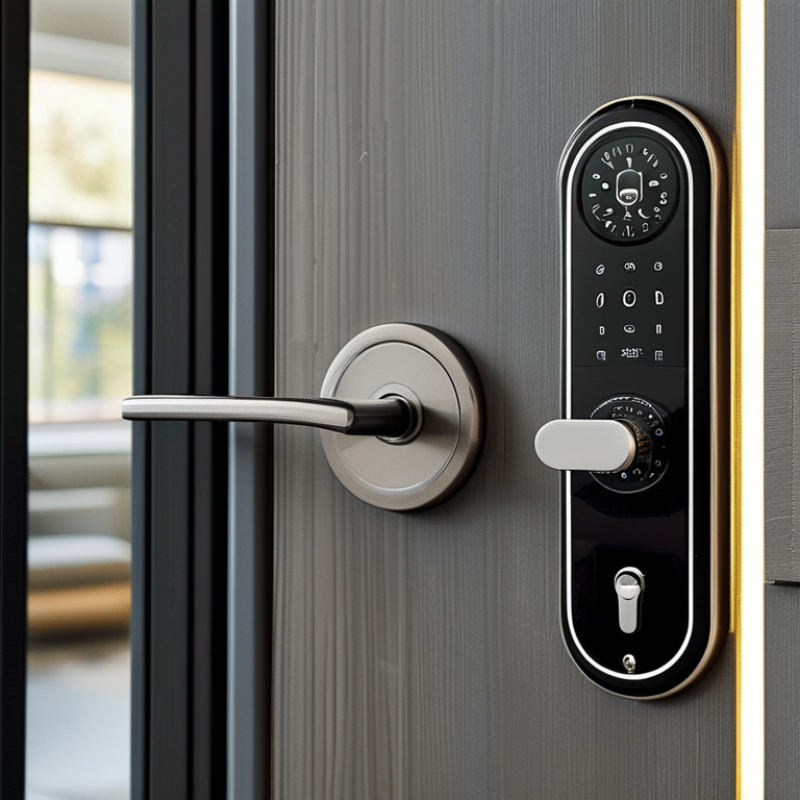
10 Tips for Choosing a Smart Lock Manufacturer China

Define Smart Lock Requirements: ANSI/BHMA Grades, IP Ratings, and Connectivity

When choosing a smart lock manufacturer in China, define performance requirements before discussing price. ANSI/BHMA grades help compare durability, security, and cycle testing. Higher grades usually suit entrances with frequent daily use. Confirm which grade the complete lock achieved, not only one component. Request test reports, sample units, and clear testing dates.

Tip: Match the IP rating to the installation environment. An outdoor gate may face rain, dust, and temperature changes. IP ratings describe protection against solids and water, but they do not prove resistance to every climate. Ask how the lock performs after repeated exposure. Real conditions can be less predictable.

Connectivity also needs careful planning. Bluetooth may work well for nearby access, while Wi-Fi supports remote management but can increase power use. Some projects need a gateway, local control, or an emergency access method. Check compatibility with your management software, mobile devices, and network security requirements. Ask about firmware updates and data protection practices. Small details matter.

Tip: Test the lock with weak signals, wet hands, gloves, and low battery conditions. A specification sheet cannot reveal every installation problem. I have seen promising samples fail when doors shifted slightly. That was a useful reminder. Request installation guidance, replacement parts, and a defined warranty process before placing a large order.

Verify Chinese Manufacturer Credentials: ISO 9001, CE, FCC, and RoHS Compliance

When evaluating a smart lock manufacturer in China, verify credentials beyond a polished website. The ISO Survey 2022 recorded 1,265,216 ISO 9001 certificates worldwide, showing its global importance. However, an ISO certificate does not automatically prove product quality. Request the certificate number, issuing body, factory address, scope, and expiry date. Confirm these details through the certification body’s public database. Paperwork is not proof.

CE is a manufacturer’s declaration of conformity, not a single universal safety certificate. Ask for the EU Declaration of Conformity and test reports matching the exact lock model. FCC compliance should include the correct equipment authorization and radio test records for Bluetooth, Wi-Fi, or other wireless functions. RoHS evidence should identify restricted-substance testing, materials, and the tested product version. The European Commission’s Blue Guide explains why technical documentation and traceable declarations matter. ENISA’s 2023 threat landscape also highlights supply-chain risks, making firmware control and update procedures worth checking. Details matter.

During factory audits, compare serial labels with laboratory reports, inspect production records, and ask how failed units are isolated. A capable supplier should explain calibration, sampling, and corrective actions without hesitation. I would also request recent reports from an accredited laboratory, not recycled files from another model. Even experienced buyers miss small differences between a prototype and mass-production unit. That gap deserves scrutiny.

10 Tips for Choosing a Smart Lock Manufacturer in China

Verify Chinese Manufacturer Credentials: ISO 9001, CE, FCC, and RoHS Compliance

This scope matrix shows what each credential primarily verifies when screening a smart lock manufacturer. A value of 1 means the credential directly addresses the verification area; 0 means it is not the credential’s primary scope.

ISO 9001 evaluates the quality management system. CE marking demonstrates applicable European Union conformity requirements. FCC compliance addresses applicable radio-frequency and electromagnetic-emissions requirements in the United States. RoHS addresses restrictions on specified hazardous substances in electrical and electronic products.

Ask the manufacturer for the certificate or declaration, certification scope, covered models, test reports, product version, validity details, and the name of the responsible conformity-assessment organization.

Assess Product Security: AES-128/256 Encryption, OTA Updates, and Audit Logs

When choosing a smart lock manufacturer in China, examine security evidence, not only product brochures. Ask whether the lock uses AES-128 or AES-256 encryption for stored and transmitted data. Request test reports, encryption diagrams, and clear explanations of key management. AES-256 sounds stronger, but poor implementation can still create vulnerabilities. Test the basics.

Tip: Ask the manufacturer to demonstrate a complete authentication process. Watch how the lock handles incorrect passwords, lost phones, and repeated connection failures. Security settings should resist guessing attempts without blocking legitimate users permanently. Clear recovery procedures also matter.

OTA updates are equally important. Confirm that firmware packages are digitally signed before installation. Ask whether updates use encrypted channels, version checks, and rollback protection. A reliable supplier should explain how urgent vulnerabilities are reported and corrected. Audit logs should record unlock events, administrator changes, failed attempts, and firmware updates. Logs need accurate timestamps and controlled access. They should also support export without exposing unnecessary personal data.

Tip: Request a sample audit report and test it on the actual device. Check whether entries remain available after power loss or network interruption. I have found that polished demonstrations can hide practical gaps. No checklist is perfect. Independent penetration testing, documented production controls, and transparent support contacts provide stronger evidence than confident promises. Ask difficult questions, and record every answer.

10 Tips for Choosing a Smart Lock Manufacturer China - Assess Product Security: AES-128/256 Encryption, OTA Updates, and Audit Logs

No. Security Dimension Recommended Requirement Evidence to Request Warning Signs Suggested Weight
1 Data Encryption at Rest Use authenticated encryption such as AES-128-GCM or AES-256-GCM for stored credentials, tokens, and configuration data. AES-256 is preferred where performance and hardware support allow it. Encryption architecture, algorithm and mode specification, key-storage design, and an independent security test report. “AES encrypted” is stated without identifying the mode, key protection, or protected data. 15%
2 Communication Encryption Protect mobile-app, gateway, and cloud communications with TLS 1.2 or higher, strong certificate validation, and secure random session keys. Protocol configuration, certificate-validation behavior, penetration-test results, and network data-flow documentation. Unencrypted local API traffic, disabled certificate checks, or reliance on proprietary encryption without technical documentation. 12%
3 Secure OTA Updates Firmware updates should be digitally signed, verified on the lock, transmitted securely, and protected against downgrade attacks. A recovery or rollback mechanism is recommended. Update workflow, signing-key control process, signature-verification test, rollback plan, and published support period. Unsigned firmware, manual update files from unknown sources, no rollback process, or no stated end-of-support date. 15%
4 Secure Boot and Hardware Protection Use a verified boot chain, protected bootloader, debug-port control, and secure storage for device keys where supported by the hardware platform. Hardware security architecture, production configuration, debug-lock evidence, and laboratory attack-test results. Open debug interfaces, shared device keys, undocumented bootloader access, or identical credentials across units. 12%
5 Audit Logs and Event Integrity Record unlocks, failed attempts, credential changes, administrator actions, firmware updates, and configuration changes with synchronized timestamps. Sample log export, event-field list, retention policy, access-control policy, and evidence that logs cannot be silently modified. Logs omit failed attempts or administrator actions, lack timestamps, are easily deleted, or cannot be exported. 12%
6 Authentication and Access Control Support unique administrator accounts, least-privilege roles, strong password rules, session timeout, credential revocation, and optional multi-factor authentication for management portals. Role-permission matrix, account-management screens, password policy, revocation test, and administrator audit records. Shared administrator accounts, permanent installation passwords, unlimited login attempts, or no way to revoke lost credentials. 12%
7 Randomness and Credential Protection Generate keys, reset tokens, and temporary access codes with a cryptographically secure random number generator. Store passwords using salted, adaptive hashing rather than reversible encryption. Credential-storage design, random-number-generation details, code-expiration rules, and security-assessment findings. Predictable PINs, reusable temporary codes, plaintext credentials, or one universal master code. 10%
8 Vulnerability Management Maintain a vulnerability-reporting channel, risk-based remediation targets, dependency monitoring, and a documented process for security advisories. Incident-response procedure, vulnerability disclosure policy, patch records, responsible contact, and sample remediation timeline. No security contact, no patch history, unclear ownership after shipment, or refusal to discuss vulnerability handling. 8%
9 Privacy and Data Governance Define what personal data is collected, where it is stored, who can access it, how long it is retained, and how data deletion or export requests are handled. Data-flow diagram, privacy policy, retention schedule, deletion procedure, subprocessors list, and applicable compliance documentation. Undisclosed cloud storage, indefinite retention, unnecessary collection of biometric data, or no account-deletion process. 7%
10 Independent Testing and Security Documentation Require current penetration testing, threat modeling, secure-development procedures, and applicable product safety or cybersecurity conformity evidence. Test scope and date, unresolved-findings summary, threat model, secure-development lifecycle documents, and relevant certification or conformity records. Generic certificates unrelated to cybersecurity, outdated reports, incomplete test scope, or refusal to provide evidence under confidentiality terms. 7%
Total Suggested Evaluation Weight 100%
Scoring guidance: Award full points only when the manufacturer provides verifiable technical evidence. Treat missing documentation, shared credentials, unsigned updates, and absent audit trails as high-risk findings regardless of marketing claims.

Compare Manufacturing Capacity: MOQ, Monthly Output, Lead Times, and Warranty Rates

A capable smart lock manufacturer should prove capacity with records, not attractive factory photographs. Ask for MOQ by model, monthly output, current utilization, and production lead times. A low MOQ helps testing, but it may signal limited purchasing power or unstable component supply. Look closely.

The China Manufacturing PMI averaged 49.8 in 2024, according to the National Bureau of Statistics, showing uneven factory activity. Therefore, request twelve months of shipment data, not one impressive month. Compare confirmed output with your forecast. For example, a factory promising 30,000 units monthly should show testing stations, assembly lines, and finished-goods space supporting that figure. A basic production audit can reveal whether “capacity” includes subcontracted work.

Lead times need separate figures for samples, first orders, repeat orders, and peak seasons. The World Bank’s 2023 Logistics Performance Index gave China a logistics score of 3.7 out of 5, but transport performance still varies by region and port. Ask for a written timeline covering tooling, firmware loading, aging tests, packaging, and export preparation. Warranty rates deserve equal attention. Request the last twelve months’ return rate, DOA rate, and top three failure causes, supported by service records. Industry reports rarely provide a universal smart-lock warranty benchmark, so factory-specific evidence matters more. I would also check whether the rate counts only confirmed defects. That detail can change the picture.

Audit Quality Control: AQL Sampling, 100,000-Cycle Testing, and After-Sales Support

When choosing a smart lock manufacturer in China, audit quality control before comparing prices. Ask for the written AQL plan, not a verbal promise. It should define inspection levels, acceptable defects, and actions after failure. During a factory visit, trace one finished lock backward through assembly records. Check torque readings, firmware version logs, battery contacts, and packaging seals. Small details reveal whether procedures are real. AQL sampling reduces inspection costs, but it cannot prove every unit is perfect. That limitation matters.

Request an independent or witnessed 100,000-cycle test for the complete locking mechanism. The test should record deadbolt movement, motor temperature, noise, and failed attempts. Ask whether testing uses real doors, changing alignment, dust, and low battery conditions. A polished laboratory report is useful, but raw data is more convincing. I would also inspect samples after testing for worn gears and loose screws. Some factories test an ideal setup. That is not enough.

After-sales support deserves the same audit discipline. Confirm response times, spare-part availability, remote troubleshooting, and replacement procedures in writing. Ask who handles firmware issues and how failures are analyzed. A capable supplier can provide corrective-action reports, not only apologies. Still, no checklist catches every production mistake. Leave room for reinspection. A trial order with documented acceptance criteria exposes weaknesses before larger commitments.

Learn More

Connect with us today to learn more about our industrial automation solutions—and how to commission them for your application.