
How to Choose the Best Conveyor Roller Supplier in China?

Choosing the best Conveyors Roller supplier in China requires more than comparing prices on a spreadsheet. A roller may look simple, yet its tube thickness, bearing seal, shaft tolerance, and welding quality can determine an entire conveyor’s performance. In dusty warehouses, mines, and parcel hubs, small defects become loud noise, belt damage, or unexpected stoppages. A low quotation can still become expensive.

R. Todd Swinderman, a recognized conveyor safety and maintenance specialist, has emphasized, “Reliability begins with design, not emergency maintenance.” This principle should guide every supplier review. Ask for material certificates, dimensional drawings, load calculations, and documented test results. Visit the factory when possible. Watch how workers inspect bearings, measure runout, and protect finished rollers from moisture. These details reveal more than polished brochures.

A capable Chinese supplier should understand your belt width, speed, environment, temperature range, and loading pattern. Confirm whether the rollers use sealed bearings, precision-machined shafts, and corrosion-resistant coatings. Request samples before approving thousands of units. Test them under realistic loads, not only clean showroom conditions.

Experience also teaches an uncomfortable lesson: no supplier is perfect. Communication may fail. A specification may be misunderstood. Even a trusted factory can change components without clear notice. Therefore, require written inspection standards, batch traceability, spare-parts support, and an agreed response time. Certifications help, but they never replace evidence.

This guide explains how to evaluate technical competence, production consistency, quality control, delivery reliability, and after-sales support. The goal is not to find the cheapest supplier. It is to find a partner whose rollers keep turning when the operation is under pressure.
How to Choose the Best Conveyor Roller Supplier in China?

Define Your Conveyor Roller Requirements and Application Conditions

How to Choose the Best Conveyor Roller Supplier in China?

Define Your Conveyor Roller Requirements and Application Conditions

Before contacting a conveyor roller supplier in China, describe your operating conditions clearly. State the belt width, roller diameter, shaft size, load, speed, and conveyor length. Also explain whether materials are heavy, sharp, dusty, wet, or sticky. These details affect tube thickness, bearing selection, sealing, and surface treatment.

Temperature matters too. A roller used near a furnace needs different materials from one installed in a warehouse. For outdoor conveyors, humidity and rain may accelerate corrosion. Include the expected operating hours and maintenance access. A supplier who asks detailed questions is usually more reliable than one offering a quick, generic quotation. Specifications can still change after testing. That is normal, not necessarily a failure.

Tips: Prepare a simple application sheet with drawings, photos, dimensions, and load data. Request material certificates, inspection records, and a sample roller before placing a large order. Check runout, noise, rotation resistance, weld quality, and shaft accuracy. Do not judge quality by price alone. A low-cost roller may create belt tracking problems and repeated downtime. Ask how each measurement is controlled during production. Supplier statements should be supported by documented checks, not promises.

Assess Supplier Manufacturing Capabilities and Product Quality

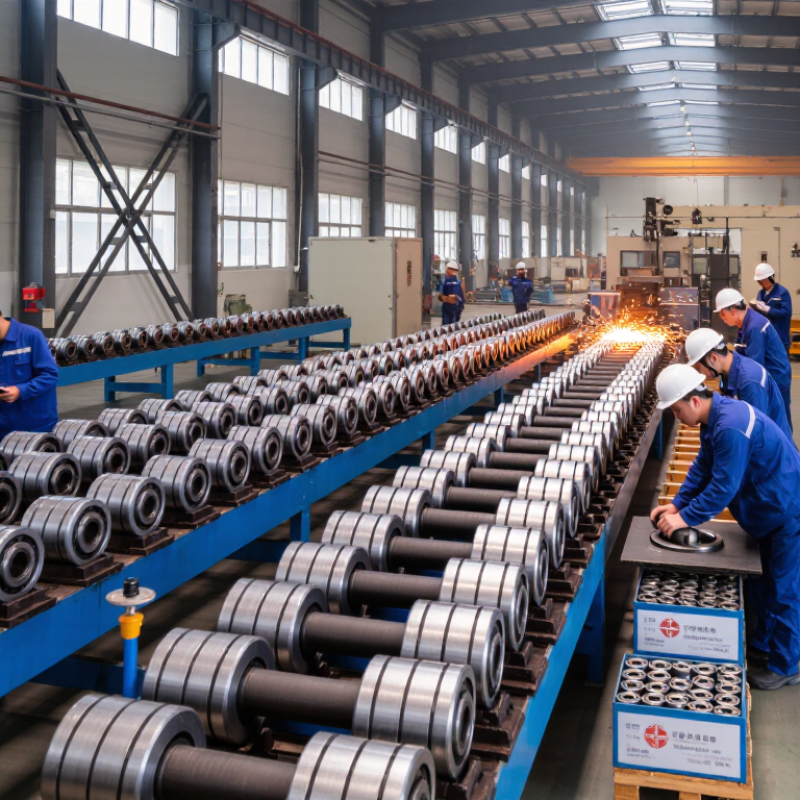
A conveyor roller supplier should prove capability, not merely display a clean factory. Ask for production flow records, machine lists, inspection plans, and recent customer references. The factory should control tube cutting, shaft machining, welding, bearing fitting, and final testing internally. Outsourcing every critical step creates blind spots.

ISO’s 2022 Survey recorded more than 1.2 million ISO 9001 certificates worldwide. Certification helps, but it does not guarantee consistent rollers. Check whether the supplier links each batch to material certificates, bearing codes, operator records, and inspection results. Request measured data for concentricity, shaft runout, wall thickness, noise, and rotational resistance. Load testing should reflect your conveyor’s belt speed, product weight, and operating temperature. A polished factory tour can still hide weak process control. No supplier is flawless.

Tips: Inspect ten random rollers, not one sample. Compare actual dimensions with drawings. Ask for failure data and corrective-action reports. The supplier’s response matters. Honest limitations often signal stronger quality control.

The International Federation of Robotics reported 541,302 industrial robots installed globally in 2023. Automation can improve repeatability, but only when calibration and maintenance are documented. Review equipment maintenance logs and gauge-calibration records. Also examine packaging: sealed bearings, protected shafts, and moisture-resistant wrapping reduce damage during ocean transport. An experienced supplier should explain expected service life, warranty exclusions, spare-part availability, and recommended inspection intervals in writing. Perfect promises deserve careful questions.

How to Choose the Best Conveyor Roller Supplier in China? - Assess Supplier Manufacturing Capabilities and Product Quality

Evaluation Dimension Key Data to Request Practical Benchmark Verification Method Suggested Weight Priority
Manufacturing Facility Production area, equipment list, process layout, and monthly production capacity A documented production flow with dedicated forming, welding, machining, assembly, and testing areas Factory audit, live video inspection, equipment records, and production-capacity documents 15% High
Roller Size Range Available shell diameters, shaft sizes, face widths, and custom dimensions Common conveyor roller diameters typically include approximately 50–159 mm, with custom sizes available when required Review dimensional drawings, product samples, and measurement reports using calibrated tools 10% High
Material Selection Shell, shaft, bearing, seal, coating, and polymer material specifications Material grades and surface treatments should be stated clearly and matched to load, moisture, abrasion, and temperature conditions Material certificates, incoming inspection records, and sample testing 10% High
Dimensional Accuracy Outside diameter, face width, shaft length, concentricity, runout, and shaft tolerance Critical dimensions should be controlled against approved drawings; runout requirements must be defined before production Inspection plan, calibrated measuring instruments, first-article inspection, and batch reports 10% High
Bearing and Sealing Performance Bearing type, load rating, seal structure, grease specification, and contamination protection Bearing selection should be based on radial load, speed, operating temperature, dust, water, and maintenance conditions Technical datasheets, bearing certificates, seal inspection, and operating-condition review 10% High
Load and Running Tests Static load, rotational resistance, noise, vibration, endurance, and temperature-rise data Test limits should be linked to the roller design, conveyor speed, transported material, and stated service conditions Witness testing, test reports, sample approval, and comparison with approved specifications 15% High
Welding and Assembly Quality Welding procedure, shaft alignment, end-disc fit, bearing installation, and assembly controls Welds should be uniform and free from visible cracks, undercut, excessive spatter, or misalignment Process audit, visual inspection, dimensional checks, and destructive or non-destructive tests where appropriate 8% High
Corrosion Protection Surface preparation, painting, galvanizing, powder coating, or other protective treatment The coating system should match the application environment, including indoor, outdoor, humid, corrosive, or washdown conditions Coating specification, thickness measurement, adhesion testing, and salt-spray data when applicable 7% Medium
Quality Management Quality procedures, inspection stages, traceability, non-conformance handling, and corrective actions Controls should cover incoming materials, in-process production, final inspection, packing, and shipment release Quality-system audit, inspection forms, corrective-action records, and batch traceability review 8% High
Customization Capability Ability to produce grooved, tapered, rubber-coated, sprocket, impact, or other application-specific rollers The supplier should provide drawings, prototypes, design review, and repeatable production for approved custom designs Review engineering resources, prototype samples, drawings, and previous non-brand-specific project records 5% Medium
Packaging and Export Readiness Packaging method, moisture protection, pallet design, labeling, loading plan, and export documentation Packaging should prevent shaft deformation, surface damage, corrosion, and component mixing during international transport Packaging inspection, packing-list review, loading photographs, and trial-shipment evaluation 2% Medium
Recommended Supplier Assessment Structure 100% Complete

Recommended scoring method: rate each dimension from 1 to 5, multiply the rating by the suggested weight, and compare suppliers using the same approved drawings, samples, test conditions, and inspection requirements.

Verify Materials, Standards, Certifications, and Testing Procedures

Choosing a conveyor roller supplier in China requires more than comparing prices. Verify the steel grade, tube wall thickness, shaft material, bearing source, and rubber composition against the purchase specification. Request mill certificates with heat numbers, not generic material statements. Check whether each batch can be traced from raw steel to final assembly. Small gaps matter. Corrosion often begins where documentation stops.

Standards should match the conveyor’s duty. ISO 5048 supports conveyor design calculations, while ISO 281 helps assess bearing rating life. Ask the supplier to explain the selected load, speed, temperature, and service factor. The ISO Survey 2022 recorded more than 1.26 million ISO 9001 certificates worldwide, yet certification alone does not prove roller quality. Confirm the certificate’s scope, issuing body, and validity. A factory certificate can look convincing and still be too broad.

Testing should be witnessed or independently verified. Require dimensional checks for runout, concentricity, shaft straightness, and shell balance. Ask for radial load, rotational resistance, sealing, noise, and temperature-rise results. For painted or galvanized rollers, request coating thickness and corrosion-test records. The testing method, sample size, equipment calibration date, and acceptance limit should appear on every report. I would also inspect retained samples after endurance testing. This step is easy to overlook. Supplier audits should include production floors, not only conference rooms. My own review would remain cautious when a supplier offers perfect numbers but cannot show failed samples, corrective actions, or raw test data.

Compare Pricing, Customization, Delivery, and After-Sales Support

How to Choose the Best Conveyor Roller Supplier in China?

Price should be compared by total operating cost, not unit price alone. Ask for roller material, bearing type, load rating, surface finish, and expected service life. MHI’s 2024 Annual Industry Report found that 55% of supply chain professionals expect to adopt robotics and automation within five years. This trend increases the need for rollers that match automated systems precisely. Request a sample, dimensional drawing, and a written quotation. Check whether tooling, packaging, testing, and spare parts are included. The cheapest offer may become expensive after installation.

Customization also deserves careful attention. A capable supplier should adjust shaft length, tube diameter, coating, noise control, and corrosion resistance. Share conveyor speed, product weight, temperature, and working hours. Small details matter. Delivery promises should include production time, inspection time, export preparation, and transport. The World Bank’s Logistics Performance Index 2023 evaluates 139 economies through customs, infrastructure, logistics services, and timeliness. Use these factors when reviewing a supplier’s shipping plan, rather than trusting a single estimated date.

After-sales support often reveals real manufacturing experience. Ask for response times, installation guidance, failure analysis, warranty conditions, and replacement procedures. Keep written records. ISO 9001-based quality systems can improve traceability, but certification alone does not prove consistent roller performance. Request inspection reports and batch photos before shipment. I would also test a small order first. It may slow purchasing, but it exposes communication gaps early. Some suppliers provide excellent samples, yet weaker production batches; that risk deserves honest attention.

How to Choose the Best Conveyor Roller Supplier in China?

Comparison of key purchasing dimensions: pricing, customization, delivery reliability, and after-sales support.

The chart uses a practical procurement scoring framework on a 100-point scale. Pricing reflects total cost competitiveness, customization covers engineering flexibility and specification matching, delivery measures lead-time reliability, and after-sales support evaluates warranty response and technical service.

Evaluate Supplier Reliability Through Audits, Samples, and References

How to Choose the Best Conveyor Roller Supplier in China?

A supplier’s website cannot prove production reliability. An on-site audit can reveal much more. Check the machining area, assembly line, warehouse, and final inspection station. Ask to review material certificates, inspection records, and equipment calibration documents. Measure shaft diameter, roller length, surface finish, and bearing fit on random products.

The details matter.

Samples should reflect your actual conveyor conditions. Run several rollers under the expected load and speed. Record noise, vibration, runout, and temperature after continuous operation.

Ask for dimensional reports and test procedures, not only finished samples. A polished sample can hide weak production control.

I have seen this happen.

Therefore, request samples from different production batches when possible.

References provide practical evidence beyond factory claims. Ask for recent customers with similar conveyor loads and working environments. Speak with them directly about delivery consistency, defect rates, communication, and after-sales support.

Reliable suppliers explain past failures instead of pretending they never occur. Their corrective-action records should identify causes, responsibilities, and deadlines.

Still, one audit or one reference is not enough. Conditions change, and my own inspection may miss details. Use audits, samples, and references together, then record every finding before signing a technical agreement.

Learn More

Connect with us today to learn more about our industrial automation solutions—and how to commission them for your application.