
Connect with us today to learn more about our industrial automation solutions—and how to commission them for your application.
How to Choose Hydraulic Piston Seals
Choosing Hydraulic Piston Seals is not a matter of matching a diameter and moving on. The seal must hold pressure while the piston moves repeatedly inside the cylinder. A practical paraphrase of sealing-industry author Robert Flitney’s guidance is: “Select the seal for the real operating conditions, not dimensions alone.” Treat that as a principle, not a verified verbatim quotation.
Start with the details the machine actually faces. Record working pressure, temperature range, fluid type, piston speed, and duty cycle. A cylinder running warm hydraulic oil through short, frequent strokes may need a different seal than one operating slowly under heavy pressure. Check the extrusion gap, too. A tiny clearance can become important when pressure rises. Small details matter.
Then compare seal profiles and materials against those conditions. Polyurethane can suit many demanding applications, while other compounds may better tolerate particular fluids or temperatures. Compatibility charts and manufacturer data help narrow the choice, but they cannot replace accurate system information. That is easy to overlook. Installation matters as well: a sharp groove edge, trapped dirt, or a twisted seal can shorten service life before the machine reaches full load.
This guide explains how to evaluate those factors, ask useful questions of suppliers, and avoid common selection shortcuts. No seal is universally best. The honest answer may be that more operating data is needed before choosing. That can feel inconvenient, but it is safer than treating a catalog match as proof of performance.
Understand the Role and Operating Conditions of a Hydraulic Piston Seal
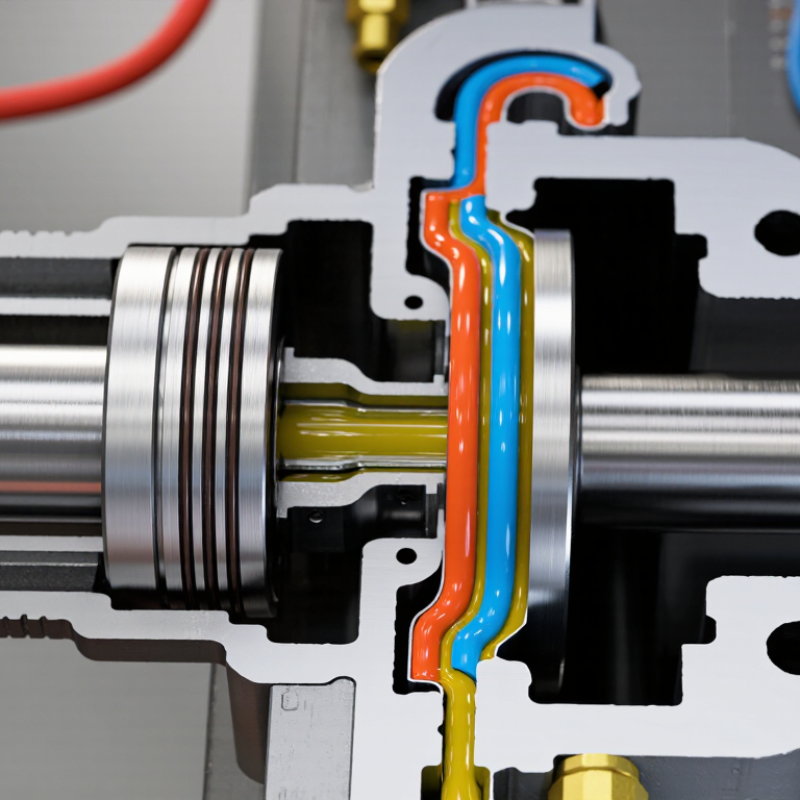
A hydraulic piston seal keeps pressurized fluid on the correct side of the piston. It also helps maintain force as the piston moves through the cylinder. The seal works against pressure, friction, heat, and repeated motion. Small changes in any of these conditions can affect leakage and service life.
Start with the actual operating conditions, not just the cylinder diameter. Note the fluid type, pressure range, temperature, piston speed, and duty cycle. A machine that runs briefly differs from one cycling all day. Check the clearance between the piston and cylinder, too. Under high pressure, a large gap can let seal material deform or extrude into the space. That detail is easy to miss.
Seal material and profile should suit both the fluid and the motion. Some materials tolerate heat well but may not suit a particular fluid. A tighter seal is not always better; extra friction can increase wear and heat. Installation matters as well. A nick from a sharp edge may cause leakage soon after startup. Selection charts help narrow options, but they cannot replace accurate measurements and operating data. When results differ from expectations, inspect the conditions again; assumptions can be wrong.
Measure the Piston and Seal-Groove Dimensions
A reliable piston-seal choice starts with accurate measurements, not the cylinder’s nominal size.
Clean the piston and groove first; oil, grit, or a small burr can distort a reading. Measure the piston outside diameter with a micrometer, then check the groove’s root diameter and width. Use a suitable depth gauge if groove depth is not clear from those measurements. Small errors matter.
Take readings at several points around the piston and groove. Wear, ovality, or a damaged edge can make one measurement misleading. Record each value, the tool used, and the units. One measurement can feel convincing, but it is not enough. If readings vary, inspect the surface and repeat them rather than averaging away a possible defect.
Compare the measured dimensions with the seal’s application data, including its cross-section and recommended groove dimensions. The piston diameter alone does not determine the correct seal fit. Groove width affects axial movement, while groove depth helps establish radial squeeze. Also check the expected clearance between the piston and cylinder, since excessive clearance can increase the risk of seal damage under pressure. A drawing may look precise, yet an old groove can be worn. Leave that possibility in the record.
Identify Fluid, Temperature, Pressure, and Speed Requirements
How to Choose Hydraulic Piston Seals
Select a Seal Profile and Material for the Application
Choose the profile from the cylinder’s motion, pressure, and clearance—not from bore size alone. A single-acting U-cup can suit one pressure direction, while a double-acting profile may be needed when pressure reverses. For low-friction, steady motion, compact designs can help; under shock loads or wider clearances, an energised profile may resist leakage better. Check the gland dimensions against ISO 7425-1 or ISO 7425-2, which cover housings for piston seals. Small dimensional errors matter. A seal that looks correct on the bench can still twist or wear quickly in a real cylinder.
Material choice depends on fluid, temperature, speed, and contamination. Polyurethane is often selected for abrasion resistance, while nitrile compounds commonly suit mineral-oil systems; neither is universally suitable. Confirm compatibility using the actual fluid and operating temperature, including short heat spikes near the piston. ISO 1817 provides methods for measuring rubber changes after liquid exposure, such as volume and mass change. That is useful evidence, but it does not replace testing in the intended assembly. Ask for the compound’s tested range and clarify whether it reflects continuous or intermittent service. I have seen catalog ranges treated as guarantees; they are not. Check extrusion gaps, surface finish, and pressure peaks before finalizing the profile and material.
How to Choose Hydraulic Piston Seals — Select a Seal Profile and Material for the Application
| Seal Profile | Typical Acting Direction | Common Material Options | Suitable Application Conditions | Key Advantages | Selection Considerations |
|---|---|---|---|---|---|
| U-cup seal | Usually single-acting; pressure energizes the sealing lips. | Polyurethane (PU), nitrile rubber (NBR), or fluoroelastomer (FKM), depending on fluid and temperature. | General-purpose hydraulic cylinders with moderate speeds and clean to moderately contaminated fluid. | Simple design, effective sealing, and relatively easy installation. | Confirm the pressure direction and lip orientation. Friction, wear, and extrusion resistance depend on material, clearance, and operating pressure. |
| Double-acting compact seal | Double-acting; seals pressure from either side. | Commonly a PU sealing element with elastomer energizer and supporting rings; other combinations are available. | Double-acting cylinders where space is limited and a single piston sealing assembly is preferred. | Combines sealing and, in some designs, guidance functions in a compact assembly. | Check groove dimensions, pressure balance, friction requirements, and whether separate wear rings are needed for side-load support. |
| PTFE step seal with energizer | Available in single- or double-acting configurations, depending on profile. | Filled PTFE sealing ring with an NBR, FKM, or other compatible elastomer energizer. | Applications requiring low friction, smooth motion, or good performance at relatively high sliding speeds. | Low stick-slip tendency and good wear characteristics when correctly specified. | PTFE seals may require a precise gland and adequate anti-extrusion support. Verify compatibility of both the PTFE compound and energizer. |
| Elastomer-energized PTFE seal | Single- or double-acting, according to the sealing geometry. | PTFE or filled-PTFE jacket energized by an elastomer O-ring. | Low-friction service, variable motion, or applications where a conventional elastomer profile produces excessive drag. | Provides low friction while the energizer helps maintain contact at low pressure. | Consider O-ring squeeze, groove finish, pressure direction, and the risk of twisting or damage during installation. |
| O-ring with backup rings | Can seal in one or both directions when correctly arranged. | NBR or FKM O-ring with compatible PTFE or thermoplastic backup rings. | Static or relatively low-speed piston applications, including designs with established O-ring grooves. | Widely available, compact, and adaptable to many fluids when the compound is chosen correctly. | O-rings can exhibit higher friction and are vulnerable to extrusion in excessive clearances or at high pressure; backup rings and correct squeeze are important. |
| Chevron (V-packing) set | Typically single-acting; a multi-piece stack seals against pressure from the specified side. | Fabric-reinforced elastomer, polyurethane, or other application-specific compounds. | Heavy-duty or older equipment where an adjustable packing set and robust construction are appropriate. | Multiple sealing lips can tolerate some wear and may be adjustable in certain gland designs. | Usually has more friction than modern compact profiles. Correct stack orientation, gland depth, and preload are essential. |
| Material selection guide | Material choice does not define acting direction; profile geometry does. | PU: often selected for abrasion and wear resistance. NBR: commonly used with mineral hydraulic oils. FKM: considered for certain higher-temperature or chemically demanding services. PTFE compounds: used where low friction or broad chemical resistance is needed. | Choose according to fluid type, temperature, pressure, speed, contamination, and duty cycle. | Matching the compound to the fluid and operating conditions helps limit swelling, hardening, wear, and leakage. | Compatibility depends on the exact compound and fluid formulation. Check the fluid supplier’s guidance and the seal supplier’s published limits before specifying. |
Selection note: Operating limits vary with seal design, compound, gland dimensions, surface finish, clearance, and duty cycle. Confirm pressure, temperature, speed, fluid compatibility, and extrusion-gap requirements against application-specific technical data before final selection.
Check Compatibility, Installation, and Maintenance Needs
A hydraulic piston seal must suit the cylinder’s dimensions, fluid, pressure, temperature, and operating speed. Measure the piston groove and cylinder bore rather than relying only on an old seal. Small differences matter. Check the seal material against the hydraulic fluid and expected temperature range, using equipment specifications or supplier data. A seal that fits on paper may still perform poorly if pressure or motion exceeds its limits.
Installation deserves equal care. Clean the groove and nearby surfaces, and remove burrs that could nick the seal. Use a suitable installation tool, follow the specified orientation, and avoid twisting or overstretching the seal. If the piston has sharp edges, protect the seal as it passes over them. It is tempting to rush this step; that can lead to leaks and repeat work. After assembly, check for leakage and unusual movement under the equipment’s approved test procedure.
Tips: Keep seals away from dust, heat, and direct sunlight before installation. During maintenance, look for cuts, flattening, swelling, or uneven wear. Record fluid type and service conditions when replacing a seal; those notes can help explain early failures. Inspect regularly, but adjust the interval to actual duty and site conditions.
How to Choose Hydraulic Piston Seals: Compatibility, Installation & Maintenance
Temperature is only one part of seal selection. Check compatibility with the hydraulic fluid, pressure, and cylinder design; install the seal without twisting or damaging its sealing lips; and inspect it regularly for wear, hardening, or leakage. Temperature ranges are indicative and vary by compound, fluid, pressure, and operating conditions—confirm specifications with the seal supplier.