
How to Choose UHF RFID Tags in 2026?

Choosing an Uhf Rfid Tag in 2026 is not a simple catalog decision. The best option depends on materials, reader distance, mounting surfaces, temperature, and workflow speed. A tag that performs well on cardboard may fail against liquid-filled containers or metal equipment. That difference becomes visible on the warehouse floor, not in a polished product sheet. Real experience matters. A reliable selection process combines controlled testing with honest feedback from installers and operators.

Start by defining the reading environment. Measure the required range, tag orientation, item density, and expected movement speed. Then compare inlay sensitivity, memory, adhesive performance, encapsulation, and resistance to heat or moisture. For metal assets, use a purpose-built on-metal Uhf Rfid Tag with a spacer or rigid housing. For cartons, a smaller label tag may reduce cost and simplify printing. However, lower price can hide weaker adhesives, inconsistent encoding, or poor performance after handling. Request samples. Test them on the actual products, shelves, conveyors, and readers. This step often reveals assumptions that specifications cannot explain.

In 2026, buyers should also examine supplier traceability, quality controls, technical support, and documented performance data. Choose products aligned with recognized RFID standards and your organization’s privacy and security procedures. Do not accept impressive read-range claims without test conditions. A dependable Uhf Rfid Tag should deliver repeatable reads, not occasional spectacular results. The decision may remain imperfect. Materials change, facilities evolve, and tags behave differently after years of handling. That is why a pilot, measured results, and a review plan are more valuable than confident promises. This guide explores practical criteria for making that decision with fewer surprises.
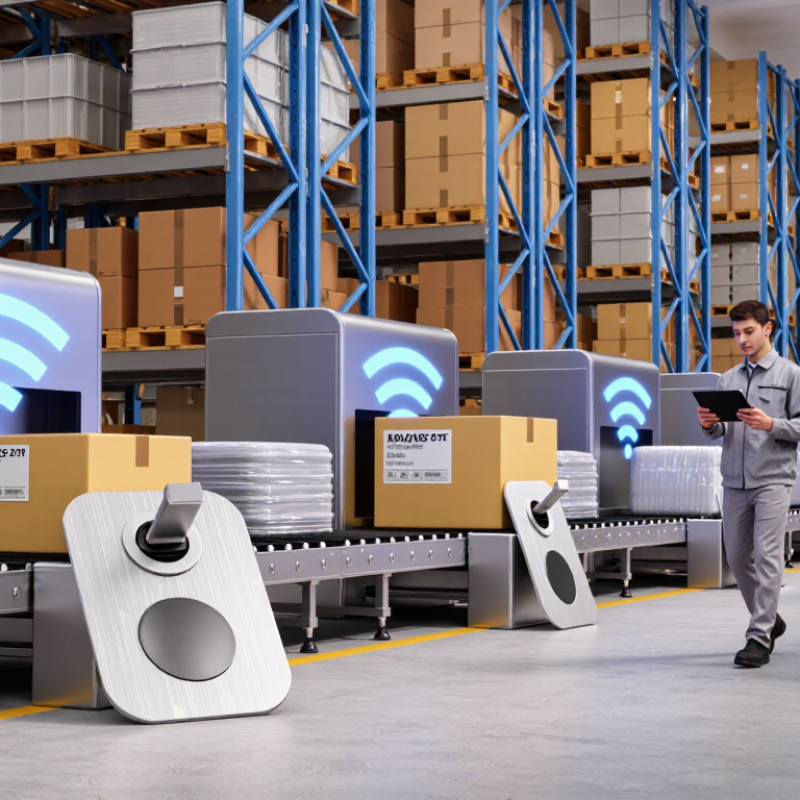
How to Choose UHF RFID Tags in 2026?

Define Your UHF RFID Application Requirements

How to Choose UHF RFID Tags in 2026?

Define Your UHF RFID Application Requirements

Before comparing tags, describe where and how each item will be identified. A label on a cardboard carton behaves differently from a tag placed beside metal or liquid. Note the item’s material, available mounting space, and likely tag orientation. Include the operating environment: temperature changes, moisture, abrasion, or repeated handling. Small details matter.

Set practical read-distance and speed targets. Does a worker scan one item at close range, or must a portal identify many moving cartons? Record acceptable missed reads and stray reads, too. A system that reads farther is not automatically better. Unwanted reads can complicate inventory checks.

Check reader placement, antenna angles, and nearby reflective surfaces during a site walk. Then test candidate tags on the actual items, not only on a clean workbench. That matters. A neat bench test can mislead. Define how tag data will connect to inventory software, and who will maintain encoding and placement instructions. Keep assumptions visible; real workflows often expose gaps that a specification sheet cannot. If the first pilot struggles, revise the requirements before settling on a tag.

Compare Frequencies, Standards, and Regional Regulations

UHF RFID operates across roughly 860–960 MHz, but the usable band depends on where tags will be deployed. European systems commonly use 865–868 MHz, while North American deployments often use 902–928 MHz. These differences affect reader settings and antenna design. A tag that performs well in one region may lose read range elsewhere.

Check standards as carefully as frequency. EPC Gen2, also known as ISO/IEC 18000-63, supports communication between compatible UHF readers and tags. Yet protocol compatibility does not guarantee identical performance. Compare the tag’s chip sensitivity, antenna design, and intended mounting surface. A label on a cardboard carton behaves differently from one placed against metal. Test actual items, not just sample specifications.

Regional radio rules can limit channels, transmission power, and equipment use. Requirements may change, so confirm current rules with the relevant national regulator before ordering tags or configuring readers. Ask suppliers for regional frequency details and test reports. Then pilot tags in the destination market, using the same reader and packaging planned for production. Small details matter. I have seen teams focus on read distance and overlook nearby liquids or metal shelving. That choice can make a neat specification sheet feel rather optimistic.

How to Choose UHF RFID Tags in 2026? - Compare Frequencies, Standards, and Regional Regulations

Comparison Dimension What to Check Practical Guidance
Frequency, Standards, and Regional Rules
Air-interface standard RAIN RFID / EPC UHF Class 1 Gen 2, standardized as ISO/IEC 18000-63 For general-purpose passive UHF systems, confirm that both the tag and reader support the same standard and the required regional frequency plan.
United States Common UHF RFID operating range: 902–928 MHz. Devices are subject to applicable FCC rules, including Part 15 requirements. Check the reader’s permitted channels, power settings, antenna configuration, and equipment authorization for the intended deployment.
European Union Common harmonized RFID range: 865–868 MHz. Equipment requirements include applicable ETSI radio standards and national implementation rules. Confirm the exact permitted sub-band, channel use, power limits, and device conformity for each country of operation.
China Common UHF RFID allocation: 920–925 MHz, subject to applicable national radio rules and equipment requirements. Verify current national requirements and approved reader settings before importing or deploying equipment.
Japan UHF RFID commonly operates in the 920 MHz band; permitted frequencies and operating conditions are set by Japanese regulations. Use equipment configured and certified for Japan rather than assuming a setting for another region will be permitted.
Australia Common UHF RFID range: 920–926 MHz, subject to local spectrum and device rules. Check current national requirements and the reader’s approved configuration for the deployment location.
Other markets Frequency allocations, channel plans, power limits, and certification requirements vary by jurisdiction. Obtain local regulatory confirmation before selecting a fixed-frequency tag-and-reader solution for cross-border use.
Regional interoperability A tag antenna is tuned for a frequency range; a reader must operate on frequencies allowed in its region. For global supply chains, consider region-specific reader configurations and test the same tag design across the actual countries of use.
Regulatory compliance Reader approval, radio-frequency exposure requirements, and permitted operating conditions may apply in addition to the air-interface standard. Do not treat a shared RFID standard as proof of regulatory approval. Confirm current rules with the relevant national authority or compliance specialist.
Tag Characteristics and Application Fit
Item material Paper, cardboard, plastic, glass, liquid-filled containers, and metal affect RF performance differently. Test the tag on the final item and in its final orientation. Use a design made for mounting on metal when the tag will be attached directly to a metal surface.
Read distance Read range depends on the tag antenna, reader power and antenna, regional limits, item material, tag orientation, and surrounding environment. Do not rely on a range figure in isolation. Validate reads at the required distance using the actual reader, item, and installation.
Tag size and antenna Larger antenna designs can support different performance and mounting options than compact designs, but results depend on the full system. Balance available label area, required read zone, orientation, and item geometry. Test the smallest acceptable tag rather than assuming size alone predicts performance.
Memory and identifier Check the required EPC identifier length, user-memory needs, and whether the application needs to read or write additional data. Many inventory applications use an EPC identifier and store detailed records in a database. Confirm the specific tag’s memory capacity and encoding support.
Mounting and materials Adhesive, label face stock, spacers, and enclosure materials can affect attachment and RF performance. Choose mounting materials suitable for the item’s surface, temperature, moisture, and expected service life; test the completed assembly.
Environmental protection Consider water, dust, chemicals, UV exposure, temperature, vibration, and cleaning processes. Specify an ingress-protection rating only where applicable, and verify it for the finished tag or enclosure under the relevant test conditions.
Use case Retail inventory, warehouse cartons, reusable containers, industrial equipment, and asset tracking have different read and durability needs. Define the read point, item speed, tag orientation, expected lifetime, and failure tolerance before comparing tag models.
Validation before purchase Performance in a test environment may differ from performance around liquids, metal, dense tag populations, or other radio devices. Run a pilot with representative items and operating conditions. Record read rate, missed reads, and unwanted reads before finalizing the specification.

Note: Frequency ranges above are commonly used examples, not a substitute for current national regulations. Confirm the permitted operating conditions and certification requirements for every deployment country.

Evaluate RFID Tag Materials, Form Factors, and Memory

A UHF RFID tag is a material-and-environment choice, not just a chip choice.

Paper inlays suit dry cartons and short product lifecycles; PET or other durable facings better tolerate handling and moisture. Metal surfaces need a purpose-built on-metal tag, often with a spacer that keeps the antenna from detuning.

Test the tag on the actual package, not a clean desk. A liquid-filled bottle or curved metal tool can change read performance quickly.

Form factor matters at the point of use. A small label may fit a cosmetic carton, while a rigid tag may survive repeated handling on a returnable tote.

RAIN Alliance’s 2024 industry report estimates that 52.8 billion RAIN tags shipped in 2023. That scale signals broad adoption, but it does not prove any one tag will work in your facility.

Measure read rates at realistic distances and angles. The awkward edge case often reveals more than the average.

Memory deserves the same scrutiny. GS1’s EPC Gen2 air-interface specification defines separate EPC, TID, user, and reserved memory banks.

Many item-level applications need only an EPC identifier; extra user memory can increase cost or encoding time without adding value.

Check the required EPC length, whether data must be rewritten, and how readers will verify it.

I would not assume that more memory means a better tag. Pilot a few candidates, record failures, and revisit the choice after seeing real handling conditions.

Match Tag Performance to Your Operating Environment

Choosing UHF RFID tags starts with the place they will work, not the longest read range on a data sheet. A tag that performs well on a cardboard carton may fail on a steel tool case. Metal reflects radio waves, while water-rich products can absorb them. Match the tag construction to the actual mounting surface, then test it at the intended distance and orientation. Check temperature, moisture, cleaning chemicals, vibration, and expected service life. A freezer label and an outdoor asset tag face very different conditions. Read performance can also shift when tags sit close together or near shelving. Small details matter.

Tips: Test samples on real items. Move them through the actual reader zone. Record missed reads, not just successful ones. Keep a few tags in the test for several days; dust, condensation, and hurried placement can change results. A lab result can flatter a tag. Field conditions are less tidy.

For metal assets, consider tags designed with a spacer or on-metal backing. For curved containers, check that the tag stays flat and attached. If items pass quickly through a doorway, test at realistic speed and from more than one angle. Confirm the reader and tag use a compatible frequency for your operating region. Avoid choosing by price alone: a cheaper tag can cost more when staff must rescan or replace it. I would still retest after installation. Real sites have odd corners, and a neat pilot rarely shows every one.

Test, Select, and Plan the Total Cost of Deployment

Choosing UHF RFID tags in 2026 starts with the object, not the catalog. Test tags on the actual materials: a carton, a liquid bottle, or a metal tool can change read performance. The RAIN Alliance’s 2024 industry report estimated 52.8 billion RAIN RFID chips shipped in 2023. That scale shows broad adoption, not that every tag suits every workflow. Keep that distinction clear.

Run a small pilot at the real read points. Record missed reads, duplicate reads, read distance, and how often staff must reposition items. Test full and nearly empty containers, stacked cases, and tags facing different directions. A clean lab result can mislead. We have seen a tag read well on a bench, then struggle beside metal shelving. Re-test after packaging or layout changes.

Plan total deployment cost, not just tag price. Include readers, antennas, software, integration, installation, training, replacement stock, and ongoing support. Estimate costs per tagged item and per successful read; then compare them with labor saved and inventory errors avoided. Leave room for rework. It happens. A modest pilot with written acceptance thresholds may cost more upfront, but it can prevent a costly rollout based on optimistic assumptions.

How to Choose UHF RFID Tags in 2026: Test, Select, and Plan Deployment Costs

Illustrative budget for a 10,000-tag deployment. Costs are planning estimates in USD, not vendor quotes; actual totals depend on tag type, site conditions, reader count, and integration scope. Test candidate tags on the real materials and surfaces before ordering at scale.

Article Source:

Learn More

Connect with us today to learn more about our industrial automation solutions—and how to commission them for your application.