
Connect with us today to learn more about our industrial automation solutions—and how to commission them for your application.
How to Choose the Best Rotomolding Chair in 2026?
Choosing the right Rotomolding Chair in 2026 means looking beyond color and price. The best option should suit its setting, feel stable under everyday use, and withstand frequent cleaning and handling. Check the chair’s weight, dimensions, seat shape, and surface finish. A glossy shell may look striking, but scratches and scuffs can show more clearly on darker colors. Small details matter.
Rotational-molding consultant Alex Morgan offers a practical reminder: “A chair earns its place through comfort, durability, and fit—not appearance alone.” Use that idea as a guide, not a substitute for product evidence. Ask manufacturers about material specifications, load testing, warranty terms, and care instructions. If a listing makes broad durability claims without supporting details, pause and ask for clarification.
Comfort is personal. Sit in the chair, if possible, and notice whether the seat edge presses against your legs or the backrest supports your posture. Outdoors, consider drainage, sun exposure, and how easily the chair moves across a patio. Indoors, check whether its footprint works around a dining table or in a compact workspace. A chair can look perfect online and still feel wrong. Choosing well takes a little scrutiny—and sometimes a second look.
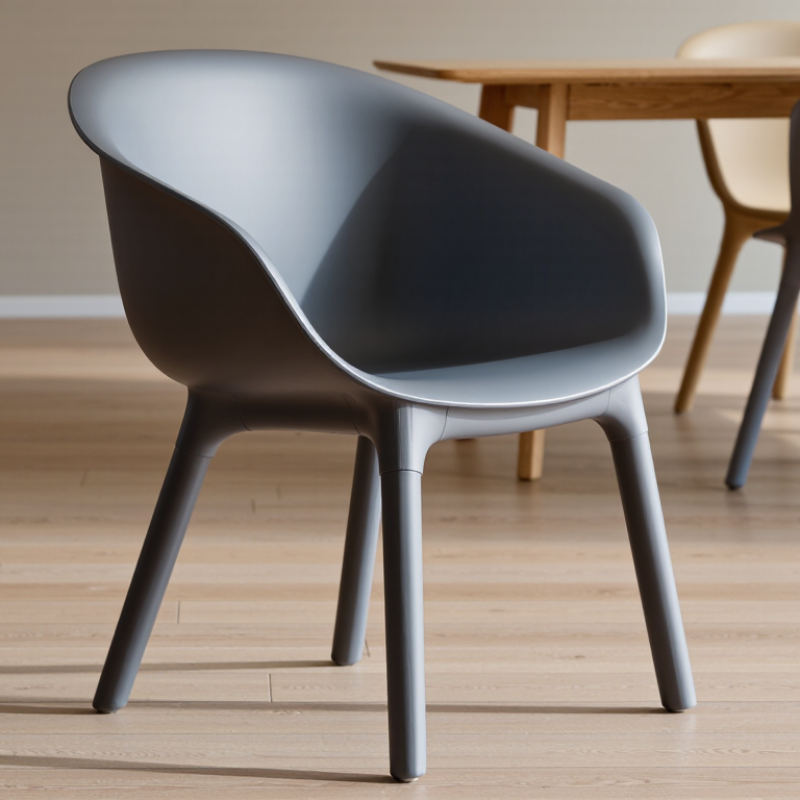
Table of Contents [Hide]
Understanding Rotomolding Chairs and Their Key Features
How to Choose the Best Rotomolding Chair in 2026?
Understanding Rotomolding Chairs and Their Key Features
Rotomolding heats plastic inside a rotating mold, forming a hollow, one-piece shell. That construction can reduce seams where water and dirt collect. It also allows rounded edges and broad, supportive shapes. But “seamless” does not mean indestructible. Check the chair’s wall thickness, stability, and weight capacity, and inspect the feet for smooth contact with the floor. A chair that rocks on a flat surface may be poorly finished.
Material and design matter. UV-stabilized polyethylene can help outdoor chairs resist sunlight-related fading and brittleness; ask for documented outdoor-use testing, not just a durability claim. Grand View Research valued the global plastic furniture market at about US$13.5 billion in 2023, reflecting broad demand—not proof that every molded chair performs well. Look for clear care instructions and measured load-test results. For testing context, ASTM D638 describes a method for measuring plastic tensile properties, though it does not by itself certify a finished chair. Sit in the chair if possible. Notice pressure behind your knees and whether the seat flexes. Comfort is personal. One trade-off remains: hollow construction can be easy to move, yet a lightweight chair may slide on smooth floors. That detail is easy to overlook.
How to Choose the Best Rotomolding Chair in 2026? - Understanding Rotomolding Chairs and Their Key Features
| Selection dimension | What to look for | Why it matters | Questions to ask before buying |
|---|---|---|---|
| Material and construction | Rotomolded chairs are commonly made from polyethylene, formed as a hollow shell. Check material specifications and whether the design is one-piece or uses assembled components. | Material, wall design, and joints affect durability, weight, maintenance, and suitability for the intended setting. | What resin is used? Are there seams, inserts, or parts that may need replacement? |
| Indoor or outdoor use | For outdoor placement, look for a stated UV-stabilized formulation and care instructions for sun, rain, and temperature exposure. | UV exposure can contribute to fading and material aging. “Plastic” alone does not confirm outdoor suitability. | Is the chair rated for continuous outdoor use? What warranty or care limits apply? |
| Comfort and ergonomics | Check seat height, seat depth, back support, edge shape, and whether the chair has a contoured seat. Try it if possible, especially for extended sitting. | A chair’s shape and dimensions have a direct effect on fit and comfort; a molded form is not automatically ergonomic for every user. | Are the seat dimensions and overall height published? Does the back support the intended sitting posture? |
| Load rating and stability | Use the manufacturer’s stated maximum load and test standard, if provided. Examine the base footprint and whether the chair rocks on a level floor. | Load capacity and stability depend on the specific chair design and testing; they cannot be reliably inferred from appearance alone. | What is the documented load limit? Which test method or standard was used? |
| Weight and portability | Compare the listed product weight and check for handholds or a shape that is easy to grip and move. | A lightweight chair is easier to reposition, while a heavier design may feel more substantial. Actual weight varies by model and size. | What is the chair’s net weight? Can one person move it safely? |
| Drainage and ventilation | For outdoor or poolside use, check whether the seat includes drainage openings and whether the design allows water to escape. | Drainage can help prevent standing water after rain or cleaning. Openings may also affect cleaning and comfort. | Does water drain from the seat? Are openings easy to clean? |
| Maintenance and cleaning | Look for a nonporous surface that can be cleaned with mild soap and water, subject to the product’s care guidance. | Simple surfaces are generally practical for shared spaces, but cleaners and abrasive tools may affect the finish. | Which cleaning products are approved? Are there textured areas that collect dirt? |
| Storage and stacking | If space is limited, confirm whether the chair is designed to stack and check the recommended stacking height. | Stackability can reduce storage space, but not every sculptural or molded chair nests safely. | Is stacking approved? Are protective spacers or a stacking limit specified? |
| Color and finish | Compare available colors, surface texture, and finish samples under the lighting where the chair will be used. | Color and texture affect appearance, visible scuffs, and how well the chair fits its surroundings. Screen images may not show exact color. | Can you review a physical sample? Is the color consistent through the material or applied as a surface coating? |
| Warranty and documentation | Review written warranty terms, assembly information, care guidance, and any applicable safety or performance documentation. | Clear documentation helps establish coverage, correct use, and the evidence behind durability or load claims. | What defects are covered, for how long, and under what conditions? |
Note: Specifications vary by chair model. Confirm dimensions, load limits, outdoor-use claims, and care instructions in the product documentation before purchase.