Top China VFD Controller Manufacturers How to Choose?
Selecting among China’s top VFD controller manufacturers requires more than comparing prices, catalogs, or attractive efficiency claims. A variable frequency drive controls motor speed, torque, acceleration, and energy use. Its quality appears in real conditions: a dusty factory floor, unstable power, frequent starts, and long cable runs. The International Energy Agency reports that electric motor systems consume roughly half of global electricity. The U.S. Department of Energy also indicates that motor-driven equipment can account for about 70% of industrial electricity consumption. Small control decisions can therefore create significant operating costs.
A reliable vfd controller supplier should demonstrate engineering depth, production consistency, testing capability, and after-sales support. Look for verified efficiency data, EMC compliance, thermal protection, overload ratings, firmware stability, and documented field experience. Dr. Austin Hughes, author of Electric Motors and Drives, states, “The speed of an induction motor is determined by the frequency of the supply.” This simple principle explains why controller accuracy matters. Poor frequency control can produce heat, vibration, unstable torque, and premature motor failure.
Yet manufacturer rankings are never perfectly objective. Market reports often use different definitions, and some supplier claims deserve closer inspection. A polished website proves little. Ask for test records, reference projects, spare-parts policies, and response times. Compare total ownership cost, not only the purchase quotation. The cheapest unit may become expensive after one failed cooling fan or unavailable circuit board. A careful selection process leaves room for uncertainty, practical testing, and honest technical questions.
What Is a VFD Controller and How Does It Work?
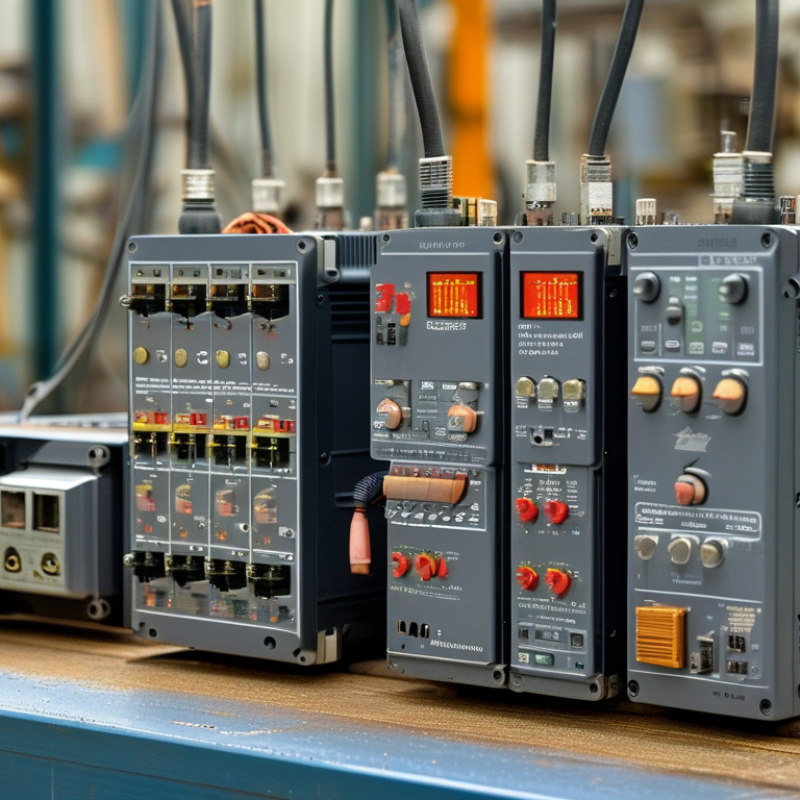
A variable frequency drive (VFD) controller regulates an electric motor’s speed, torque, and direction. It does this by changing the frequency and voltage supplied to the motor. A typical unit first converts incoming AC power into DC through a rectifier. The DC link then smooths the energy with capacitors and filtering components. Finally, inverter switches create a controlled AC waveform for the motor.
It is not a magic speed knob. The controller reads current, voltage, temperature, and sometimes motor position. Its software adjusts switching patterns within milliseconds. For example, a conveyor may start at 10 Hz, accelerate gradually, and reach 50 Hz without a sharp mechanical shock. This reduces belt stress and limits starting current. In pump systems, sensor feedback can maintain stable pressure as demand changes.
When comparing VFD controller manufacturers, check motor compatibility, overload capacity, enclosure protection, cooling design, and service documentation. Field experience shows that a low-cost unit can perform well in a clean cabinet, but dust and heat expose weak designs quickly. Harmonic distortion, grounding, cable length, and electromagnetic interference also require engineering attention. Some installations still fail because parameters are copied without measuring the motor. That shortcut is tempting, but unreliable. A qualified technician should verify acceleration time, carrier frequency, braking behavior, and fault records during commissioning. Even experienced teams can miss one detail.
Key Features of Leading China VFD Controller Manufacturers
Leading China VFD controller manufacturers distinguish themselves through measurable engineering, not attractive brochures. The International Energy Agency reports that electric motor systems consume nearly half of global electricity. This makes efficiency, control accuracy, and service life important purchasing factors. Look for controllers supporting IEC 61800 requirements, compatible voltage ranges, and clear efficiency test records. Ask for real load data, not only laboratory claims.
A reliable controller should provide sensorless vector control, adjustable acceleration, overload protection, and stable operation during voltage fluctuation. Thermal derating matters in hot factory rooms. So does enclosure protection against dust and moisture. Confirm EMC testing, insulation performance, and fault history before ordering. Small details matter. A polished brochure is not proof.
The U.S. Department of Energy identifies motor systems as a major industrial electricity user, making energy monitoring valuable after installation. Leading manufacturers should offer communication protocols, parameter backups, wiring diagrams, and responsive technical support. Check whether engineers can explain harmonic distortion and braking resistor selection clearly. Request sample testing with your motor, cable length, and operating cycle.
Test it cold. Then test it under continuous load. Price remains relevant, but an inexpensive controller may create hidden downtime, replacement, or commissioning costs. Some supplier claims still need independent verification. That is where careful buyers should remain skeptical.
How to Compare China VFD Controller Suppliers
How to Compare China VFD Controller Suppliers
Comparing China VFD controller suppliers requires more than checking the lowest quotation. The International Energy Agency reports that electric motor systems consume about 40% of global electricity. Therefore, efficiency, control accuracy, and service support directly affect operating costs. Request verified efficiency curves, overload capacity, speed range, braking performance, and harmonic data. A neat datasheet is not proof. Ask for test records from a matching motor and load.
Factory capability matters. Check whether the supplier controls PCB assembly, firmware testing, aging tests, and final inspection internally. Review ISO 9001 records, product test procedures, and certificates relevant to your market. For industrial installations, compare compliance with IEC 61800 requirements, enclosure ratings, cooling design, and electromagnetic compatibility. The International Energy Agency also notes that efficient motor systems can provide substantial energy-saving potential, but poor parameter settings can remove those gains.
Service separates suppliers after delivery. Compare response times, spare-part availability, remote diagnostics, firmware procedures, and warranty exclusions. Ask for references from applications with similar voltage, power, dust, temperature, and duty cycles. Total cost is not only the purchase price; commissioning labor and downtime can be higher. I have seen buyers overvalue a small discount and underestimate technical support. That judgment deserves review. A practical comparison should score performance, reliability, documentation, and support separately, then validate the highest-scoring supplier with a sample test.
Top China VFD Controller Manufacturers: How to Choose and Compare Suppliers
A practical procurement benchmark for comparing China-based VFD controller suppliers. The percentages represent the typical importance of each evaluation criterion in an industrial purchasing decision, rather than data from any specific company or brand.
Buyers should give priority to application suitability, overload performance, safety compliance, efficiency, after-sales support, customization capability, and delivery reliability when comparing VFD controller suppliers.
How to Select the Right VFD Controller Manufacturer
Choosing a VFD controller manufacturer requires more than comparing catalog prices. Start with your motor data, load profile, supply voltage, and operating environment. A supplier should explain how its controller handles pumps, conveyors, fans, or sudden torque changes.
Ask for documented testing, not attractive promises. Check efficiency results, thermal limits, EMC performance, and protection against overload, dust, and unstable voltage. Small details matter. Request sample manuals, wiring diagrams, inspection records, and valid quality certificates. These documents reveal whether the manufacturer understands installation problems beyond the sales stage.
Experience matters. Review the company’s work in applications similar to yours, including outdoor cabinets or high-temperature workshops. Ask how engineers troubleshoot fault codes and how quickly replacement parts can arrive. A clear warranty is useful, but repair procedures matter more. One weakness in my own early evaluations was trusting a polished presentation too quickly. That was careless. A factory audit, sample test, or video inspection can expose weak assembly practices. Reliable manufacturers usually provide traceable serial numbers, burn-in records, software update procedures, and technician training. Confirm communication quality before signing anything. Keep technical questions specific, and note whether answers remain consistent across sales and engineering teams.