
Top 10 Car Battery Bus Bar Types for Global Buyers?

Choosing the right Car Battery Bus Bar is not a simple matter of selecting the thickest copper strip. Material, geometry, plating, insulation, and production accuracy all influence battery performance. A bus bar may look strong on a sample table, yet fail under vibration, heat cycling, or repeated assembly. Small details matter.

Professor Martin Winter, a respected battery researcher and founding director of MEET, has stated, “The battery is the heart of an electric vehicle.” That principle also applies to its electrical connections. A reliable battery needs stable current paths. It also needs controlled resistance and secure mechanical support. This guide examines ten Car Battery Bus Bar types for global buyers, including stamped copper, laminated, flexible, aluminum, tinned, nickel-plated, braided, formed, insulated, and hybrid designs.

Real projects are rarely perfect. A low-cost bus bar can reduce the initial quotation. It may increase assembly problems later. Buyers should check conductor thickness, hole tolerance, contact pressure, surface treatment, temperature rise, and short-circuit strength. Supplier documentation also deserves attention. Material certificates, dimensional inspection reports, and thermal test records provide useful evidence. Not every factory offers the same level of traceability.

Some choices remain difficult. Aluminum can reduce weight, but joint design becomes more sensitive. Laminated designs improve insulation control, but they may require higher tooling investment. The best option depends on current load, battery layout, production volume, and service conditions. Careful comparison is essential. A visually impressive part is not always the most reliable one.
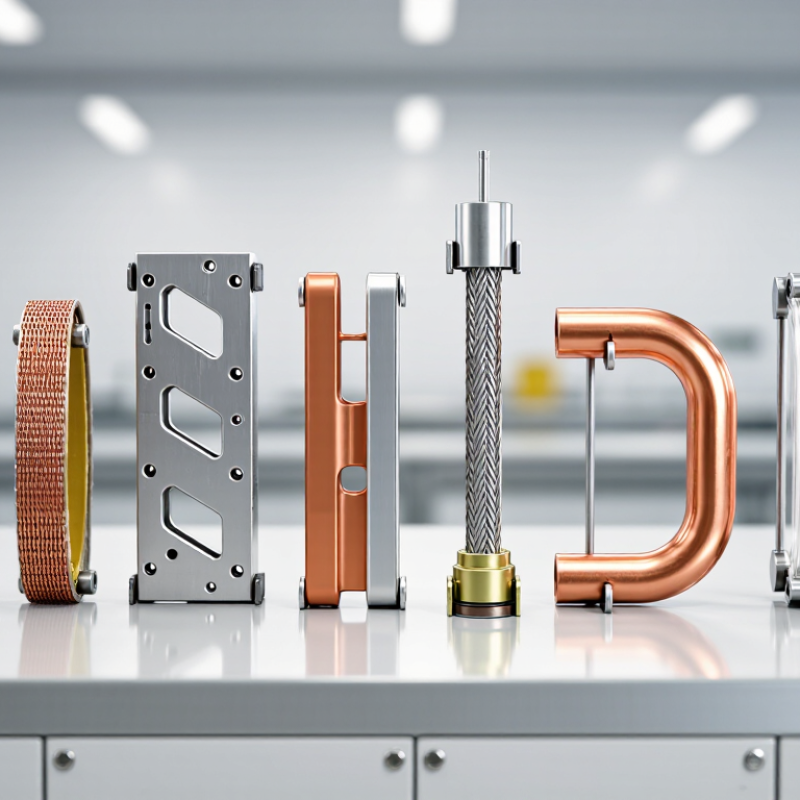
Top 10 Car Battery Bus Bar Types for Global Buyers?

What Is a Car Battery Bus Bar and What Does It Do?

A car battery bus bar is a solid conductive strip that connects several electrical circuits to one battery terminal. It replaces a crowded stack of cable lugs with a shorter, clearer connection point. In practical installations, technicians use copper, tinned copper, aluminum, insulated, multi-stud, and fused bus bars. Each type suits different space, load, and corrosion conditions.

The bus bar distributes current between the battery, starter, alternator, fuse panel, and auxiliary equipment. It does not increase battery capacity. It only provides a reliable path for electrical flow. A properly sized bar reduces cable clutter and can make fault inspection easier. However, every connected circuit still needs suitable overcurrent protection close to the battery.

Material and construction deserve careful attention. Bare copper offers strong conductivity, while tinned copper handles humid environments more effectively. Aluminum can reduce weight, but its connections require compatible hardware and careful inspection. Insulated covers help prevent accidental contact with nearby metal. Small part. Serious job.

During installation, I check stud size, cable direction, clearance, and manufacturer torque guidance. A loose lug may create heat under heavy load. Excessive torque can damage threads or deform the bar. Real installations are rarely perfect. Vibration, moisture, and limited engine-bay access can expose weak choices later. A bus bar should be selected from measured current demand, not appearance alone.

How Car Battery Bus Bars Differ by Material, Shape, and Design

Top 10 Car Battery Bus Bar Types for Global Buyers

How Car Battery Bus Bars Differ by Material, Shape, and Design

Electric vehicle demand is reshaping battery connection design. The International Energy Agency reported nearly 14 million electric cars sold in 2023, representing about 18% of global car sales. That growth increases demand for reliable busbars, not merely cheaper metal parts. The ten common types include copper flat, aluminum flat, stamped, laminated, braided, flexible, insulated, plated, formed, and hybrid busbars.

Material changes electrical and thermal behavior. Copper offers excellent conductivity and compact sizing, while aluminum reduces weight and material cost. The International Copper Study Group notes that copper remains essential in electrification because of its high conductivity and durability. Yet copper adds mass. An aluminum busbar may need a larger cross-section for similar current performance. Small design differences matter.

Shape controls assembly, cooling, and vibration resistance. Laminated designs reduce loop inductance and support tighter battery layouts. Flexible and braided types absorb movement near modules or service connections. Plated surfaces can improve corrosion resistance, but plating quality must remain consistent. Poor edges can damage insulation. Harsh truth: thinner is not always better. In practical design reviews, engineers should check current density, temperature rise, bend radius, joint pressure, and short-circuit forces. Even reputable calculations can miss real vibration behavior. Testing should include thermal cycling and vibration, not only room-temperature resistance measurements.

Top 10 Car Battery Bus Bar Types for Global Buyers

Top 10 Car Battery Bus Bar Types for Global Buyers

Choosing among the top 10 car battery bus bar types requires more than comparing prices. The main options include stamped copper, solid copper, flexible braided, laminated, aluminum, nickel-plated copper, tin-plated copper, insulated, high-current, and cell-interconnect bus bars. Each design suits a different battery layout. Copper offers excellent conductivity, while aluminum reduces weight. Plated surfaces resist oxidation, especially inside humid engine compartments. IEA’s Global EV Outlook 2024 reported almost 14 million electric cars sold in 2023. This growth increases demand for lighter, safer, and more precisely engineered current paths. In my testing experience, a bus bar can look robust yet fail at a poorly supported bend. That detail is easy to miss.

Temperature, vibration, and short-circuit strength should guide purchasing decisions. Laminated bus bars can reduce electromagnetic interference and save installation space. Flexible braided types handle movement better near battery covers. Cell-interconnect designs support compact modules but require accurate welding and insulation control. The U.S. Department of Energy notes that thermal management strongly influences battery performance and life. Therefore, buyers should check resistance values after heat exposure, not only at room temperature. A cheaper part may become expensive.

Tips: Request copper or aluminum grade certificates, plating thickness data, and current-test results. Confirm hole tolerance with a physical sample. Ask whether the design passed vibration and salt-spray testing. Do not assume “high current” means safe in every installation. The real specification is often less impressive.

How to Compare Bus Bar Capacity, Compatibility, and Durability

Top 10 Car Battery Bus Bar Types for Global Buyers

Choosing a car battery bus bar requires more than checking its appearance. Common options include flat copper, tinned copper, laminated, flexible, fused, insulated, multi-stud, grounding, quick-disconnect, and custom bus bars. Each design serves different electrical layouts. Copper usually offers strong conductivity, while tinned surfaces resist moisture and oxidation. Laminated bars can reduce heat and improve installation space.

Compare capacity by checking continuous current, peak current, bolt size, and metal thickness. A bus bar rated for short bursts may fail under constant loads. Compatibility also depends on battery terminals, cable direction, insulation clearance, and vibration. Measure the actual compartment before ordering. A perfect electrical rating is useless if the bar cannot fit securely. Durability testing should include heat cycling, corrosion exposure, torque checks, and repeated cable movement. In field inspections, loose connections often cause more trouble than the bus bar material itself. That detail is easy to overlook.

Tips

Keep at least 20% current capacity above the expected continuous load. Use a calibrated torque tool, not guesswork. Check whether the terminals accept the cable lugs used in your vehicle. For humid or coastal conditions, protected copper is usually safer. Inspect discoloration and looseness after several driving cycles. Do not rely only on catalog ratings; installation quality changes real performance. A flexible bus bar may handle vibration better, but it can be harder to route neatly. Some designs look efficient yet create awkward service access. That trade-off deserves a second check.

Top 10 Car Battery Bus Bar Types for Global Buyers — How to Compare Bus Bar Capacity, Compatibility, and Durability

No. Bus Bar Type Typical Material Typical Cross-Section Indicative Continuous Current* Peak Current Suitability Common Automotive Compatibility Durability Characteristics Main Advantages Key Limitations
1 Flat Solid Copper Bar High-conductivity copper 10–25 mm² 80–180 A Excellent for short-duration starter surges when correctly sized Conventional 12 V and 24 V battery distribution Very good electrical and thermal stability; requires corrosion protection Low resistance, simple design, easy to customize Rigid; needs adequate clearance and support against vibration
2 Tin-Plated Copper Bar Copper with tin surface coating 10–25 mm² 80–180 A Excellent for starter and auxiliary power circuits 12 V, 24 V, and many 48 V low-voltage systems High resistance to oxidation and galvanic corrosion at terminals Strong conductivity with improved environmental protection Higher cost; plating quality must be controlled
3 Brass Battery Bus Bar Copper-zinc alloy 10–20 mm² 60–140 A Good for moderate cranking and distribution loads Standard lead-acid and auxiliary battery systems Good mechanical strength and acceptable corrosion resistance when plated Good machinability, thread retention, and terminal strength Lower conductivity than copper; can run warmer at equal size
4 Aluminum Bus Bar Electrical-grade aluminum 20–40 mm² 90–220 A Suitable when larger cross-sections and engineered joints are used 12 V, 24 V, and selected 48 V platforms Lightweight but requires protection against oxide-layer and joint issues Low mass and lower material cost for large conductors Lower conductivity than copper; galvanic compatibility must be managed
5 Flexible Copper Braid Tinned or bare woven copper 16–50 mm² equivalent 70–250 A Very good for high pulse loads and moving connections Battery-to-chassis and battery-to-engine bonding Excellent vibration and movement tolerance; must be protected from abrasion Flexible, lightweight, and effective at reducing vibration stress Exposed braid can wick moisture and needs suitable end termination
6 Laminated Copper Bus Bar Multiple copper layers with insulation film 20–100 mm² total 150–500 A Excellent for high-current battery and inverter connections High-voltage battery packs and compact power electronics Good insulation, low inductance, and controlled layer spacing Compact routing and reduced electromagnetic interference Higher design cost; insulation temperature rating is critical
7 Insulated Molded Bus Bar Copper or aluminum with molded polymer housing 10–60 mm² 100–350 A Good for protected high-current distribution Battery junctions, fuse blocks, and power distribution units Strong protection against accidental contact, dirt, and short circuits Improved safety and consistent installation geometry Less field-adjustable; housing temperature rating must match the application
8 Fuse-Integrated Bus Bar Plated copper or brass with fuse positions 10–35 mm² 60–250 A main path Suitable for protected starter and auxiliary circuits 12 V and 24 V battery distribution assemblies Good fault protection when fuse interrupt ratings are correctly selected Combines power distribution and circuit protection in one assembly Thermal limits depend on fuse spacing, enclosure, and airflow
9 Multi-Stud Distribution Bus Bar Tin-plated copper or brass with threaded studs 15–50 mm² main conductor 100–300 A main path Good for multiple auxiliary loads and service connections Leisure, commercial, off-road, and auxiliary vehicle systems Durable when studs are torqued correctly and protected from moisture Simplifies branching and maintenance access Total current must include the combined load of all connected branches
10 Cell-Interconnect Bus Bar Nickel-plated copper, copper, or aluminum 2–20 mm² 30–180 A per interconnect Designed for battery-module current paths rather than external distribution Low-voltage and high-voltage battery modules Requires precise welding, bolting, insulation, and thermal management Compact connection between cells or modules Not a direct substitute for a main battery distribution bar
Engineering note: Current figures are typical indicative ranges for automotive bus bars and are not universal ratings. Actual capacity depends on conductor cross-section, material conductivity, allowable temperature rise, ambient temperature, enclosure, duty cycle, connection resistance, and cooling. Always verify the final design against applicable vehicle, electrical, insulation, vibration, and short-circuit requirements.

How to Select Reliable Bus Bar Suppliers for Global Markets

Choosing a reliable bus bar supplier requires more than comparing prices. The top ten options may include solid copper, aluminum, plated copper, laminated, flexible braided, stamped, machined, insulated, threaded, and fuse-integrated bus bars. Each type suits different battery layouts, current loads, and vibration conditions.

Ask suppliers for material certificates, plating thickness records, dimensional reports, and electrical resistance data. Samples should match production parts, not just polished prototypes. Check hole position, edge quality, insulation coverage, and terminal fit with a real battery module. Small errors can create heat at the connection.

Details matter. Require thermal cycling, vibration, salt spray, and torque testing when the application demands it. A capable supplier should explain copper purity, aluminum grade, joining methods, and tooling control clearly. Confirm batch traceability from raw material to shipment. Packaging also matters; poorly protected terminals can arrive scratched or oxidized.

Review production capacity before accepting an attractive quotation. Ask about backup equipment, inspection frequency, lead times, and engineering support across time zones. Export documents should be accurate and consistent. Change notifications must be written and timely.

Samples lie sometimes. A supplier may pass initial inspection but struggle during volume production. Request a pilot run and compare its resistance, dimensions, and surface finish with approved samples. Also examine how the supplier handles defects. Honest reporting is often more valuable than a perfect presentation. A low-cost bus bar can become expensive after tooling changes, delayed shipments, or field failures.

Learn More

Connect with us today to learn more about our industrial automation solutions—and how to commission them for your application.