
Connect with us today to learn more about our industrial automation solutions—and how to commission them for your application.
China Top Automatic Gate Manufacturers for Global Buyers
China has become a major sourcing hub for Automatic Gate systems, serving residential, commercial, industrial, and infrastructure projects worldwide. Its manufacturers increasingly combine motors, control boards, sensors, remote access, and safety detection in one coordinated system.
Fortune Business Insights estimates that the global gate automation market was worth approximately USD 2.11 billion in 2024. The report expects continued growth through 2032, supported by urban development, parking automation, and stronger demand for controlled entry. However, market estimates vary between research companies. The data is not perfectly measured. That difference deserves attention.
For global buyers, factory selection involves more than comparing prices. A reliable supplier should demonstrate tested motors, clear load ratings, stable opening cycles, weather-resistant enclosures, and documented quality controls. Installation support matters too. A heavy sliding gate can expose weak gears within months. A narrow driveway can reveal poor sensor calibration immediately.
Security technology expert Bruce Schneier offers a useful principle: “Security is a process, not a product.” His statement applies directly to automatic entrance systems. A gate requires suitable design, correct installation, regular maintenance, and responsible user access.
This guide examines China’s leading Automatic Gate manufacturers through practical buying criteria. It considers product range, manufacturing experience, export capability, customization, certifications, after-sales service, and application suitability. Some suppliers may look impressive online but lack transparent testing records. Buyers should ask harder questions. The best choice is not always the cheapest quote.
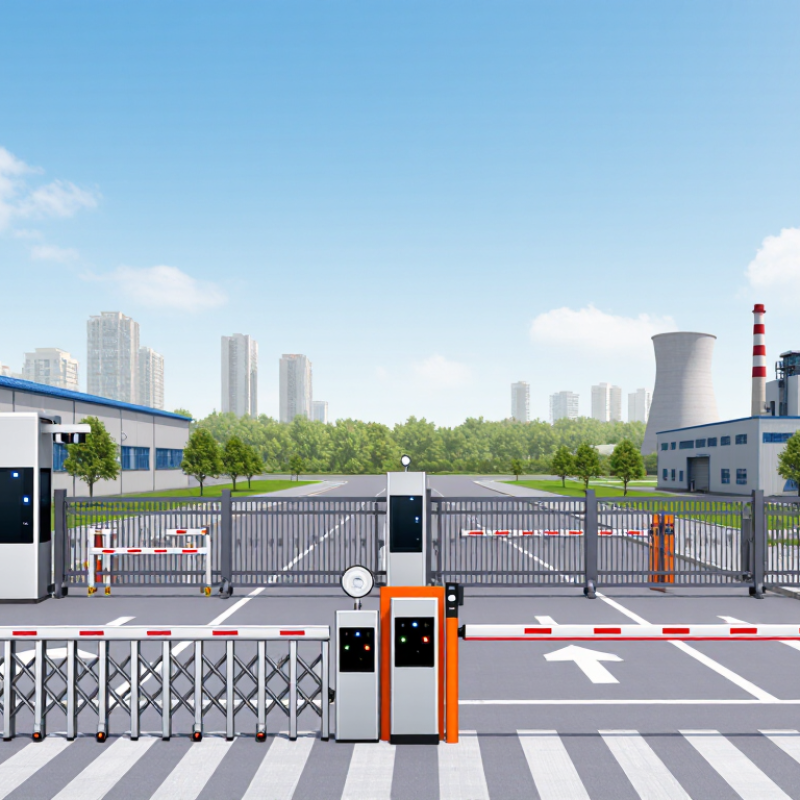
Automatic Gate Industry Scope: 2024 Market Growth and China’s Export Role
China Top Automatic Gate Manufacturers for Global Buyers
In 2024, the automatic gate industry is expanding with residential, commercial, and logistics construction. Demand is rising for safer entrances, contactless access, and controlled vehicle movement. Smart sensors, remote monitoring, and mobile access are becoming practical features, not luxury additions. However, adoption differs widely between regions. Price sensitivity remains strong in developing markets.
China plays an important export role through its broad manufacturing network. Producers can source motors, control boards, sensors, steel parts, and safety components locally. This supports flexible production for residential driveways, factories, parking areas, and public facilities. Experienced manufacturers also provide installation guides, wiring diagrams, product testing, and replacement-part support. These details matter when equipment crosses borders.
Global buyers should examine more than factory price. They need to check cycle testing, weather resistance, emergency release design, and electrical compatibility. Export documents must be accurate and clearly prepared. Some suppliers still underestimate local service requirements. That weakness can turn a reliable gate into a costly maintenance problem. Forecasts may also appear too confident, because construction slowdowns and shipping delays can quickly affect orders. Careful audits, sample testing, and direct technical communication remain essential.
China’s Export Role in the Automatic Gate Industry
The indexed market-growth series uses 2024 as the base year and applies a 6.5% annual growth assumption through 2030, consistent with the mid-range CAGR reported across public automatic-door and access-control market studies. China’s export-role series shows its share of global merchandise exports, providing a transparent macro indicator of China’s manufacturing and international supply capacity.
Sources: World Trade Organization, “World Trade Statistical Review”; market-growth assumption based on publicly reported 2024–2030 automatic-door and access-control market CAGR estimates. Automatic gates are not separately isolated in standard international customs classifications.
Core Technologies: Motor Power, Opening Speed, Duty Cycles, and IP Ratings
China Top Automatic Gate Manufacturers for Global Buyers
Motor power should match gate mass, length, wind exposure, and daily traffic. A 400W motor may move a light residential gate smoothly, yet struggle with a long steel sliding gate. Power alone is not proof of performance. Field testing should record starting torque, thermal rise, and emergency release effort. Mordor Intelligence’s 2024 market assessment expects the automatic gate and door opening system market to grow at about 6% annually through 2029. That growth increases supplier choice, but also makes technical comparison harder.
Opening speed is usually measured in metres per second. Many sliding systems operate near 0.2–0.3 m/s, balancing convenience and controlled movement. Faster is not always better. Duty cycles matter more at factories, apartments, and logistics sites. A 30% duty rating may suit occasional use, while high-traffic entrances need continuous or carefully calculated service. I have seen buyers select motors by peak power, then overlook heat buildup. That mistake is expensive.
IP ratings show enclosure protection under IEC 60529. IP54 resists limited dust and water splashes; IP65 offers stronger dust protection and water-jet resistance. Neither rating guarantees performance after poor cable sealing or flooding. UL Solutions’ safety research repeatedly highlights installation and maintenance as major risk controls. Suppliers should provide cycle-test records, temperature data, and clear IP test conditions. One detail is often missing: real site conditions. Wind, mud, voltage variation, and winter grease can change the result. Specifications are useful. Evidence is better.
| Automatic Gate System | Typical Gate Load or Size | Typical Motor Power | Typical Opening Speed | Typical Duty Cycle | Common IP Rating | Core Technology and Buyer Considerations |
|---|---|---|---|---|---|---|
| Residential Sliding Gate | Approximately 300–800 kg gate leaves; generally used for private driveways and small compounds | 200–600 W | 10–20 m/min | Intermittent duty; commonly around 20%–30% depending on traffic frequency | IP44–IP55 | Rack-and-pinion transmission, obstacle detection, soft start and stop, manual release, and optional battery backup. Confirm the actual gate weight, travel length, slope, and wind exposure before selecting the motor. |
| Commercial Sliding Gate | Approximately 600–2,000 kg gate leaves; suitable for warehouses, offices, schools, and residential developments | 400–1,500 W | 10–25 m/min | Medium duty; commonly around 30%–50% with suitable thermal protection | IP54–IP65 | Higher-torque gear motors, reinforced drive components, adjustable limit switches, photocells, emergency release, and access-control integration are commonly specified. |
| Heavy-Duty Industrial Sliding Gate | Approximately 1,500–5,000 kg gate leaves; used at factories, logistics centers, ports, and high-security sites | 1,000–3,000 W | 8–18 m/min | High duty; commonly around 50%–100% when designed for frequent or continuous operation | IP55–IP67 | Industrial gearboxes, high-starting torque, forced cooling or thermal protection, encoder feedback, braking control, and redundant safety devices may be required. Foundation quality and gate alignment are critical. |
| Residential Swing Gate | Typically 2–4 m per leaf and approximately 100–400 kg per leaf | 150–400 W per operator | 12–25 seconds for a 90° opening | Intermittent duty; commonly around 20%–30% | IP44–IP55 | Linear actuators and articulated-arm operators are common. Selection depends on leaf length, weight, hinge geometry, wind pressure, and the required opening angle. |
| Commercial Swing Gate | Typically 3–6 m per leaf and approximately 300–800 kg per leaf | 300–1,000 W per operator | 15–30 seconds for a 90° opening | Medium duty; commonly around 30%–50% | IP54–IP65 | Heavy-duty arms or underground operators, adjustable force control, limit management, photocells, magnetic locks, and access-control interfaces are typical requirements. |
| Industrial Swing Gate | Typically 4–8 m per leaf and approximately 500–1,500 kg per leaf | 750–2,000 W per operator | 20–45 seconds for a 90° opening | High duty; commonly around 50%–100% with appropriate cooling and control systems | IP55–IP67 | High-load hinges, reinforced gearboxes, encoder-based positioning, mechanical stops, emergency operation, and a risk-assessed safety circuit are important for industrial installations. |
| Automatic Barrier Gate | Barrier arms commonly 3–8 m long; designed for vehicles rather than solid gate leaves | 100–500 W | 1.5–6 seconds for a 90° movement | Medium to continuous duty; often specified by cycles per hour rather than only by percentage | IP44–IP65 | Brushless or geared motors, counterbalance springs, loop detectors, vehicle presence sensors, LED boom lighting, and anti-crush protection are common. Wind load must be assessed for long arms. |
| High-Speed Industrial Gate | Usually designed for large openings in factories, warehouses, clean areas, and logistics facilities | 750–3,000 W | 0.5–2.5 m/s | High-frequency operation; commonly designed for hundreds of cycles per day or more | IP54–IP65 | High-speed drives, frequency control, safety light curtains, radar or induction-loop activation, wind-lock systems, and automatic reset functions are typically required. |
| Cold-Climate Automatic Gate System | Load and size vary by gate type; selection must account for snow, ice, and low-temperature lubrication | Usually 10%–30% above the standard calculated requirement | May be reduced in low temperatures | Depends on motor thermal rating, heating provisions, and site maintenance conditions | IP55–IP67 | Specify low-temperature-rated lubricants, sealed enclosures, heated control cabinets where necessary, frost-resistant sensors, and a manual release that remains usable during power failure. |
| Coastal or High-Humidity Gate System | Load and size vary by gate type; corrosion exposure is often the main design factor | Based on calculated gate load and friction | Selected according to gate type and safety requirements | Depends on traffic level and motor thermal class | IP65–IP67 recommended for exposed equipment | Use corrosion-resistant fasteners, suitable powder coating or stainless-steel components, sealed cable glands, drainage provisions, and regular inspection of hinges, racks, control boxes, and safety devices. |
Manufacturer Evaluation: ISO 9001, CE, UL 325, and EN 12453 Compliance
When evaluating China’s automatic gate manufacturers, global buyers should treat compliance evidence as a working process, not a decorative certificate. ISO 9001 indicates a controlled quality management system, including documented procedures, corrective actions, and traceable production records. It does not prove that every gate is safe. Ask for the certificate scope, audit date, and manufacturing address.
CE marking requires conformity with applicable European requirements, supported by a technical file and risk assessment. EN 12453 focuses on the safe use of power-operated gates, including crushing, impact, and entrapment risks. Request test reports for the actual gate configuration, not only a standard product brochure. Check safety edges, photocells, emergency release systems, and closing-force measurements. Small details matter.
For the United States, UL 325 is a key reference for gate operators and related entrapment protection. Confirm whether the operator, controls, monitored sensors, and installation instructions match the intended application. Ask how design changes are reviewed and how failed inspections are corrected. Good manufacturers can explain these steps clearly. Ask for evidence.
Factory experience also deserves practical testing. Review sample inspection records, wiring diagrams, spare-part control, and installer training materials. A certificate may be genuine but still cover another model or an earlier production site. That is an uncomfortable gap. Buyers should independently verify certificates with the issuing body and compare serial numbers, ratings, and regional requirements before placing a large order. Safety performance depends on installation, maintenance, and site conditions, not paperwork alone.
Product Categories: Sliding, Swing, Barrier, Folding, and High-Speed Gates
Global buyers evaluating China’s automatic gate manufacturers should match gate type to traffic patterns, available space, and safety requirements.
Sliding gates suit wide entrances where a clear side run is available. They handle heavy vehicle access well, but their tracks need drainage and regular cleaning.
Swing gates create a formal entrance with simpler ground preparation. They need generous opening space and accurate hinge alignment.
Small details matter.
Barrier gates work well at parking entrances, toll areas, and controlled vehicle lanes. Their fast arm movement supports frequent traffic, while sensors and loops help prevent unsafe closing.
Folding gates are useful when the entrance is wide but side clearance is limited. They open in sections, reducing the depth required behind the gate.
High-speed gates suit warehouses, logistics hubs, and temperature-sensitive rooms. Their curtain, motor, and control system must match cycle frequency.
When comparing suppliers, buyers should request load data, cycle testing, wiring diagrams, and maintenance guidance.
Factory quality is not proven by appearance alone. Check weld consistency, coated surfaces, emergency release design, and spare-part availability. Request test records aligned with applicable local standards.
A practical site survey should record wind exposure, pavement slope, power supply, and pedestrian routes.
One common mistake is choosing speed before studying daily traffic. That decision can increase wear and service costs.
Specifications sometimes look impressive. Field conditions are less forgiving.
Global Buyer Checklist: MOQ, Lead Time, Warranty, Testing, and After-Sales Support
China Top Automatic Gate Manufacturers for Global Buyers
A reliable automatic gate supplier should answer five questions clearly: MOQ, lead time, warranty, testing, and after-sales support. MarketsandMarkets’ 2024 Gate Automation Market report projects steady global growth through 2029, increasing pressure on factories to prove consistency, not just offer low prices. Ask for a written MOQ by model, motor type, and customization level. A low MOQ can still hide higher tooling or packaging costs.
Lead time needs evidence. Request a production schedule showing component sourcing, assembly, testing, and shipment. For standard gates, 20–35 days may be practical; customized systems often need longer. Confirm whether the warranty covers the motor, controller, sensors, and remote devices separately. ISO 9001-based quality systems help, but certification alone does not guarantee field performance. Request test records for cycle endurance, obstacle detection, water resistance, and voltage fluctuation. Small details matter.
Tips: Ask for one complete sample unit. Record opening speed, noise, emergency release, and sensor response on video. Require serial-number tracking and spare-parts availability for at least three years. The World Bank’s Logistics Performance Index 2023 highlights reliability and shipment visibility as major supply-chain factors. Yet many buyers still accept vague delivery promises. That is risky. A clearer checklist is better, though it may slow negotiations slightly.