
Top 10 Electric Forklift Battery Options for Global Buyers

As the demand for efficient warehouse operations grows, the importance of reliable "Electric Forklift Batteries" becomes paramount. According to a recent report by the Industrial Truck Association, electric forklifts account for over 60% of the market due to their eco-friendliness and lower operational costs. Expert Dr. Sarah Thompson emphasizes, "The shift towards electric options isn't just a trend, it's a necessity for sustainable business practices."

Industry professionals often debate the optimal battery type for electric forklifts. Lead-acid batteries are cost-effective but have limited cycle life. Lithium-ion batteries offer longer lifespans and quicker charging but come at a higher initial cost. This diversity necessitates careful consideration of operational needs.

Global buyers must evaluate various aspects, including reliability, maintenance, and energy efficiency. Reports indicate that poor battery choice can lead to increased downtime and costs. Sourcing the right "Electric Forklift Battery" tailored to specific operational demands can lead to a significant competitive advantage. Decisions in this area require reflection and weigh the immediate benefits against long-term performance.
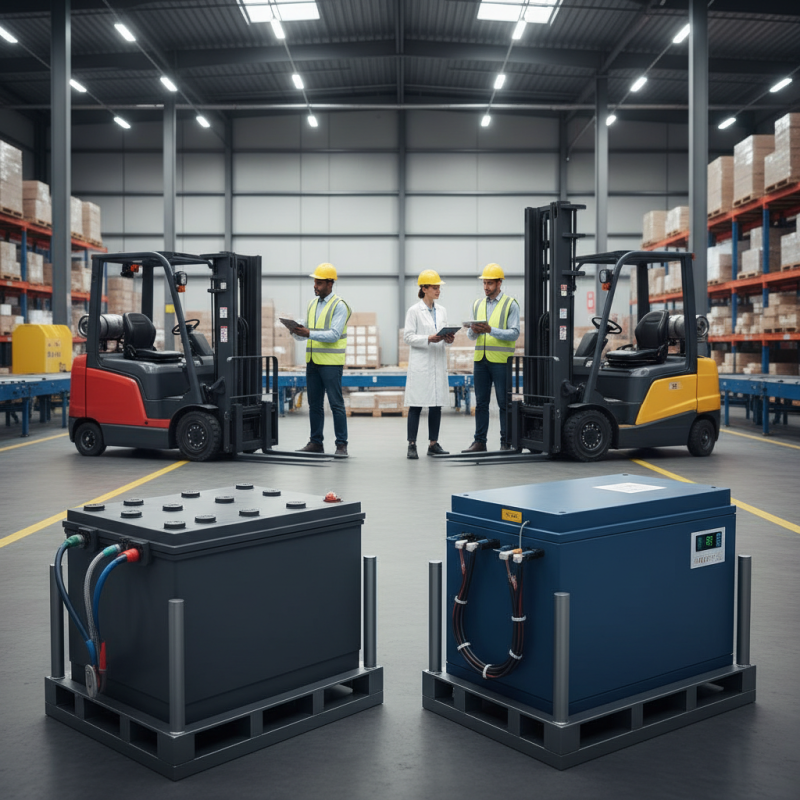
Top 10 Electric Forklift Battery Options for Global Buyers

Overview of Electric Forklift Batteries: Types and Technologies

Electric forklifts rely heavily on battery technology for operation. Understanding the types of batteries available is crucial for buyers. There are several main types: lead-acid, lithium-ion, and nickel-cadmium. Each type has its advantages and drawbacks, making careful selection essential.

Lead-acid batteries are often the most affordable option. However, they are heavier and have a shorter lifecycle, typically lasting around 1,000 cycles. In contrast, lithium-ion batteries are gaining popularity due to their lighter weight and longer lifespan of approximately 3,000 cycles and higher energy efficiency. The choice between these technologies affects operational costs and efficiency.

For buyers considering battery options, it's vital to evaluate power needs. Analyze the work environment and frequency of use. Lithium-ion batteries may have a higher upfront cost but can reduce long-term expenses through better efficiency and reduced downtime.

Tip: Look for batteries with robust warranties and consider the charging infrastructure. A well-planned investment can boost productivity significantly.

Keep in mind that battery performance can fluctuate based on temperature and usage patterns. Regular maintenance can extend the lifecycle of battery systems. Monitor and assess the performance of your choice regularly to ensure it meets operational demands.

Top 10 Electric Forklift Battery Options Comparison

This chart provides a comparison of the different battery technologies used in electric forklifts, showcasing their respective energy densities (Wh/kg) and cycle lives (number of charge/discharge cycles). The data illustrates the advantages of each battery type for global buyers looking to optimize their electric forklift performance.

Factors to Consider When Choosing Electric Forklift Batteries

When choosing electric forklift batteries, several critical factors should be assessed. The battery type is essential. Options vary from lead-acid to lithium-ion batteries, each with unique characteristics. Lithium-ion batteries offer faster charging and longer life, while lead-acid batteries are more cost-effective initially.

Capacity is another key consideration. It influences how long the forklift can operate before recharging. Evaluating your specific workload will help determine the optimal capacity. The discharge rate is also important. Higher discharge rates may be necessary for heavy-duty applications.

Tip: Regular maintenance improves battery lifespan. Simple checks on connections and electrolyte levels make a significant difference.

Safety measures cannot be overlooked either. Batteries can be hazardous if not handled correctly. Educate your team about proper usage and emergency procedures. Always store batteries in a cool, dry place to prevent overheating.

Tip: Invest in a good charging system. A smart charger can enhance battery longevity and efficiency.

Understanding these factors can lead to better decision-making in battery selection, ensuring better performance and reliability in your operations.

Top 10 Electric Forklift Battery Options for Various Applications

Electric forklifts are essential in various industries. The choice of battery can greatly affect productivity and efficiency. According to a recent report from the Industrial Truck Association, electric forklifts accounted for over 51% of all forklift sales in the United States. Selecting the right battery option aligns with specific operational needs.

For short shifts, lithium-ion batteries are gaining traction. They offer faster charging times and longer lifespans compared to traditional lead-acid batteries. However, they often come at a higher initial cost. In contrast, lead-acid batteries remain popular due to their lower price and established technology. Their robustness makes them suitable for heavy-duty applications, yet they require regular maintenance and can take longer to recharge.

A key consideration is the application type. Warehousing operations might benefit from higher energy density batteries, allowing for extended operational hours. For outdoor use, a ruggedized battery design is essential. Reports indicate that the average service life of well-maintained lead-acid batteries is around five years, while lithium-ion can last up to eight years. Understanding these factors helps in making informed battery choices that will enhance efficiency and reduce downtime.

Comparative Analysis of Battery Performance and Lifespan

When evaluating electric forklift batteries, performance and lifespan are critical factors. Different battery types exhibit varying energy efficiencies. Lead-acid batteries are widely used, and they offer a robust solution for many applications. However, they may require more frequent maintenance, which can lead to downtime. Lithium-ion batteries, on the other hand, often provide longer lifespans and faster charging capabilities. These features can lead to fewer interruptions during operations.

The trade-offs in battery selection are significant. Some batteries deliver high performance initially but may degrade rapidly under heavy use. Others may lack in power but are more efficient in energy consumption over time. Understanding your operational needs can guide you in selecting the best option. Investigating the environmental factors, such as temperature and humidity, is essential, as they can impact battery health and lifespan. Testing performance metrics under various conditions helps in obtaining reliable data for decision-making.

While exploring battery options, consider the total cost of ownership. It includes purchase price, maintenance expenses, and energy costs. This broader view can alter your perception of value. Not all buyers recognize the long-term implications of their choices, leading to regret down the line. More informed decisions stem from detailed analysis and real-world performance evaluation. Make sure the chosen battery aligns with your operational goals and budget.

Future Trends in Electric Forklift Battery Technology and Sustainability

Electric forklift battery technology is evolving rapidly, driven by demands for efficiency and sustainability. According to a recent market report, the global electric forklift market is projected to grow at a CAGR of 7.5% between 2023 and 2030. This growth is fueled largely by advancements in battery technology, particularly lithium-ion and lead-acid options. Lithium-ion batteries, known for their longer life and shorter charging times, are gaining traction. However, high initial costs can deter some buyers.

Sustainability is becoming essential in battery technology. A study from the International Energy Agency highlights that battery recycling could reduce raw material consumption by up to 20%. This aligns with the global push for circular economy practices. Still, many industries face challenges in implementing sustainable practices effectively. For instance, recycling processes are not yet widely adopted. This creates a gap in efficiency and environmental responsibility.

Future trends indicate a shift toward greener alternatives. Emerging technologies like solid-state batteries promise greater safety and efficiency. However, these are still in developmental stages. Users may experience limited availability and higher prices. Investing in emerging battery technologies might be risky but can offer substantial long-term benefits. As electric forklifts become more prevalent, the need for sustainable and resilient battery solutions will remain critical.

Top 10 Electric Forklift Battery Options for Global Buyers - Future Trends in Electric Forklift Battery Technology and Sustainability

Battery Type Capacity (Ah) Voltage (V) Weight (kg) Charging Time (hours) Cycle Life (cycles) Sustainability Features
Lithium-ion 600 48 300 2 2000 Recyclable materials, high energy density
Lead Acid 700 48 450 8 1500 Requires recycling, energy-efficient manufacturing
Nickel Metal Hydride 500 36 280 4 1200 Low self-discharge rate, recyclable
Solid-state Batteries 800 48 250 1.5 5000 No liquid electrolyte, potentially safer
Flow Batteries 400 48 500 10 3000 Scalable energy storage, long lifespan
Lithium Iron Phosphate 650 48 280 2.5 2500 Thermal stability, long cycle life
Gel Batteries 500 12 60 6 1200 Maintenance-free, recyclable
Sealed Lead Acid 700 48 450 8 1500 Low maintenance, fully sealed
Carbon Nanotube Batteries 750 48 290 2 3000 High energy, lightweight
Ultra-capacitors 400 24 50 0.5 1,000,000 Fast charging, long lifespan

Learn More

Connect with us today to learn more about our industrial automation solutions—and how to commission them for your application.