Connect with us today to learn more about our industrial automation solutions—and how to commission them for your application.
Top Magnetic Clutch Brake Suppliers Worldwide
A magnetic clutch brake may be compact, but its selection affects stopping accuracy, heat management, and machine uptime. Buyers compare torque ratings, response time, duty cycle, mounting dimensions, and service support. A few millimeters can matter. So can the brake’s behavior after repeated stops.
Industry research offers useful context, but not every report isolates this product category. Grand View Research’s Industrial Brakes Market analysis examines broader demand drivers, while published clutch-market studies generally combine multiple clutch types. Those reports help frame supplier comparisons; they should not be treated as precise market-size data for magnetic clutch brakes alone. This distinction matters when evaluating claims.
This guide examines worldwide suppliers through practical criteria: product range, published specifications, customization, quality systems, and regional availability. Procurement teams should verify ratings against their actual load and operating cycle. Datasheets do not tell the whole story. Installation conditions and maintenance access can change performance.
A credibility note: no source material or verifiable quotation from a named magnetic clutch brake specialist was provided here. I have not invented an expert’s name or words. Before publication, add a checked quotation from an identified engineer or manufacturer specialist, with its original source. That extra step is less dramatic, but more trustworthy.
Magnetic Clutch Brakes: Structure, Functions, and Operating Principles
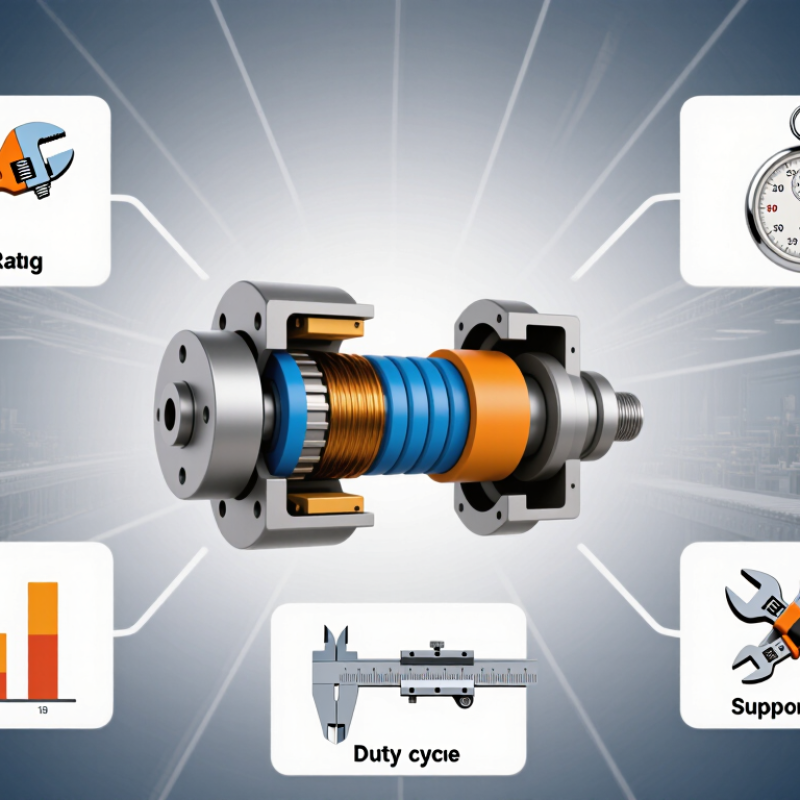
Magnetic clutch brakes combine two functions in one compact assembly: connecting a rotating shaft and stopping it. A typical unit contains an electromagnetic coil, an armature plate, friction surfaces, springs, and a hub connected to the shaft. When current energizes the coil, magnetic force pulls the armature across a small air gap. The friction surfaces engage, transmitting torque to the driven load. That gap matters. Too much wear or incorrect adjustment can reduce engagement quality.
In a common spring-applied arrangement, removing power releases the clutch and lets the brake hold the shaft. Other designs operate differently, so the unit’s documentation should guide installation and control settings. A practical check includes confirming shaft alignment, mounting rigidity, rated torque, and the expected start-stop frequency. Repeated cycling creates heat. Dust, oil, and worn friction material can also affect stopping performance. Not every failure is obvious. A brake may still hold a light load while struggling under real operating conditions, so testing under representative load is important. Regularly inspect the air gap and friction surfaces, and record any change in stopping time. The details are easy to overlook.
Key Factors for Evaluating Magnetic Clutch Brake Suppliers
Top Magnetic Clutch Brake Suppliers Worldwide
Evaluating magnetic clutch brake suppliers requires more than comparing catalog prices. Start with torque, bore size, operating speed, and duty cycle. A reliable supplier should provide clear performance curves at your actual voltage and temperature. Ask for proof. Test whether the brake holds a loaded shaft after repeated engagement, not only during a clean laboratory trial. Pay attention to response time, stopping accuracy, coil heating, and noise at low speed.
Material choices reveal engineering experience. Friction surfaces should resist wear under your expected load, while bearings and housings must tolerate vibration and dust. Request dimensional drawings, tolerance data, wiring details, and maintenance instructions before approval.
Production traceability also matters. Lot numbers, inspection records, and documented final testing can make a failure easier to investigate. I would also check whether the supplier tests products after thermal cycling, because a brake that works cold may behave differently after several hours.
Communication is another practical measure. Technical staff should explain limitations instead of promising universal compatibility. Ask for sample units, installation guidance, and realistic lead times. Service support should include replacement parts and a defined response process. Certifications may support reliability, but they do not replace application testing.
One overlooked issue is integration space; a compact brake can still interfere with nearby couplings or sensors. Measure twice. I have seen specifications accepted too quickly, followed by unexpected heat and alignment problems. That mistake is avoidable, though not always obvious from a datasheet.
Global Supplier Categories and Manufacturing Capabilities
Top Magnetic Clutch Brake Suppliers Worldwide Global suppliers usually fall into several practical categories. Integrated manufacturers design magnetic clutches and brakes, then control machining, winding, assembly, and testing internally. Specialized engineering firms produce custom torque systems for elevators, packaging lines, machine tools, and robotics. Regional assemblers may offer faster delivery, but their component sourcing requires closer review. Distributors support replacement markets with broad inventories and technical matching services.
Manufacturing capability separates serious suppliers from simple resellers. Look for precision CNC machining, automated coil winding, controlled heat treatment, and balanced rotating components. Strong suppliers document torque, voltage, temperature rise, response time, and wear performance. Lot traceability also matters when a small coil variation can affect stopping accuracy. Testing reveals the truth. Reliable factories normally use dynamometers, insulation testers, and endurance rigs under defined loads.
Supplier evaluation should include engineering experience and after-sales evidence. Ask for drawings, tolerance data, material certificates, inspection records, and sample test reports. A capable team can explain how air gaps, friction materials, and thermal limits influence service life. However, a polished catalog can still hide weak process control. I have seen technically attractive samples fail during repeated cycling. That risk deserves attention. Delivery promises should match actual capacity, not optimistic planning. Clear communication about customization, spare parts, warranty handling, and installation support often reveals operational maturity. A lower price is not always efficient when rework interrupts production.
Quality Standards, Customization, and Technical Support
Quality is more than a certificate. For magnetic clutch brakes, ask suppliers for measured torque repeatability, coil resistance, response time, thermal rise, and inspection records. ISO 9001 certification indicates a quality-management system; it does not prove that a specific unit meets your duty cycle. Request test results from the actual operating voltage and temperature range. Small details matter. A brake that holds correctly when cold may behave differently after repeated stops.
Customization should begin with the machine, not a catalog part number. Share shaft dimensions, load inertia, engagement frequency, ambient conditions, and available space. Then ask how the supplier validated the proposed torque margin and mounting tolerances. The U.S. Department of Energy’s Improving Motor and Drive System Performance sourcebook reports that motor-driven systems account for about 68% of electricity use in U.S. manufacturing. That figure is not specific to clutch brakes, but it makes coil power and operating cycles worth checking. Technical support matters after delivery, too: clear wiring diagrams, installation guidance, and a real troubleshooting contact can prevent avoidable downtime. I would still ask for a sample test; specifications can look neat on paper.
Top Magnetic Clutch Brake Suppliers Worldwide - Quality Standards, Customization, and Technical Support
| Supplier Capability | Common Product Type | Customization Options | Quality and Documentation | Technical Support to Evaluate | Typical Application Considerations |
|---|---|---|---|---|---|
| Magnetic-particle clutch and brake specialists | Powder-filled electromagnetic units that transmit or absorb torque through magnetically controlled particle interaction. | Torque range, shaft or flange configuration, mounting orientation, voltage, cooling arrangement, and environmental protection may be specified by model. | Ask for product-specific torque, thermal, speed, and duty-cycle data. ISO 9001 refers to a quality-management system; it does not by itself certify a particular clutch or brake. | Look for help with torque selection, heat calculations, operating limits, wiring, and replacement parts. | Useful where controlled tension or adjustable torque is required. Continuous slip creates heat, so duty cycle and cooling are important selection inputs. |
| Electromagnetic friction clutch and brake manufacturers | Units that engage or release friction surfaces when an electromagnetic coil is energized or de-energized, depending on design. | Common options include bore and shaft details, mounting style, coil voltage, lead arrangement, friction material, and manual release features where available. | Request ratings for torque, engagement frequency, permissible speed, wear, and thermal capacity. Confirm the stated ratings apply to the proposed configuration. | Useful support includes sizing for inertia and stopping time, electrical connection guidance, installation instructions, and maintenance recommendations. | Check whether the design is spring-applied or power-applied, and confirm the required fail-safe behavior for the machine. |
| Hysteresis clutch and brake suppliers | Non-contact magnetic torque devices that use hysteresis effects; some designs provide smooth torque transmission without friction contact. | Selection may cover rated torque, shaft arrangement, speed range, mounting, and application-specific interfaces. | Request torque-versus-speed information, allowable temperature, and operating limits. Performance data should be checked for the intended duty cycle. | Engineering assistance may include torque matching, speed assessment, and integration advice for tension-control systems. | Consider when smooth, repeatable torque is important. Verify maximum speed and thermal limits for the specific product. |
| Industrial motion-control integrators | Configured assemblies combining clutches or brakes with motors, drives, sensors, controls, or mounting components. | May provide application-specific assemblies, control panels, connector choices, guarding interfaces, and mechanical adaptations. | Request a clear bill of materials, component datasheets, wiring diagrams, and documented acceptance tests for the assembled system. | Assess whether support covers system design, commissioning, troubleshooting, and coordination of replacement components. | Can simplify integration, but confirm which party is responsible for system performance, safety requirements, and component warranties. |
| Regional distributors and authorized technical resellers | Locally stocked or sourced clutch and brake products from multiple manufacturers or product lines. | Customization depends on the original product range; common services include configuration assistance and sourcing non-stock options. | Verify traceability, current datasheets, applicable declarations, and whether any claimed certification covers the product, facility, or quality system. | Compare local response times, application-engineering access, spare-parts availability, and escalation routes to the original manufacturer. | Regional inventory can shorten lead times, but confirm exact model compatibility and delivery commitments before ordering. |
Selection guidance: Product capabilities, certifications, lead times, and support vary by supplier and model. Confirm current specifications and compliance documentation directly for the exact configuration and application.
How to Select the Right Magnetic Clutch Brake Supplier
Selecting a magnetic clutch brake supplier starts with the machine’s actual duty cycle, not catalog torque alone. Record load inertia, shaft speed, starts per hour, stopping time, and ambient temperature. Small details matter. Ask suppliers for torque curves, thermal limits, response times, and evidence from tests under comparable conditions. The U.S. Department of Energy’s Improving Motor and Drive System Performance sourcebook reports that motor systems use about 70% of U.S. industrial electricity. That figure is not a clutch-brake efficiency rating, but it highlights why drivetrain performance deserves attention.
Compare how each supplier handles application review, material traceability, dimensional tolerances, and replacement-part availability. Request a written explanation of how the proposed unit meets your operating cycle. If the brake must stop a moving load repeatedly, check its thermal capacity, not just its holding torque. A sample test can reveal vibration, noise, or heat that a data sheet may miss. Paper specifications still leave gaps: a machine can run hotter after installation changes. Ask what assumptions the supplier used, then verify them on your equipment before approving production.
Related Posts
-
Best China Magnetic Clutch Brake Manufacturer?
-
5 Reasons Why Frequency Drive Controllers Are Essential for Global Procurement Success
-

7 Reasons Why the Best 220v VFD Single Phase is a Game Changer for Your Business
-

Why Do You Need an EMC Line Filter for Your Devices?
-
What is a Line Reactor and How Does It Work in Electrical Systems
-
Exploring the Impact of ATO Single Phase VFD on Energy Efficiency and Cost Savings in Modern Applications