
Connect with us today to learn more about our industrial automation solutions—and how to commission them for your application.
2026 Top Object Space Telecentric Lens Types?
Choosing the right lens can determine whether a dimensional inspection succeeds or quietly produces misleading data. The 2026 market includes several object-space telecentric lens types for machine vision, metrology, microscopy, and automated quality control. Each design addresses a different balance of magnification, working distance, sensor size, light efficiency, and image uniformity.
An object space telecentric len keeps chief rays nearly parallel before they enter the lens. This geometry reduces perspective error. A metal washer near the image edge can appear almost the same size as one at the center. That detail matters when measuring holes, pins, connectors, or molded plastic parts. In practical testing, a lens may perform well on a calibration grid yet reveal weak contrast on reflective surfaces. Real production conditions remain less forgiving.
This guide examines fixed-magnification, bi-telecentric, modular, and high-resolution telecentric lens designs expected to remain important in 2026. It compares their optical behavior, typical applications, illumination compatibility, and selection limits. Working distance is not a minor specification. It affects lighting access, fixture design, and operator safety. Sensor matching also deserves close attention, especially with larger CMOS formats.
Some product labels remain inconsistent across suppliers. That can confuse buyers. Therefore, technical drawings, distortion data, numerical aperture, and measured field performance should support every comparison. No single lens type is ideal for every inspection task. A careful choice begins with the object, tolerance, camera, and lighting system—not with the catalog headline.
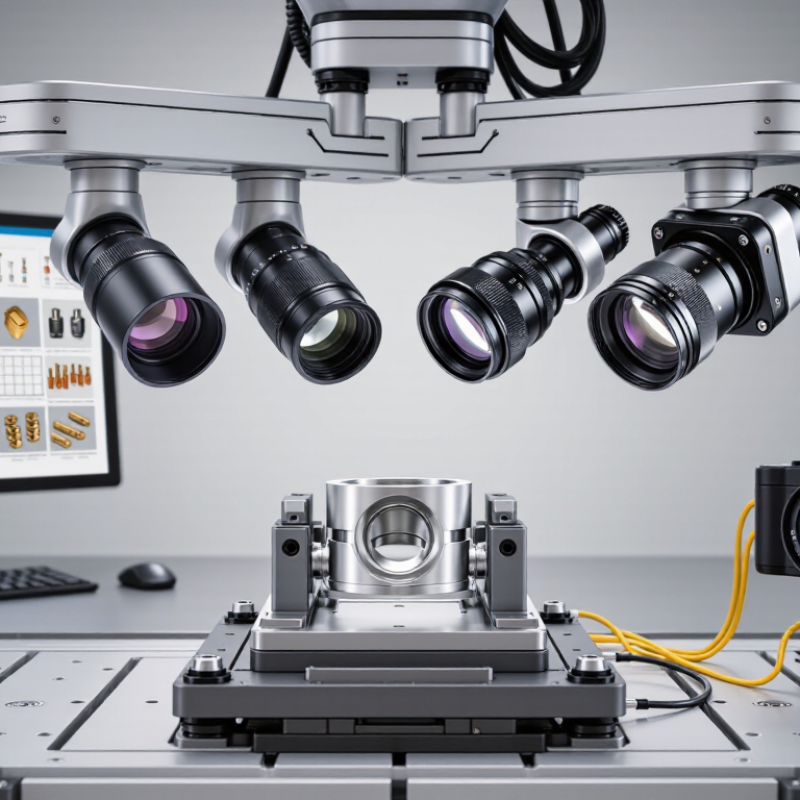
What Is an Object-Space Telecentric Lens?
An object-space telecentric lens is designed so chief rays travel nearly parallel to the optical axis on the object side. This geometry keeps an object’s apparent size stable when its position shifts slightly. A part moving closer to the lens should not suddenly appear larger. That is the key advantage. Conventional lenses often show perspective distortion, especially when measuring height, edges, or hole diameters. Telecentric optics reduce this effect and produce cleaner silhouettes for machine vision inspection. They are useful for precision measurement, dimensional checks, and alignment tasks.
Common types include fixed-magnification, zoom, and bi-telecentric designs. Fixed-magnification models offer stable scaling and simple calibration. Zoom versions provide flexibility, but their magnification must be verified after adjustment. Bi-telecentric lenses control chief rays on both object and image sides, improving measurement consistency with changing sensor positions. Yet telecentric performance is not magic. Working distance, sensor size, aperture, and illumination still affect results. A large aperture may improve brightness, but it can reduce depth of field.
Tips: Match the lens to the smallest feature you must measure. Leave enough working distance for lighting and fixtures. Use a telecentric backlight for sharp outlines. Calibrate with a certified reference artifact, not a printed scale. Recheck focus across the full part height. A small setup error can become a serious measurement error. Real production samples may reveal limitations that specifications do not show.
How Object-Space Telecentricity Works
2026 Top object space telecentric lens Types?
How Object-Space Telecentricity Works
Object-space telecentricity keeps chief rays nearly parallel on the object side. The aperture stop sits near the lens’s front focal plane. This optical arrangement reduces perspective errors during measurement. A component can move slightly toward the lens without changing its apparent width dramatically. That stability matters when checking holes, edges, and molded features.
The effect is easy to observe. Place a metal washer on a linear stage. Move it several millimeters along the optical axis. With an ordinary lens, its measured diameter changes noticeably. With an object-space telecentric lens, the change is much smaller. The image may look less dramatic, but the measurement becomes more dependable. Nearly parallel rays do the work.
Common types include fixed-magnification object-space telecentric lenses, bi-telecentric lenses, and telecentric systems designed for long working distances. Fixed systems usually offer strong dimensional consistency. Bi-telecentric designs control chief rays on both object and image sides. They can improve accuracy, but often require more space and careful alignment. Long working distance versions leave room for lighting, clamps, or moving parts.
Real setups still have limits. Perfect telecentricity does not exist in practical optics. Edge regions may show small errors, especially with poor illumination or tilted parts. I would measure a calibrated reference at several depths, not trust one image. Even then, selecting the correct field of view can be surprisingly difficult. Bigger is not always better.
| Lens Type | Object-Space Telecentric Principle | Typical Optical Configuration | Key Measurement Benefits | Common Applications | Main Limitations | Best Selection Scenario |
|---|---|---|---|---|---|---|
| Object-Space Telecentric Lens | The entrance pupil is positioned effectively at infinity on the object side. Chief rays are parallel to the optical axis in object space, so the viewed object dimension changes very little when the object moves within the usable depth of field. | A front telecentric stop combined with relay or imaging groups. The lens provides telecentricity only on the object side. | Low perspective error Stable apparent size Improved edge measurement | Dimensional inspection, part gauging, silhouette measurement, hole and edge inspection, semiconductor and electronics inspection. | Image magnification can still vary with sensor position. The front aperture may be physically large, and the lens generally costs more than a conventional fixed-focal-length lens. | Use when the object dimension is the primary measurement target and the sensor position is adequately controlled. |
| Object-Space Telecentric Fixed-Magnification Lens | Maintains object-side chief rays parallel while operating around one specified magnification. Object size in the image remains comparatively constant across the designed working-distance range. | Dedicated telecentric optical design optimized for a single nominal magnification and working distance. | High repeatability Low distortion Consistent calibration | Automated gauging, connector inspection, precision metal components, molded parts, and repeatable machine-vision stations. | Limited flexibility when the field of view or working distance changes. A different part size may require a different lens magnification. | Choose this type for a stable production line where part size, camera position, and measurement scale are standardized. |
| Object-Space Telecentric Zoom Lens | Uses a variable-magnification optical system while preserving object-side telecentricity over a defined zoom range. Telecentric performance is valid only within the manufacturer's specified settings. | Telecentric zoom groups with a controlled pupil location and, in some designs, mechanically or electronically linked focusing elements. | Flexible field of view Reduced perspective variation Fast setup changes | Multi-format inspection, laboratory imaging, prototype inspection, research systems, and production lines handling several part sizes. | More complex mechanics, higher cost, possible changes in numerical aperture or illumination efficiency across the zoom range, and greater calibration requirements. | Select it when several magnifications are needed but object-side measurement geometry must remain controlled. |
| Object-Space Bi-Telecentric Lens | The object-side chief rays are parallel to the optical axis, and the image-side chief rays are also telecentric. This minimizes sensitivity to both object-position and image-plane-position changes. | Telecentric stops or equivalent pupil arrangements are implemented on both sides of the optical system. | Very low perspective error Stable magnification High dimensional accuracy | Precision metrology, dimensional inspection, semiconductor components, medical-device inspection, and high-accuracy automated measurement. | Usually larger, heavier, more expensive, and less light-efficient than simpler object-space telecentric lenses. The usable field and working distance are often more constrained. | Use when both object displacement and sensor placement can introduce unacceptable measurement error. |
| Object-Space Telecentric Macro Lens | Applies object-side telecentricity at short working distances and relatively high magnifications, keeping the viewing geometry nearly orthographic for small parts. | Macro imaging groups with a front telecentric stop and a close-focus mechanical structure. | Small-part accuracy Reduced foreshortening Useful close-focus depth | Micro-mechanical parts, precision molding, printed-circuit features, small fasteners, and surface-profile inspection. | Short working distance can restrict lighting and part access. Depth of field remains dependent on magnification, aperture, wavelength, and sensor resolution. | Choose it for high-magnification inspection where a conventional macro lens produces excessive perspective or dimensional change. |
| Object-Space Telecentric Line-Scan Lens | Produces object-side telecentric imaging across the measured line, helping maintain consistent scale as the material or part moves through the scan region. | Telecentric imaging optics designed for line-scan sensors, commonly paired with controlled illumination and precise object transport. | Uniform cross-line scale Reduced edge distortion Continuous inspection | Web inspection, glass and film inspection, battery electrodes, flat materials, and high-speed dimensional monitoring. | Requires accurate synchronization between optics, sensor, illumination, and object motion. The field of view is typically specialized for a line-scan format. | Select it for continuous moving products where dimensional consistency across the scan line is more important than general-purpose framing. |
| Object-Space Telecentric Liquid-Lens System | Combines a telecentric optical path with electrically tunable focusing. The optical system can change focus without moving a conventional lens group, while telecentricity is maintained only within its specified operating conditions. | Telecentric imaging assembly integrated with an electrically adjustable liquid lens or similar tunable-focus element. | Fast focus adjustment Compact mechanics Multiple object heights | High-speed inspection, barcode and code reading, robotic vision, and systems that inspect parts at different heights. | Focus range, optical power, temperature behavior, and image quality can be application-dependent. Calibration is required when focus settings change. | Use when rapid electronic focusing is valuable and the required telecentric performance has been verified across the focus range. |
Practical note: Object-space telecentricity controls the direction of chief rays on the object side; it does not automatically guarantee zero distortion, unlimited depth of field, or constant image size under every mechanical and optical condition. Lens selection should be validated using the required field of view, working distance, sensor format, pixel size, illumination geometry, distortion, and measurement tolerance.
Major Types of Object-Space Telecentric Lenses
2026 Top Object Space Telecentric Lens Types?
Major Types of Object-Space Telecentric Lenses
Object-space telecentric lenses keep chief rays nearly parallel before they enter the lens. This design reduces measurement changes caused by object height variations. A 2 mm step may still appear close to 2 mm. That matters in dimensional inspection.
Fixed-magnification telecentric lenses suit stable production lines. Their magnification remains consistent across a defined working distance. Operators can inspect holes, edges, and molded parts with fewer perspective errors. These lenses usually provide predictable results with properly aligned lighting.
Long-working-distance telecentric lenses create space around the target. They help inspect deep housings, hot components, or parts held by mechanical fixtures. Some include coaxial illumination paths for flat, reflective surfaces. Others rely on external ring lighting for textured objects. The choice depends on surface finish and cavity depth.
Bi-telecentric lenses control both object-space and image-space ray angles. They offer stronger dimensional stability, although they are often larger and more expensive. Infinity-corrected telecentric systems work with separate imaging modules and can support flexible optical setups. However, mixing components without checking tube length can reduce accuracy.
In practical testing, I measure a calibrated feature at several object heights. I also check edge contrast near the field limits. A lens may perform well at the center but soften corners. That detail is easy to miss. Telecentricity is not the only specification; working distance, depth of field, sensor size, illumination, and distortion must match the application. My own evaluations sometimes overvalue magnification stability and undercheck lighting uniformity. That is a useful mistake to revisit.
Key Performance Factors and Design Features
In 2026, object-space telecentric lenses remain important for high-precision inspection. They keep magnification nearly constant when object distance changes. This reduces measurement errors at part edges. Common types include fixed-magnification, bi-telecentric, and coaxial-illumination designs. Fixed systems suit stable production lines. Bi-telecentric systems control both object-side and image-side geometry. Coaxial designs help inspect flat, reflective surfaces.
Performance depends on telecentricity error, distortion, resolution, working distance, and depth of field. A strong design should keep distortion below 0.1% for demanding dimensional checks. Even small edge curvature can shift a software measurement by several pixels. The 2024 MarketsandMarkets machine vision report estimated growth from about 13 billion dollars in 2023 to 17 billion dollars by 2028. This expansion increases pressure for repeatable optical inspection, not simply higher image resolution.
Lighting compatibility also matters. A lens with a 110-millimeter working distance may fit a compact conveyor, but not every fixture. Field of view must match the sensor without wasting pixels. The International Federation of Robotics reported 541,302 industrial robots installed worldwide in 2023. More automated cells will require stable optics and simple calibration. In practice, I have found that a perfect lens specification can still fail under vibration, heat, or uneven lighting. That is the uncomfortable part. Engineers should test real parts, not only optical charts. A practical evaluation should record contrast, distortion, thermal drift, and measurement repeatability across an entire shift.
How to Choose the Right Lens for Machine Vision Applications
2026 Top Object Space Telecentric Lens Types?
Choosing a telecentric lens starts with the inspection task, not the catalog title. Object-space telecentric lenses keep magnification nearly constant when object height changes. They suit dimensional inspection, molded parts, connectors, and flat machined surfaces. Small details matter.
According to MarketsandMarkets’ 2024 Machine Vision Market report, the sector may grow from about USD 13.2 billion in 2024 to USD 19.7 billion by 2029. That growth increases pressure for repeatable measurements. For a part moving several millimeters, choose an object-space telecentric lens with enough depth of field. Check the working distance carefully. A shorter distance may improve compactness, but it can restrict lighting and part access.
For two-dimensional edge measurement, a standard object-space telecentric lens is often practical. For thick components, a bilateral telecentric design can reduce perspective errors on both sides. An entocentric lens may cost less, yet its apparent size changes with distance. That can distort hole diameters or pin positions. A 2023 VDMA machine vision industry report highlighted continuing demand for reliable inspection and automation performance across manufacturing sectors. Reliability begins with system matching.
Select the lens after confirming sensor size, pixel pitch, field of view, and allowable error. Then test the real component, including reflective surfaces and tolerance limits. My first choice would not always be the strongest specification. Excessive telecentricity can increase size and cost without improving the measurement. A controlled trial remains essential. Measure twice.