
What Are the Top Aluminium Patio Doors?

Choosing the right aluminium patio doors can change how a home feels, performs, and connects with its garden. Slim frames bring more daylight into kitchens, lounges, and extensions. Large glass panels can also make a small room appear wider. Yet appearance alone should not decide the purchase.

Neil Ginger, founder of Origin Global, has described the core principle this way: “The best door is the one that fits the home, the opening, and the way people live.” That practical view matters. A south-facing opening may need strong solar control glass. A coastal property may require finishes designed for harsher air. Busy family homes may benefit from low thresholds, smooth rollers, and secure multi-point locking.

Small details matter.

This guide examines the top aluminium patio doors through real performance factors. We will compare thermal efficiency, frame sightlines, glass options, security, weather resistance, accessibility, maintenance, and installation quality. We will also consider folding, sliding, and lift-and-slide systems, because each design behaves differently in daily use.

A premium door can still disappoint if the opening is measured poorly. Even the finest hardware may feel weak after an unsuitable installation. That is an easy point to overlook.

The strongest options combine durable aluminium, accurate fabrication, dependable seals, and tested performance. However, “best” is not universal. A minimalist new build needs different priorities from a period house with uneven walls. Our comparison keeps that limitation visible, so readers can make a more informed and realistic choice.
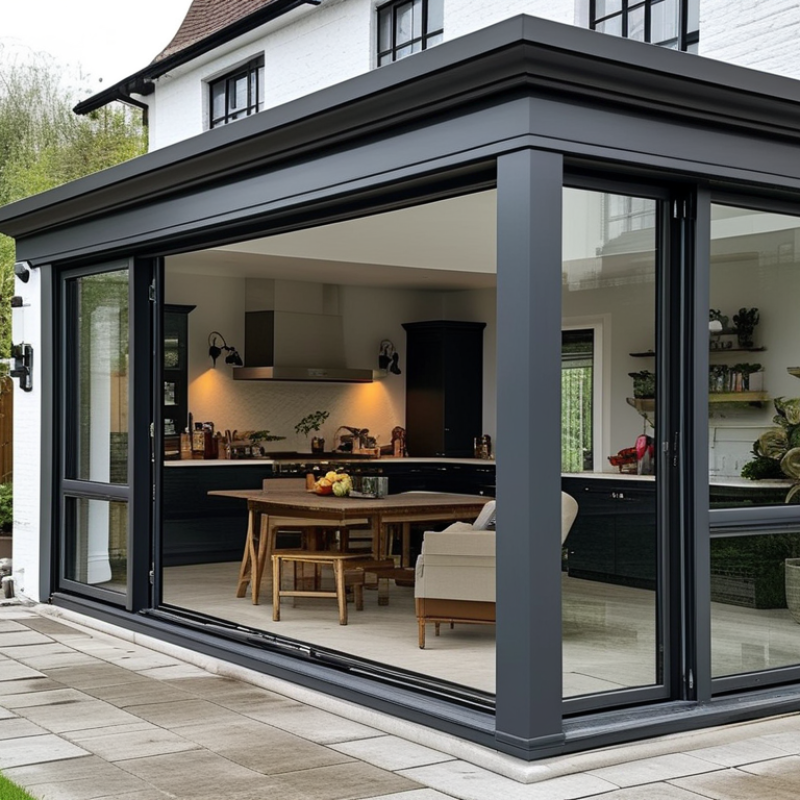
What Are the Top Aluminium Patio Doors?

What Defines a High-Quality Aluminium Patio Door?

What defines a high-quality aluminium patio door is not merely a slim, polished frame. The frame needs a continuous thermal break, properly sealed corners, and tested hardware. The U.S. Department of Energy reports that windows account for roughly 25–30% of household heating and cooling energy use. That figure makes glazing and installation impossible to treat as decoration. Look for a low U-factor and a climate-appropriate SHGC on a National Fenestration Rating Council label. These values matter more than showroom shine.

A strong door should resist air, water, and structural movement under recognized fenestration tests. The FGIA/AAMA/WDMA/CSA standard evaluates air leakage, water penetration, and structural loading. Ask for the tested size, not just the best laboratory result. That detail is often missed. For coastal or wet locations, stainless or corrosion-resistant rollers and drainage paths deserve close inspection. Small failures become expensive.

The International Energy Agency’s 2023 Energy Efficiency report says buildings use about 30% of global final energy. A well-performing door can support lower operational demand, but results depend on orientation, shading, glass, and installation. I would check the sill with a level and test the lock by hand. A perfect specification can still fail after careless fitting. Honestly, even premium aluminium systems may transmit heat at the threshold. That is where I remain cautious.

Which Aluminium Patio Door Styles Suit Different Homes?

Choosing among the top aluminium patio doors starts with your home's shape, light, and daily traffic. For a compact terrace, a two-panel sliding door keeps furniture clear and creates a clean opening. It works well where an outward swing could meet a path, planter, or narrow balcony. For wider garden rooms, multi-panel sliders provide a generous view and flexible ventilation. They can feel impressive. However, large glass areas need careful shading and strong hardware. A traditional house may suit slim French-style aluminium doors. Their symmetrical opening can echo existing windows without making the extension look too modern.

Tips: Measure the wall, furniture clearance, and threshold height before choosing a style. Check how handles feel with wet hands. Ask about thermal performance, drainage, secure locking, and independently tested weather resistance. A low threshold helps wheelchair users and reduces trips, but it must still manage rain correctly. Coastal exposure and strong winds require suitable finishes and installation details.

For period homes, colour and sightlines often matter more than maximum panel width. For new builds, flush tracks and minimal frames can create a quieter, more open interior.

In practice, homeowners often underestimate furniture movement through the opening. Measure sofas twice. Also consider cleaning access and where rainwater will land.

Energy efficiency depends on the complete door, not glass alone. Frame design, seals, installation, and ventilation all influence comfort. Ask to inspect a real sample before ordering. Computer images can hide frame depth and surface texture. I would not choose the widest opening automatically. Sometimes, a smaller, better-sealed door feels warmer and operates more reliably.

How Do Aluminium Patio Door Materials and Glazing Compare?

The top aluminium patio doors combine slim sightlines, stable frames, and dependable weather performance. Aluminium resists warping better than many softer materials, especially beside sunny windows or damp gardens. Its strength allows larger glass panels without bulky profiles. However, aluminium can feel cold if the frame lacks a thermal break. Poorly designed frames may also collect condensation during winter. A quality door should include insulated sections, durable powder coating, and accurate drainage channels. These details matter more than appearance alone.

Glazing affects comfort, energy use, and everyday safety. Double glazing suits many homes, while triple glazing offers better insulation in colder climates. Low-emissivity coatings help reflect indoor heat back into the room. Argon-filled cavities can improve thermal performance when sealed correctly. Toughened or laminated glass provides stronger protection against accidental impact. Acoustic glass may reduce traffic noise, but it cannot remove every outside sound. I have seen attractive doors perform poorly because the glass specification was treated as an afterthought. Frame and glazing should be assessed together.

Tips: Ask for the whole door’s U-value, not only the centre-glass figure. Check the drainage design and gasket quality. Open the door several times before ordering. The handle should feel firm, and the rollers should move quietly. Consider solar control glass for south-facing rooms. It may reduce overheating, though it can slightly darken the interior. Always compare installation details, because even excellent materials can fail when fitted carelessly.

What Features Affect Security, Energy Efficiency, and Durability?

What Are the Top Aluminium Patio Doors?

Security begins with the frame, not its appearance. Look for multi-point locking, reinforced corner joints, and laminated safety glazing. Independent tests under EN 1627 can indicate resistance against forced-entry methods. However, a strong door can still fail if installers leave gaps around the frame. Small details matter. Check hinge protection, cylinder quality, and the threshold’s fixing points during a site inspection.

Energy performance depends on more than aluminium. Thermal breaks reduce heat transfer through the frame, while low-emissivity glass limits indoor heat loss. The U.S. Department of Energy reports that windows can cause 25–30% of residential heating and cooling energy use. The National Fenestration Rating Council recommends reviewing both U-factor and solar heat gain coefficient. Lower U-factor usually means better insulation. Yet the best value depends on climate, orientation, and shading. A low number alone proves little.

Durability requires tested materials and realistic maintenance. Powder-coated finishes should resist moisture, ultraviolet exposure, and surface wear. Hardware must operate smoothly after repeated opening cycles. Fenestration industry testing commonly evaluates air leakage, water penetration, and structural performance. Ask for those test results, not vague claims. Coastal homes need extra attention to corrosion protection around fasteners and drainage paths. I would not assume aluminium is maintenance-free. Dust, salt, and blocked weep holes can quietly shorten service life. Reliable installation records and clear warranty terms add practical confidence.

How Should You Choose and Maintain an Aluminium Patio Door?

Choosing an aluminium patio door begins with the opening, not the frame colour. Measure the wall carefully, then check the threshold, drainage path, and surrounding structure. A thermal-break frame reduces heat transfer, while low-emissivity glazing can improve indoor comfort. The U.S. Department of Energy reports that windows account for about 25–30% of residential heating and cooling energy use. Patio doors are part of that glazed area.

Look for tested U-factor, solar heat gain coefficient, and air-leakage ratings. Independent certification labels make comparisons more reliable. A lower U-factor generally means better insulation, but climate matters. In a hot region, excessive solar gain can make the floor feel warm by afternoon. In my experience, buyers often focus on slim sightlines and forget the rollers. That mistake becomes expensive. Inspect seals, tracks, locks, and drainage channels every few months. Rinse coastal salt from the frame with clean water, then dry it with a soft cloth. Never use abrasive pads. They can damage the finish.

Tips: Keep tracks free of grit. Use a soft brush first. Check the rollers before forcing the door. Lubricate only with a product suitable for the hardware. If condensation appears between glass panes, the sealed unit may have failed. That deserves professional inspection, not guesswork. ENERGY STAR guidance also recommends comparing whole-unit performance, because attractive glass alone does not guarantee efficiency.

Learn More

Connect with us today to learn more about our industrial automation solutions—and how to commission them for your application.