
Connect with us today to learn more about our industrial automation solutions—and how to commission them for your application.
What Is the Best CNC Equipment from China?
Choosing the best Cnc Equipment from China requires more than comparing prices. Buyers must examine accuracy, spindle performance, control systems, service coverage, and long-term operating costs. A machine may look impressive in a showroom, yet perform poorly beside a dusty production line. The real test appears during daily cutting, tool changes, calibration, and maintenance.
Industry data shows why this decision matters. Grand View Research valued the global CNC machine market at approximately USD 88.5 billion in 2023 and forecasts strong growth through 2030. The China Machine Tool Industry Association has also reported continuing investment in automation, intelligent manufacturing, and high-end machine tools. These figures suggest opportunity, but they do not prove that every Chinese supplier offers equal quality. That assumption needs questioning.
Dr. Yoram Koren, a respected manufacturing systems researcher and author, described CNC technology as “the backbone of modern manufacturing.” His view highlights an important point: equipment should support the entire production system, not only deliver fast cutting. The best Cnc Equipment may include a rigid five-axis machining center, a reliable CNC controller, measurable positioning accuracy, and responsive technical support. Sometimes, a simpler three-axis machine is the wiser choice. It depends on materials, tolerances, batch sizes, operator skills, and available maintenance resources. Buyers should request test cuts, inspection reports, warranty terms, and customer references before signing. Marketing claims are not enough. A careful comparison may feel slower, but it often prevents expensive downtime later.
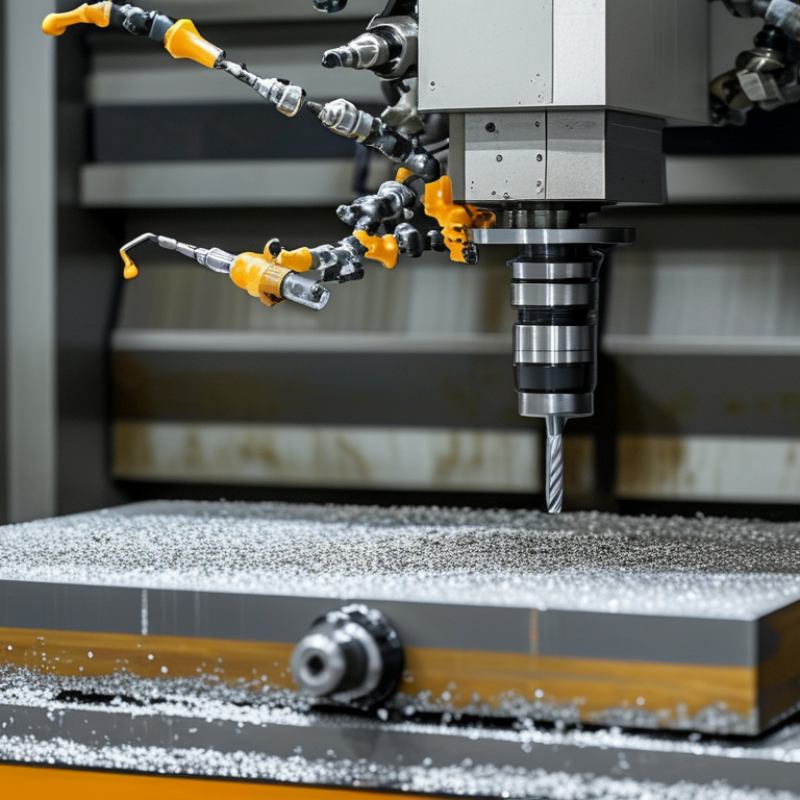
Define Chinese CNC Equipment by Axes, Controls, and Machining Range
What Is the Best CNC Equipment from China?
Chinese CNC equipment should be defined by capability, not price alone. A three-axis machine suits plates, brackets, and straightforward molds. Four-axis equipment adds rotational access for indexed features. Five-axis systems reduce repositioning and improve complex-surface accuracy. However, more axes also increase programming, calibration, and maintenance demands. Three axes suffice for many workshops.
Controls matter as much as mechanics. Check interpolation capacity, servo feedback, tool management, simulation, and G-code compatibility. A responsive controller can shorten setup time and reduce operator mistakes. The machine’s machining range must match real workpieces, not imagined future orders. Compare X, Y, and Z travel, table load, spindle speed, taper, and automatic tool capacity. According to Grand View Research, the global CNC machine market was valued at about USD 88.5 billion in 2023. China’s scale is also significant: the International Federation of Robotics reported 276,288 industrial robot installations there in 2023. These figures suggest strong manufacturing depth, but they do not prove every machine offers equal quality.
Tips: Request a cutting test using your material and tool geometry. Measure surface finish, dimensional drift, chip evacuation, and cycle time. Ask for calibration records and controller support terms. A larger work envelope may reduce rigidity. I once underestimated fixture space; the machine technically fit, but production became awkward. Leave room for maintenance, coolant access, and operator movement. Accuracy claims need evidence.
Compare 3-Axis Mills, 5-Axis Centers, CNC Lathes, and Routers
What Is the Best CNC Equipment from China?
Compare 3-Axis Mills, 5-Axis Centers, CNC Lathes, and Routers
Choosing the best CNC equipment depends on the part, material, tolerance, and production volume. A 3-axis mill suits plates, brackets, and uncomplicated metal components. It offers straightforward programming and easier operator training. For many workshops, that simplicity is valuable.
A 5-axis machining center reaches angled surfaces with fewer setups. This can improve accuracy when making aerospace-like structures, medical components, or complex molds. However, it requires stronger programming skills and careful collision checking. The machine may be powerful, but poor process planning still creates expensive mistakes. I would inspect rotary-axis calibration records before trusting impressive specifications.
CNC lathes are practical for shafts, bushings, threads, and other round parts. Live tooling can add milling operations, reducing transfers between machines. A CNC router is better suited to wood, plastics, foam, composite sheets, and some aluminum work. It usually provides a large cutting area, but its frame may lack the rigidity needed for demanding steel machining.
Look closely at spindle power, guideway design, tool capacity, and control-system stability. Ask for a sample cut using your actual material. Check surface finish, dimensional repeatability, chip removal, and noise during operation. Request inspection reports, installation procedures, training details, and spare-parts availability. One detail is easy to overlook: reliable after-sales support often matters more than a slightly lower purchase price. My own comparison would remain incomplete without reviewing service response times in writing.
Verify ±0.005 mm Accuracy Claims Under ISO 230-2 Testing
What Is the Best CNC Equipment from China?
Verify ±0.005 mm Accuracy Claims Under ISO 230-2 Testing
A CNC machine claiming ±0.005 mm accuracy deserves careful verification, not immediate confidence. ISO 230-2 evaluates positioning accuracy and repeatability along each controlled axis. It does not automatically prove finished-part accuracy under every cutting condition. Numbers need context.
During equipment inspections, I look for the complete test report, not only a sales-sheet figure. The report should identify the machine configuration, test length, measuring instrument, feedrate, temperature, and compensation settings. A laser interferometer test is useful, but its calibration must be traceable to a recognized national or international standard. The report should also show bidirectional positioning results, reversal errors, repeatability, and measurement uncertainty. A single impressive value can hide inconsistent axis movement.
The machine should reach thermal stability before testing, because spindle heat, coolant temperature, and workshop drafts can change results. I also compare compensated and uncompensated data. Compensation may improve displayed positioning, yet it cannot remove every mechanical weakness during real machining. My earlier evaluations sometimes relied too heavily on the best axis result; that was a mistake. A stronger review repeats the test on multiple axes and checks a practical workpiece afterward. Ask for raw data, test conditions, and acceptance criteria in writing. If the supplier avoids those details, the ±0.005 mm claim remains unverified, even when the machine looks exceptionally well built.
Assess BT40/BT50 Tooling and 8,000–24,000 rpm Spindle Speeds
What Is the Best CNC Equipment from China?
BT40 and BT50 tooling should match the cutting load, not just the machine price. BT40 suits smaller cutters, aluminum, molds, and rapid tool changes. BT50 offers greater rigidity for steel, deep cuts, and large-diameter tools.
Gardner Intelligence’s 2024 World Machine Tool Survey valued global consumption at roughly US$85 billion in 2023. That scale reflects strong demand, but quality still varies between suppliers.
Spindle speed needs equal attention. An 8,000 rpm spindle can deliver useful torque for heavy BT50 cutting. A 12,000–18,000 rpm spindle fits many BT40 applications. Speeds near 24,000 rpm help small tools and fine aluminum work.
However, maximum rpm is not a production setting. Check the power curve, bearing design, toolholder balance, drawbar force, and thermal stability. Grand View Research projects a 9.5% CAGR for the CNC machine market from 2024 to 2030, increasing pressure for faster equipment. Faster is not always better. I would rather choose stable 12,000 rpm performance than noisy 24,000 rpm marketing.
Tips: Request cutting-test videos, spindle-power charts, runout data, and thermal-test results. Confirm whether the rated speed applies to BT40 or BT50 holders. Measure toolholder balance near the intended speed. Also inspect taper contact after extended cutting. A small mismatch can create vibration, poor surface finish, and premature tool wear. Expect some claims to need verification.
Choose by Material, Production Volume, CE Compliance, and Total Cost
What Is the Best CNC Equipment from China?
The best CNC equipment depends on your material, production volume, CE compliance, and total cost. Aluminum needs stable motion and effective chip removal. Steel requires stronger frames, slower cutting, and better coolant control. Wood and plastics may need higher spindle speeds, but dust extraction becomes essential. A machine that performs well on one material may struggle with another.
Production volume changes the decision. For prototypes, a simpler three-axis machine can reduce investment and training time. For daily production, automatic tool changing, stronger linear guides, and reliable servo motors can reduce cycle time. Measure real output, not only the advertised speed. A ten-minute cycle may become fifteen minutes after tool changes and cleaning.
CE compliance requires more than a printed mark. Request technical documentation, risk assessment details, electrical safety information, and a declaration of conformity. Ask whether the supplied machine matches the tested configuration. Small differences in guarding or control systems can matter. Check this before payment.
Total cost includes shipping, installation, tooling, software, electricity, maintenance, spare parts, and operator training. I once underestimated downtime during setup; the purchase price looked attractive, but delayed production changed the calculation. This is where careful review helps. Request sample cutting, inspect surface finish, and test repeatability with your actual material. A factory video is useful, but it is not proof of long-term reliability.