
Connect with us today to learn more about our industrial automation solutions—and how to commission them for your application.
Why Choose a Blow Maker for Global Production?
Global production demands more than a machine that inflates plastic into a mold. It requires repeatable control, dependable service, and practical knowledge of local manufacturing conditions. A capable Blow Maker can support container production across different regions, materials, plant layouts, and customer expectations. It can help manufacturers reduce transport distance, shorten delivery schedules, and respond faster to market changes. The details matter. Stable parison control, accurate wall thickness, efficient cooling, and consistent cycle times directly affect product quality.
Donald V. Rosato, a respected plastics-processing author, offers a useful principle: “Blow molding is controlled material distribution, not simply air pressure.” That idea explains why experienced equipment partners remain important. A machine may look impressive on a showroom floor, yet performance depends on engineering, operator training, tooling support, and preventive maintenance. Global projects also require careful attention to safety standards, energy use, documentation, and regional technical requirements. These factors should be verified before purchase.
The right Blow Maker can provide more than production equipment. It can offer testing support, process guidance, spare-parts planning, and after-sales assistance near the production site. That creates confidence during scale-up. Still, no supplier is perfect. Delivery delays can happen. Software may need adjustment. Operators may require additional training. Honest evaluation is essential. Buyers should compare real production data, not only attractive brochures. When equipment capability matches local expertise, global production becomes more flexible, measurable, and reliable. The result is not automatic. It must be engineered, monitored, and improved continuously.
What Is a Blow Maker in Global Manufacturing?
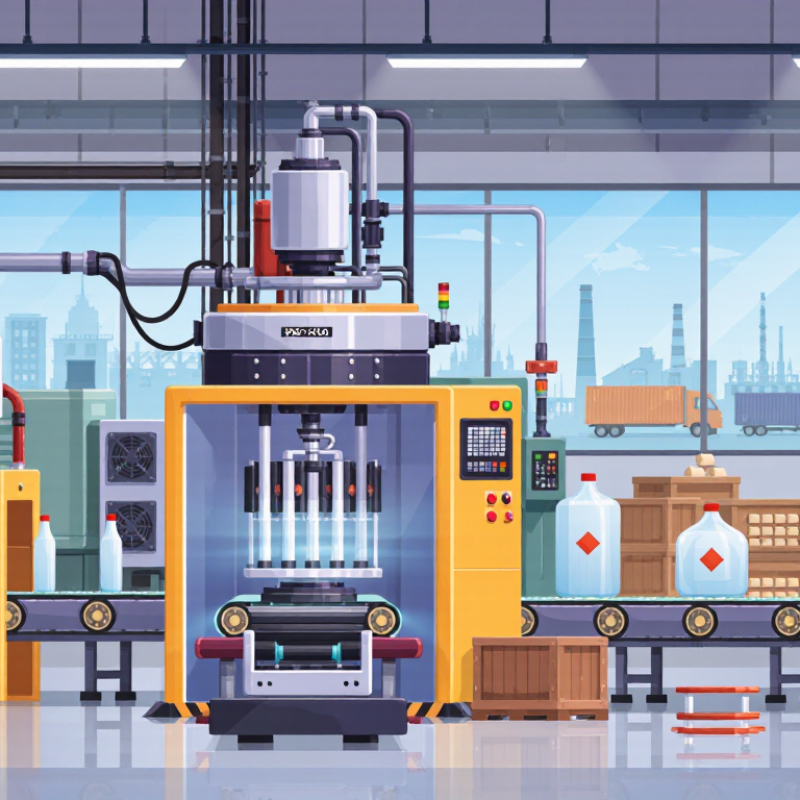
A blow maker is a machine used to produce hollow plastic items through controlled air pressure. It heats a plastic tube, called a parison, then places it inside a mold. Compressed air expands the tube against the mold walls. After cooling, the finished container keeps its designed shape.
In global manufacturing, blow makers can produce bottles, tanks, drums, and technical containers with consistent wall thickness. Modern equipment may include servo controls, automatic trimming, leak testing, and material-saving systems. These features help factories manage different production volumes and export requirements. From practical production experience, mold alignment and cooling control often affect quality more than speed alone. A fast cycle is not always a stable cycle.
Tips: Check material compatibility, mold capacity, air pressure, cooling performance, and maintenance access before purchase. Request sample production with your actual resin and product design. Measure weight, dimensions, leakage, and surface finish. Small tests reveal large problems.
A suitable blow maker can support multiple markets, but one machine rarely solves every production challenge. Product shape, resin behavior, electricity supply, operator training, and spare parts all influence results. Some evaluations focus too heavily on output per hour. That can be misleading. Energy use and rejected units may quietly increase operating costs. Production teams should record real cycle data and review it regularly. Mistakes happen. Good documentation makes them easier to correct.
How Blow Makers Enable Efficient Large-Scale Production
Why Choose a Blow Maker for Global Production?
A blow maker supports efficient large-scale production by forming hollow containers with repeatable pressure and heat control. In a well-organized line, one machine can produce thousands of units during a shift. Short cycle times reduce labor pressure and help factories meet changing regional demand. Automated mold changes can also limit downtime, although setup quality matters greatly.
From practical production experience, stable results begin with accurate temperature settings, clean compressed air, and properly calibrated molds. A small pressure variation can create thin walls, uneven handles, or weak corners. Operators should inspect samples during each run, not only at the end.
Weight checks, leak tests, and visual inspections provide useful evidence. They also expose problems early.
Blow makers can support different materials, container sizes, and production volumes. This flexibility is valuable for facilities serving several markets. However, higher speed does not always mean better efficiency. Excessive speed may increase scrap, energy use, and maintenance needs. I have seen production plans fail because they ignored mold wear and air consumption. That lesson deserves attention. Reliable manufacturers should verify machine data through factory trials, documented quality controls, and service records. Local regulations, packaging requirements, and worker safety procedures must guide the final equipment choice.
Which Blow Maker Types Suit Different Product Requirements?
Choosing a blow maker starts with the product, not the machine catalog. Container volume, neck accuracy, material behavior, and annual output shape the decision.
Extrusion blow molding suits bottles, jerrycans, and irregular hollow parts. It handles HDPE and PP well, especially where rugged walls matter.
For large containers, an accumulator head can control heavier parisons more consistently. Yet energy use and trimming waste need honest measurement. A low purchase price can become expensive.
Injection blow molding fits small, precise containers requiring clean neck finishes. It offers repeatable dimensions and little post-production trimming.
Injection stretch blow molding is often selected for PET bottles. Stretching improves clarity, stiffness, and material distribution.
Use it for lightweight packaging with demanding appearance and pressure performance. For wide containers or technical parts, extrusion systems with multilayer capability may protect contents from light or oxygen. That choice requires compatible materials and careful layer testing. A machine may pass a sample trial, then struggle at full speed. That gap deserves attention.
Tips:
Define the container drawing, resin grade, cycle time, and rejection limit before requesting quotations. Ask for production samples, not only videos. Measure wall thickness at several points.
Check mold-change time, operator access, safety guarding, and maintenance support. For global lines, verify local electrical and safety requirements early. Leave room for future formats.
I would also challenge optimistic output figures. They may exclude cooling, trimming, and quality checks. A practical factory trial reveals more than a polished specification sheet.
What Factors Matter When Selecting a Global Production Machine?
Why Choose a Blow Maker for Global Production?
What Factors Matter When Selecting a Global Production Machine?
Global production demands more than speed. A blow maker must fit the product, process, workforce, and destination market. According to the OECD’s Global Plastics Outlook, global plastics production reached 460 million tonnes in 2019, double 2000 levels. This scale makes repeatability important, not merely impressive output. Start with container size, resin behavior, neck finish, mold range, and hourly demand. Then test actual material.
Energy use deserves measured attention. Ask for kilowatt-hours per thousand containers at your real operating speed. Compare electric, hybrid, and hydraulic systems using the same bottle weight and cycle. Check changeover time, reject rates, compressed-air demand, cooling load, and noise. These details often affect total cost more than catalog speed. UNEP’s 2023 Turning off the Tap report projects annual plastic waste could reach 1,014 million tonnes by 2060, versus 353 million in 2019. Material savings should therefore be measured, not assumed.
Regional voltage, safety requirements, operator training, spare-part access, and remote diagnostics also matter. One overlooked sensor can stop a line. Request factory acceptance tests with your resin and molds. Require documented capability studies, maintenance intervals, and trial samples before shipment. Do not accept nominal capacity alone. Operators notice awkward access, dirty filters, and slow mold handling first. Maintenance teams also know whether a repair takes one hour or one week. Our first spreadsheet is often too optimistic. Leave space for learning, material variation, and unexpected rejects. ISO 50001 and ISO 9001 can support energy and quality controls, but certification alone is not proof.
How Blow Makers Improve Cost Control, Quality, and Market Flexibility
Why Choose a Blow Maker for Global Production?
How Blow Makers Improve Cost Control, Quality, and Market Flexibility
A modern blow-molding machine controls resin use, air pressure, temperature, and cycle timing. These controls can reduce flash, uneven walls, and rejected containers. The OECD Global Plastics Outlook reports that packaging created about 40% of global plastic waste in 2019. Lightweight designs therefore offer both financial and environmental value. Every gram saved matters. Scrap still happens.
Cost control also depends on stable production. Servo-driven systems, closed-loop monitoring, and automatic recipe settings can limit energy and material variation. Operators can identify a pressure change before hundreds of units fail. However, energy savings vary by product, mold, and factory conditions. A cheaper machine may become expensive through downtime, maintenance, and inconsistent output. The calculation is not always neat.
Quality improves when production data connects with practical inspection. Wall-thickness measurement, leak testing, and vision checks help maintain reliable performance across multiple sites. This consistency supports global customers and reduces corrective shipments. Flexibility comes from quick mold changes, digital recipes, and compatible materials. UNEP’s Turning off the Tap report states that existing solutions could reduce plastic pollution by 80% by 2040. Blow makers can support that shift through lightweighting, recycled-content processing, and refillable designs. Still, recycled materials may require tighter drying and temperature control. Manufacturers should test each formulation instead of trusting general specifications.