Why Choose a Portable Crusher for Global Projects?
Why Choose a Portable Crusher for Global Projects? The answer often begins with changing site conditions. Construction teams may work beside highways, remote mines, demolition zones, or temporary infrastructure. A Portable Crusher can move closer to the material source. This reduces hauling distance, fuel use, and truck congestion.
Field experience shows that mobility can improve project flexibility. Operators can process blasted rock, recycled concrete, or selected aggregates near the work area. A compact unit may arrive by standard transport and begin production after careful setup. Engineers should still verify feed size, moisture, capacity, and product grading. These details affect performance more than marketing claims. They also influence maintenance intervals and operating costs.
Conditions are rarely perfect. Dust, uneven ground, limited power, and changing weather can slow production. A portable system does not remove these challenges. It can even create new planning demands. Teams must inspect access routes, establish exclusion zones, and follow local environmental and workplace requirements. Noise and dust controls matter near homes and public roads. Reliable suppliers should provide technical documents, training guidance, spare-parts support, and realistic output data. Independent testing is valuable when specifications seem unclear.
The best choice depends on the project, not the machine’s appearance. A short-term road project may need rapid relocation. A remote operation may value simple servicing and fuel efficiency. Before purchasing, project managers should compare transport costs, lifecycle expenses, safety features, and local regulations. Portable Crusher technology can support efficient development. But only disciplined planning makes its advantages dependable.
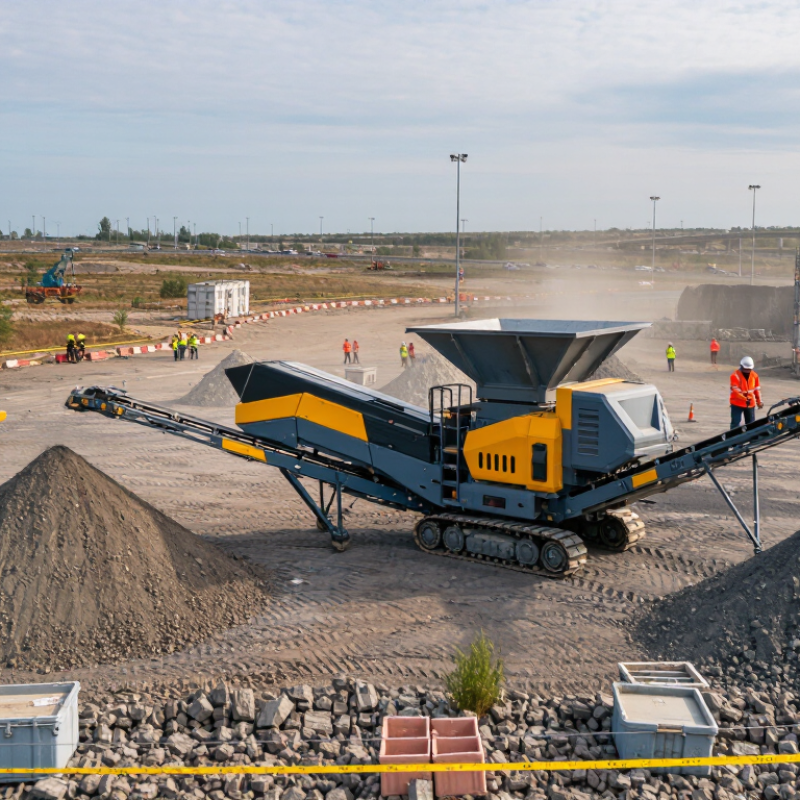
Portable Crusher Basics and Its Role in Global Projects
A portable crusher is a mobile processing unit mounted on a chassis or tracked frame. It usually includes a feeder, crushing chamber, discharge conveyor, and control system. Depending on the material, operators may choose jaw, impact, or cone crushing equipment. Each type handles different feed sizes and output requirements.
In global projects, mobility reduces the need for long-distance material transport. A road construction team can move the unit near an excavation area and produce graded aggregate onsite. This saves fuel, lowers truck traffic, and supports faster site preparation. I have found that transport dimensions matter as much as crushing capacity. A powerful machine is less useful when roads, bridges, or border procedures cannot accommodate it.
Setup still requires careful planning. Operators must inspect ground stability, dust controls, noise limits, electrical connections, and emergency access. Local permits and environmental rules can also change from one project location to another. Keep it practical. Feed consistency affects performance more than many buyers expect. Oversized rock, wet clay, or hidden metal can interrupt production and damage internal parts. I once underestimated cleaning time after a rainy shift; the delay was small, but repeated delays would affect the whole schedule. Portable crushers offer flexibility, yet they are not automatic solutions. Skilled operators, realistic production estimates, and regular maintenance remain essential for dependable work across different climates and project conditions.
Why Choose a Portable Crusher for Global Projects?
Portable Crusher Basics and Its Role in Global Projects
Portable crushing plants combine material reduction, screening, and mobility in one project-oriented system. Their main advantages are shorter setup times, reduced haulage distances, and the ability to follow changing work locations. The throughput values below are representative mid-range figures for common crushing applications; actual output depends on feed size, rock hardness, moisture, closed-side setting, and operating conditions.
Data basis: representative values synthesized from publicly available technical specifications and standard quarrying practice. Values are indicative rather than guaranteed production rates.
Key Features That Support Mobility and Flexible Deployment
On global projects, mobility is not a marketing detail. It changes how quickly a site can respond. A portable crusher can move between work zones with less dismantling and fewer heavy lifts. Tracked frames handle uneven ground, while wheel-mounted designs suit prepared roads. The choice depends on terrain, permits, and transport limits. Small footprint matters. At a crowded quarry entrance, foldable conveyors and adjustable discharge heights can prevent costly rearrangement.
Flexible deployment begins with quick setup. Hydraulic folding systems, tool-free access panels, and modular screens reduce installation time. Experienced operators still inspect belts, guards, emergency stops, and foundation stability before feeding material. Remote monitoring can show engine load, fuel use, and bearing temperature from a control room. That data supports maintenance decisions, but sensors are not a substitute for site checks. I have seen schedules slip because a simple transfer point was overlooked. That mistake is easy to repeat.
Power flexibility also supports remote work. Diesel-electric configurations can reduce idle losses, while grid-ready systems may lower operating noise near communities. Dust suppression needs adjustable spray bars and a dependable water supply. In dry regions, water logistics can limit production more than crusher capacity. Operators should match settings to feed size, moisture, and required output, not chase maximum throughput. Clear manuals, local training, spare wear parts, and documented inspections improve reliability across borders. However, deployment plans should allow extra time for customs checks, weather delays, and unfamiliar ground conditions.
How Portable Crushers Improve Project Efficiency and Cost Control
Portable crushers improve project efficiency by shortening the distance between extraction and processing. Material can be crushed near the work face, reducing truck movements, fuel use, and waiting time. This matters on remote roads, tunnels, and large infrastructure sites.
The U.S. Geological Survey reported about 1.5 billion metric tons of crushed stone production in 2023. Even small logistical improvements can influence major project budgets. McKinsey’s construction productivity research found that industry productivity has grown only about 1% annually over two decades. Portable processing can help, but it is not a magic solution. Output depends on feed size, rock hardness, operator skill, and maintenance discipline.
Cost control improves when contractors compare total operating costs, not only purchase price. A shorter haul route may reduce fuel consumption and tire wear. Faster setup can also limit idle labor during project changes. However, transport permits, site access, dust controls, and power requirements still create expenses. These details are easy to underestimate.
Tips: Measure the current haul distance before selecting equipment. Track tonnes per hour, fuel use, downtime, and unplanned repairs. Use a seven-day trial log when possible. Review the numbers with the operator, not only the procurement team. A failed assumption can erase expected savings.
Choosing the Right Portable Crusher for Different Site Conditions
A portable crusher earns its value when site conditions change quickly. On road projects, the machine may work beside traffic today and on rough ground tomorrow. I have seen crews lose hours because they selected capacity before checking access. A narrow entrance, soft shoulder, or low bridge can decide whether equipment arrives at all. Measure these limits before comparing output figures. Small details matter.
For hard, abrasive rock, choose a unit with suitable crushing geometry and replaceable wear parts. Limestone behaves differently from granite, so one chamber design cannot fit every site. Moisture also changes performance. Wet feed can cling to screens and reduce production. In dusty areas, enclosed transfer points and effective suppression help protect operators and nearby communities. Check local noise and dust requirements before mobilization. Reliable planning includes service access, fuel storage, and safe clearance around conveyors.
On remote projects, transport weight and setup time deserve equal attention. Track-mounted equipment often suits uneven ground, but it still needs stable positioning. A wheeled unit can move efficiently between prepared work zones. However, it may struggle where roads are deeply rutted. I prefer testing a representative sample before final selection. It is not always practical, and samples may mislead. Still, measured results beat confident guesses. Keep inspection records, monitor product size, and adjust feed rate when conditions shift. Experienced operators know the machine, yet they also question yesterday’s settings.